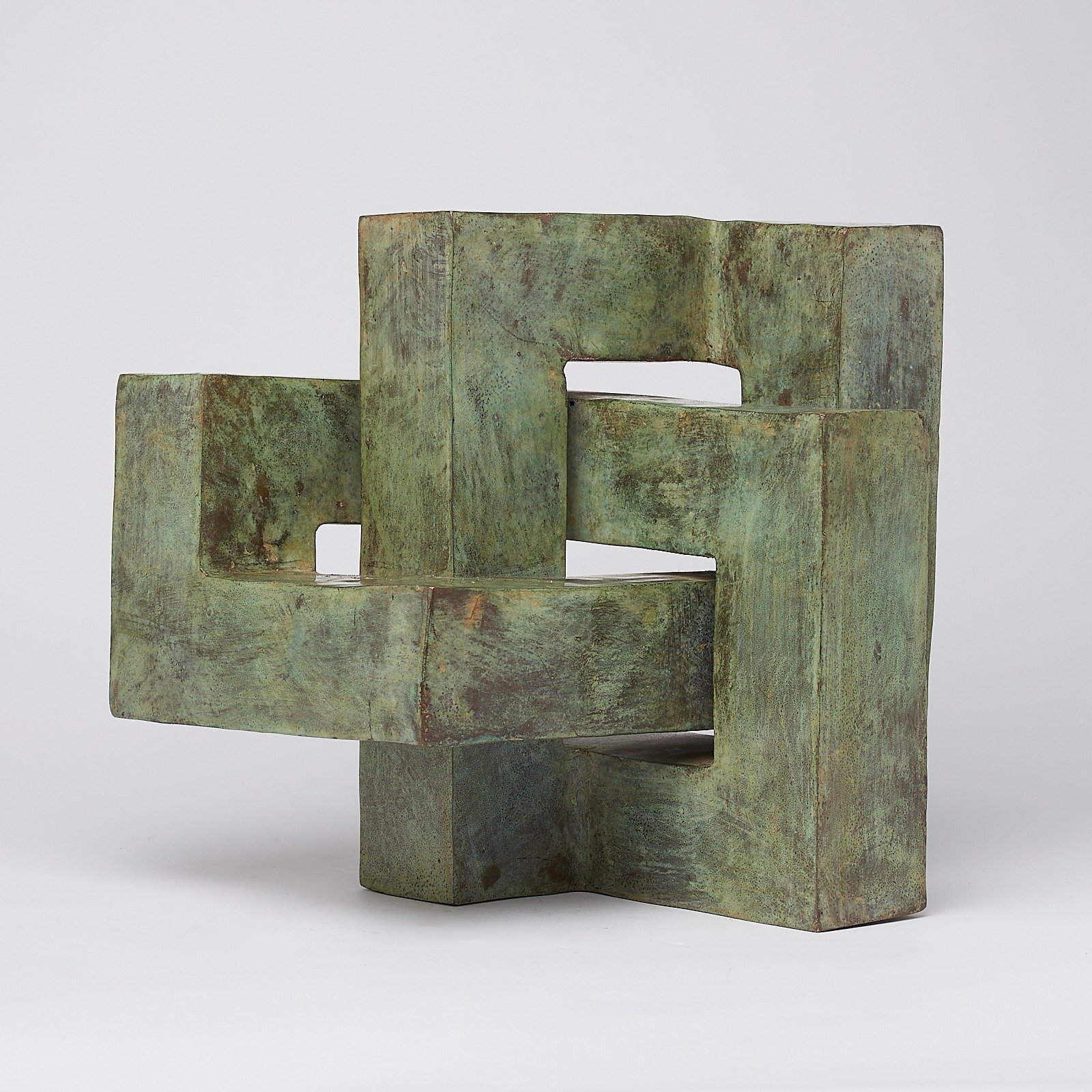
Art Deco Stained glass window - 44x52,5cm/ 2,35Kg - 1900-1910


02
days
21
hours
09
minutes
04
seconds

43 other people are watching this object
 Bidder 0391 Bidder 0391 | €90 | |
|---|---|---|
 Bidder 8602 Bidder 8602 | €81 | |
| Bidder 1638 | €78 | |
Catawiki Buyer Protection
Your payment’s safe with us until you receive your object.View details
Trustpilot 4.4 | 123718 reviews
Rated Excellent on Trustpilot.
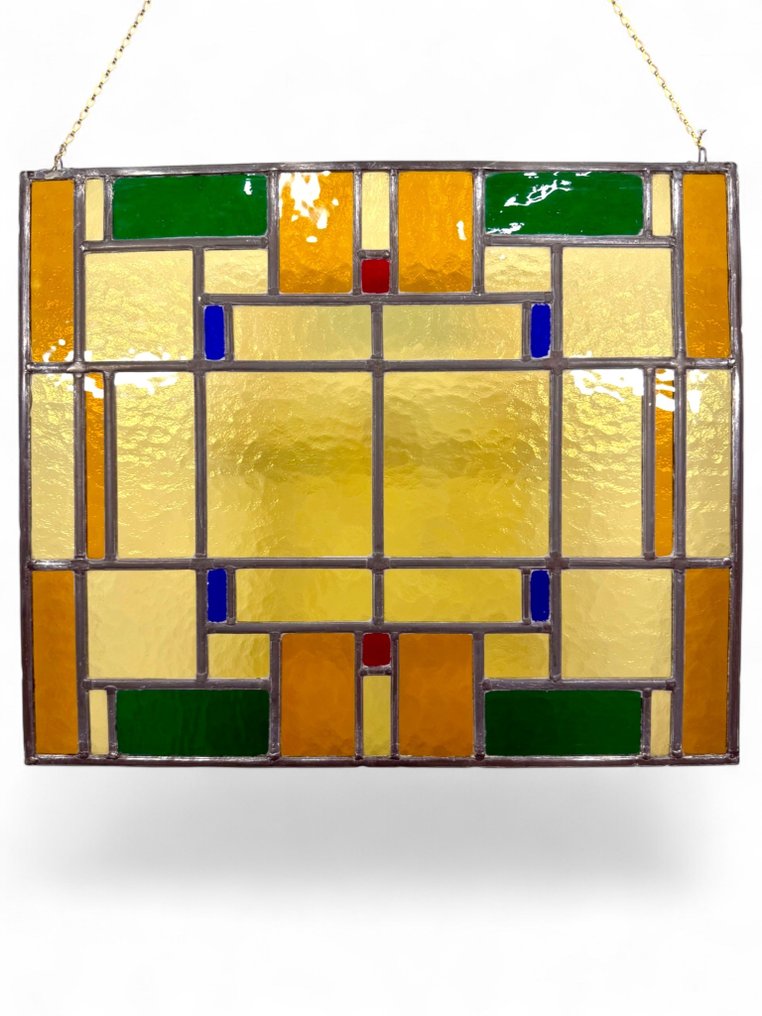
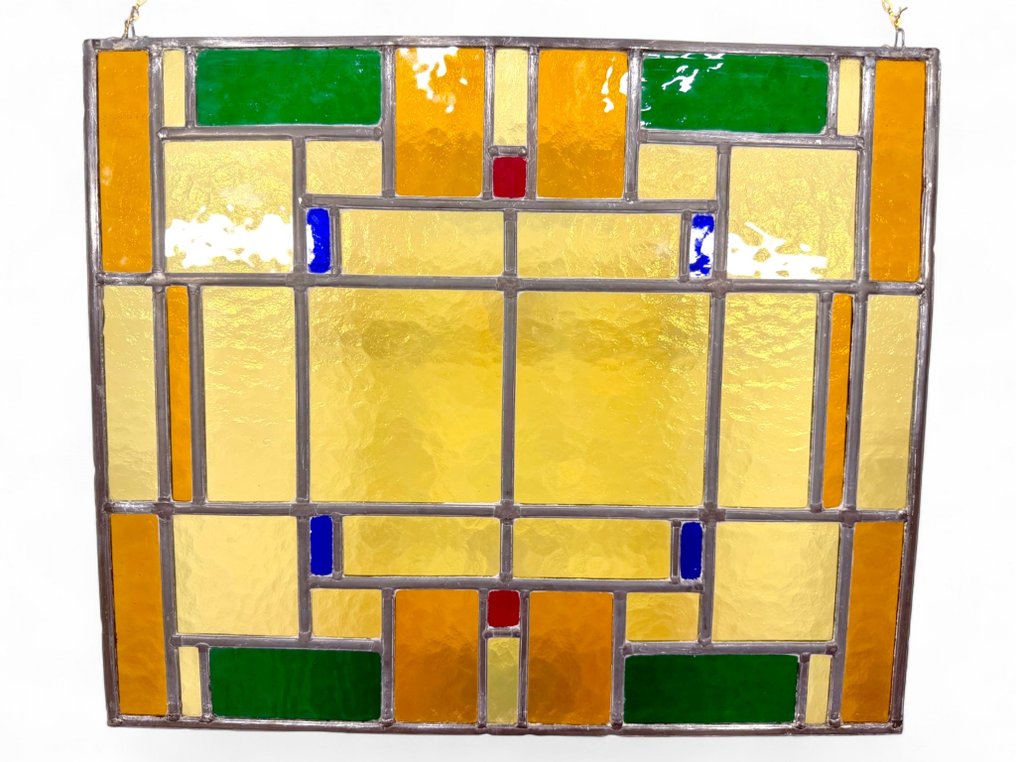
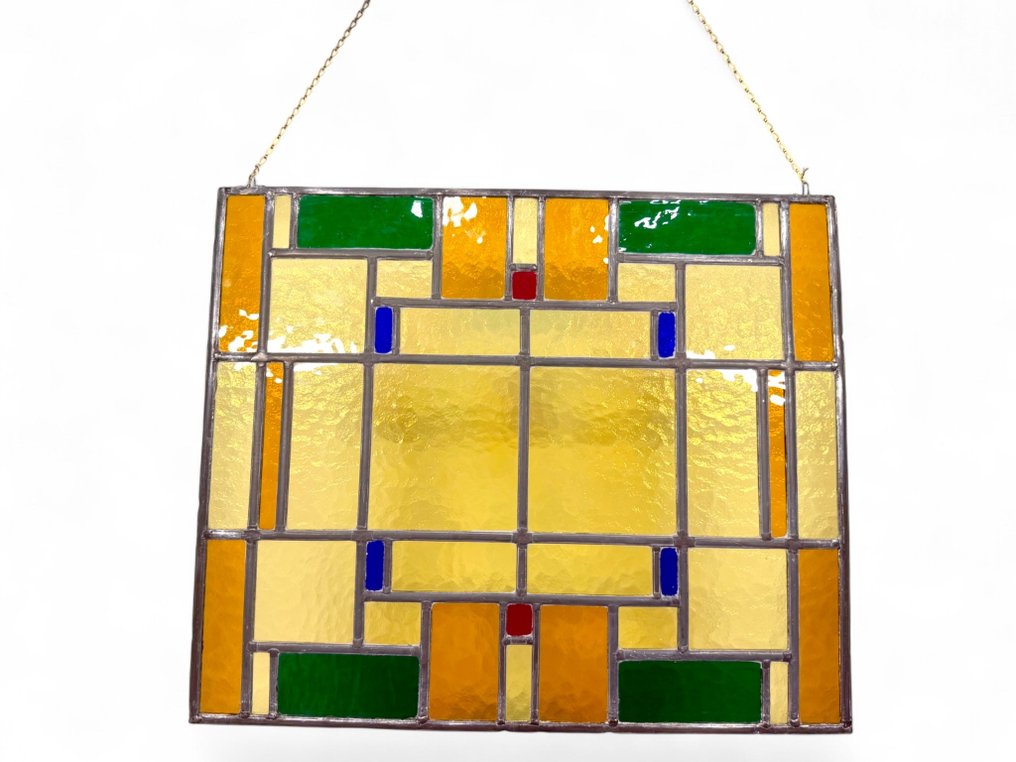
Art Deco stained-glass relief window panel dating to circa 1900–1910, made of leaded and coloured glass, origin Netherlands, measuring 44 x 52.5 x 0.5 cm and weighing about 2.35 kg.
AI-assisted summary
Description from the seller
Stained-Glass Art Deco Relief Window Panel – approx. 1920–1930
In excellent condition – No reserve
A refined composition of warm amber and deep forest-green relief glass, punctuated by cobalt-blue and ruby-red accents. The textured, hand-made glass surface catches and diffuses light beautifully, creating an interior presence that is architectural, balanced, and distinctly early 20th-century in character. A sophisticated decorative statement for both period interiors and contemporary design spaces.
Details
• Period: approx. 1920–1930
• Origin: Belgium/Netherlands region
• Material: hand-made colored relief stained glass in lead cames, with characteristic bubble inclusions and minor artisanal surface irregularities
• Design: geometric early-Art-Deco architecture-influenced layout with relief glass textures
• Condition: excellent vintage condition, no cracks, no chips, structurally sound and ready to hang
• Dimensions: approx. 44 x 52.5 x 0.5 cm (h x w x d)
• Weight: approx. 2.35 kg
• Suspension: hanging chains included as shown
Historical Context
Relief (or hammered/rolled) stained glass became highly popular in the interbellum period, when designers combined traditional leaded-glass craft with emerging Art Deco principles such as symmetry, geometry, and architectural abstraction. Glass of this type was mouth-blown or rolled by hand, which explains the visible bubbles, optical relief, and tiny artisanal imperfections that today serve as markers of authenticity and craftsmanship. Panels like this were frequently used in churches, chapels, schools, libraries, and administrative buildings to temper daylight while adding symbolic colour and rhythmic spatial structure.
This piece reflects the transitional moment from 19th-century decorative glazing toward modernist geometric glass art that defined the 1920s and 1930s.
Shipping & Handling
• This lot will be professionally packed using reinforced art-glass packaging methods
• Next-day dispatch where possible
• Registered and insured shipping with tracking
Seller's Story
We are a passionate team of skilled collectors dedicated to sourcing truly unique and rare vintage pieces. On Catawiki, we showcase only our finest finds. Carefully curated, lovingly selected, and offered with the lowest possible shipping rates as a service to our buyers.
Every item is professionally packed the very next day and shipped via registered mail for a safe and reliable delivery.
If you have any questions, please feel free to contact us. We are always happy to help.
Stained-Glass Art Deco Relief Window Panel – approx. 1920–1930
In excellent condition – No reserve
A refined composition of warm amber and deep forest-green relief glass, punctuated by cobalt-blue and ruby-red accents. The textured, hand-made glass surface catches and diffuses light beautifully, creating an interior presence that is architectural, balanced, and distinctly early 20th-century in character. A sophisticated decorative statement for both period interiors and contemporary design spaces.
Details
• Period: approx. 1920–1930
• Origin: Belgium/Netherlands region
• Material: hand-made colored relief stained glass in lead cames, with characteristic bubble inclusions and minor artisanal surface irregularities
• Design: geometric early-Art-Deco architecture-influenced layout with relief glass textures
• Condition: excellent vintage condition, no cracks, no chips, structurally sound and ready to hang
• Dimensions: approx. 44 x 52.5 x 0.5 cm (h x w x d)
• Weight: approx. 2.35 kg
• Suspension: hanging chains included as shown
Historical Context
Relief (or hammered/rolled) stained glass became highly popular in the interbellum period, when designers combined traditional leaded-glass craft with emerging Art Deco principles such as symmetry, geometry, and architectural abstraction. Glass of this type was mouth-blown or rolled by hand, which explains the visible bubbles, optical relief, and tiny artisanal imperfections that today serve as markers of authenticity and craftsmanship. Panels like this were frequently used in churches, chapels, schools, libraries, and administrative buildings to temper daylight while adding symbolic colour and rhythmic spatial structure.
This piece reflects the transitional moment from 19th-century decorative glazing toward modernist geometric glass art that defined the 1920s and 1930s.
Shipping & Handling
• This lot will be professionally packed using reinforced art-glass packaging methods
• Next-day dispatch where possible
• Registered and insured shipping with tracking
Seller's Story
We are a passionate team of skilled collectors dedicated to sourcing truly unique and rare vintage pieces. On Catawiki, we showcase only our finest finds. Carefully curated, lovingly selected, and offered with the lowest possible shipping rates as a service to our buyers.
Every item is professionally packed the very next day and shipped via registered mail for a safe and reliable delivery.
If you have any questions, please feel free to contact us. We are always happy to help.
Details
Era
1900-2000
Manufacturer/ Brand
44x52,5cm/ 2,35Kg
Weight
2.35 kg
Material
Glass, Lead
Country of Origin
Netherlands
Style
Art Deco
Condition
Excellent condition: barely used with minimal signs of wear
Height
44 cm
Width
52.5 cm
Depth
0.5 cm
Estimated Period
1900-1910