Luigi Rossanigo (1948) - Presenze specchianti


08
days
12
hours
52
minutes
34
seconds

No bids placed
Catawiki Buyer Protection
Your payment’s safe with us until you receive your object.View details
Trustpilot 4.4 | 123418 reviews
Rated Excellent on Trustpilot.
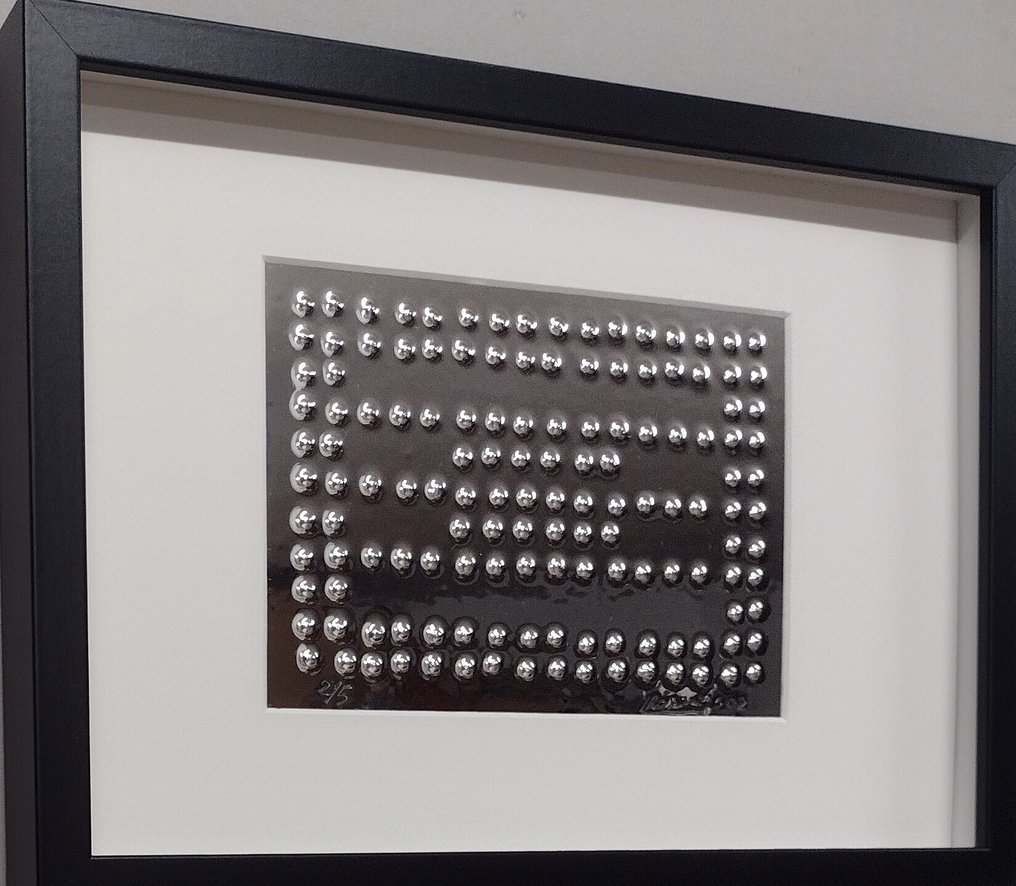
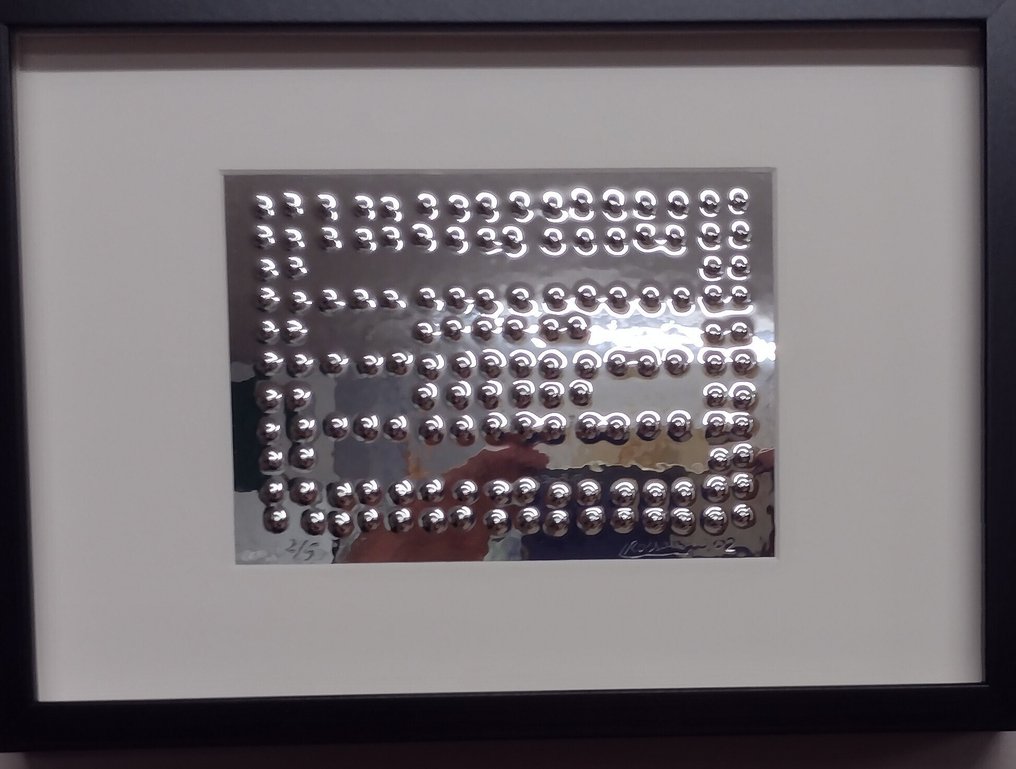
Italian artist Luigi Rossanigo (born 1948) presents Presenze specchianti (2002), a mixed‑media piece in a limited edition of 5/5, framed, 32 × 23 cm, signed by hand on the plate, Origin: Italy, Theme: Fashion, Period: 2000–2010, Condition: Good.
AI-assisted summary
Description from the seller
During the Christmas period, deliveries may experience delays.
The proposed work is an embossed aluminum mirror plate, numbered 5/5, measuring 21x15.5 cm, resting on cardboard, signed on the plate and on the back — visible in a 17x12 cm frame — with an overall frame size of 32x23 cm.
The artwork will be carefully packed and shipped within 3 days with authentication on a photo signed by the artist — ready to hang or rest —.
Traceable and insured shipment — (unfortunately, the photos never do it justice).
For those who love the innovations and suggestions of the 1900s, it would be a truly interesting work in a limited edition of only 5 copies—practically as if it were a one-of-a-kind piece.
…in the slow and steady unfolding of his research, Luigi Rossanigo followed a unique artistic path, characterized by varied experimentation in different disciplines. From his early pictorial experiences, in which the subject was treated with direct reference to reality, the artist, in the first half of the 1970s, gradually moved towards an abstract conception of form, synthesized in rapid and direct gestures. This informal interlude naturally evolved into a surrealism experienced with a highly personal, introspective intention, amidst abnormal mystifications of reality, noted with the precision of an eighteenth-century traveler. Simultaneously cultivating a love for the precious goldsmith's art and drawing closer to the sculptural milieu of Carrara, the multi-talented artist felt the need to experiment with the volumetric definition of the marble block, transferring to it the three-dimensional interpretation of the work already imagined for the golden jewel. This process led Rossanigo to modify the structural layout of the painting, moving towards the creation of tensile structures and multi-material composites, a new dialectic in which the agreement between painting and sculpture took shape....
During the Christmas period, deliveries may experience delays.
The proposed work is an embossed aluminum mirror plate, numbered 5/5, measuring 21x15.5 cm, resting on cardboard, signed on the plate and on the back — visible in a 17x12 cm frame — with an overall frame size of 32x23 cm.
The artwork will be carefully packed and shipped within 3 days with authentication on a photo signed by the artist — ready to hang or rest —.
Traceable and insured shipment — (unfortunately, the photos never do it justice).
For those who love the innovations and suggestions of the 1900s, it would be a truly interesting work in a limited edition of only 5 copies—practically as if it were a one-of-a-kind piece.
…in the slow and steady unfolding of his research, Luigi Rossanigo followed a unique artistic path, characterized by varied experimentation in different disciplines. From his early pictorial experiences, in which the subject was treated with direct reference to reality, the artist, in the first half of the 1970s, gradually moved towards an abstract conception of form, synthesized in rapid and direct gestures. This informal interlude naturally evolved into a surrealism experienced with a highly personal, introspective intention, amidst abnormal mystifications of reality, noted with the precision of an eighteenth-century traveler. Simultaneously cultivating a love for the precious goldsmith's art and drawing closer to the sculptural milieu of Carrara, the multi-talented artist felt the need to experiment with the volumetric definition of the marble block, transferring to it the three-dimensional interpretation of the work already imagined for the golden jewel. This process led Rossanigo to modify the structural layout of the painting, moving towards the creation of tensile structures and multi-material composites, a new dialectic in which the agreement between painting and sculpture took shape....
Details
Artist
Luigi Rossanigo (1948)
Sold with frame
Yes
Sold by
Owner or reseller
Edition
Limited edition
Edition number
5/5
Title of artwork
Presenze specchianti
Technique
Mixed media
Signature
Hand signed
Country of Origin
Italy
Year
2002
Condition
Good condition
Height
32 cm
Width
23 cm
Depiction/Theme
Fashion
Style
Contemporary
Period
2000-2010
