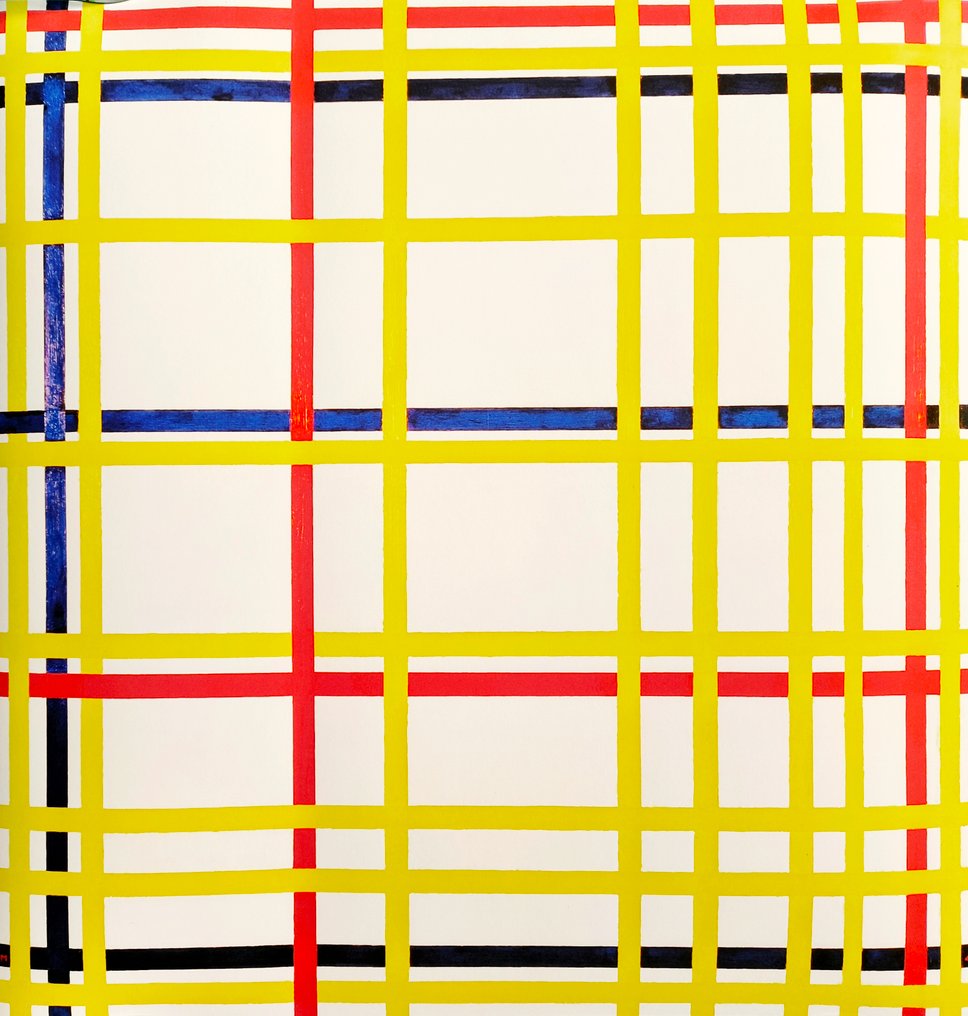
Piet Mondrian (1872–1944) (after) - "New York City, 1942"



02
days
03
hours
35
minutes
44
seconds
Current bid
€ 25
No reserve price

Expert
Selected by Juan Antonio Rodríguez
Eight years experience valuing posters, previously valuer at Balclis, Barcelona.
Estimate € 150 - € 200
44 other people are watching this object
 Bidder 9433 Bidder 9433 | €25 | |
|---|---|---|
 Bidder 7818 Bidder 7818 | €10 | |
| Bidder 8865 | €7 | |
Catawiki Buyer Protection
Your payment’s safe with us until you receive your object.View details
Trustpilot 4.4 | 123759 reviews
Rated Excellent on Trustpilot.
Description from the seller
- Piet Mondrian (after), giclée print on heavyweight smooth matte paper (300 gsm approx.).
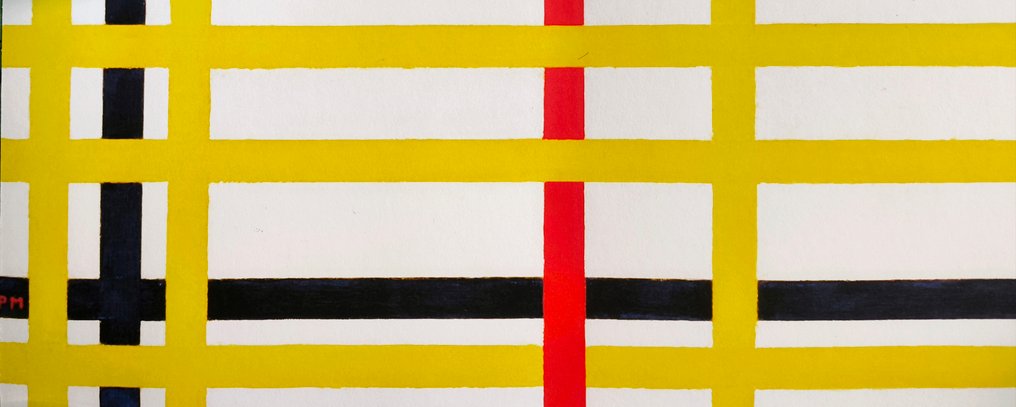
Signed on the plate.
Stamp on the verso.
- Size: 40.5 x 42cm.
- Condition: Excellent. Never framed, never exposed.
- Piet Mondrian (1872–1944) was a Dutch painter and one of the leading figures of 20th-century abstract art. He is best known for being a founding member of the De Stijl movement, which sought to express universal harmony through pure abstraction and a reduction of form and color to their most essential elements. Mondrian's signature style characterized by geometric grids, vertical and horizontal black lines, and the use of primary colors redefined modern art and became a visual language that influenced architecture, design, and contemporary culture worldwide.
During his early career, Mondrian was influenced by Impressionism and Cubism, but around 1917 he developed his distinct neoplastic style, also known as “pure plastic art.” This minimalist yet deeply spiritual approach aimed to reflect a sense of order and balance that transcended the material world.
One of his later masterpieces, New York City (1942), was created after Mondrian moved to the United States during World War II. This work marks a significant evolution in his style: the black lines of his earlier compositions are replaced by vibrant, interwoven bands of yellow, red, blue, and black, echoing the rhythmic energy of New York's urban landscape. The overlapping grid suggests movement, dynamism, and the pulsating tempo of modern life, symbolizing Mondrian's fascination with the city's structure and vitality.
Mondrian's works are highly sought after in the art market, with paintings such as Composition No. III, with Red, Blue, Yellow and Black (1929) fetching over $50 million USD at auction. Even his later and less geometric compositions have achieved multi-million-dollar sales, underscoring his enduring influence and the continued demand for his art among top collectors and museums.
New York City (1942) stands as a testament to Mondrian's ability to fuse geometry with emotion transforming the chaos of the modern metropolis into a symphony of color, rhythm, and order.
Artists of similar importance: Basquiat, Kandinsky, Hockney, Lichtenstein, Miro, Banksy, Brainwash, Delaunay, Nara, Soulages, Lagasse, Ramos, Warhol, Lautrec, Klimt, Matisse, Hirst, Chagall, Koons, Haring, Indiana, Groening, Richter, Monroe, Herrera, Laurent, Klein, Coa, Dior, Vuitton, Kusama, Murakami, Testa, Villemot, Oldenburg, Hopper, Ripolles, Wesselmann, Magritte, Jenk, Orlinski, Wille, Rizzi, Manara, Thiebaud, Kaws, Valentino, Cappiello, Rothko, Dalí, among others.
Seller's Story
Seller on Catawiki for over seven years.
I invite you to visit my profile, where you'll find a complete list of the different lots currently being auctioned. Click on "Yuke."
Good luck at the auctions!
Translated by Google Translate- Piet Mondrian (after), giclée print on heavyweight smooth matte paper (300 gsm approx.).
Signed on the plate.
Stamp on the verso.
- Size: 40.5 x 42cm.
- Condition: Excellent. Never framed, never exposed.
- Piet Mondrian (1872–1944) was a Dutch painter and one of the leading figures of 20th-century abstract art. He is best known for being a founding member of the De Stijl movement, which sought to express universal harmony through pure abstraction and a reduction of form and color to their most essential elements. Mondrian's signature style characterized by geometric grids, vertical and horizontal black lines, and the use of primary colors redefined modern art and became a visual language that influenced architecture, design, and contemporary culture worldwide.
During his early career, Mondrian was influenced by Impressionism and Cubism, but around 1917 he developed his distinct neoplastic style, also known as “pure plastic art.” This minimalist yet deeply spiritual approach aimed to reflect a sense of order and balance that transcended the material world.
One of his later masterpieces, New York City (1942), was created after Mondrian moved to the United States during World War II. This work marks a significant evolution in his style: the black lines of his earlier compositions are replaced by vibrant, interwoven bands of yellow, red, blue, and black, echoing the rhythmic energy of New York's urban landscape. The overlapping grid suggests movement, dynamism, and the pulsating tempo of modern life, symbolizing Mondrian's fascination with the city's structure and vitality.
Mondrian's works are highly sought after in the art market, with paintings such as Composition No. III, with Red, Blue, Yellow and Black (1929) fetching over $50 million USD at auction. Even his later and less geometric compositions have achieved multi-million-dollar sales, underscoring his enduring influence and the continued demand for his art among top collectors and museums.
New York City (1942) stands as a testament to Mondrian's ability to fuse geometry with emotion transforming the chaos of the modern metropolis into a symphony of color, rhythm, and order.
Artists of similar importance: Basquiat, Kandinsky, Hockney, Lichtenstein, Miro, Banksy, Brainwash, Delaunay, Nara, Soulages, Lagasse, Ramos, Warhol, Lautrec, Klimt, Matisse, Hirst, Chagall, Koons, Haring, Indiana, Groening, Richter, Monroe, Herrera, Laurent, Klein, Coa, Dior, Vuitton, Kusama, Murakami, Testa, Villemot, Oldenburg, Hopper, Ripolles, Wesselmann, Magritte, Jenk, Orlinski, Wille, Rizzi, Manara, Thiebaud, Kaws, Valentino, Cappiello, Rothko, Dalí, among others.
Seller's Story
Seller on Catawiki for over seven years.
I invite you to visit my profile, where you'll find a complete list of the different lots currently being auctioned. Click on "Yuke."
Good luck at the auctions!
Translated by Google TranslateDetails
Artist
Piet Mondrian (1872–1944) (after)
Sold by
Owner or reseller
Edition
Original
Title of artwork
"New York City, 1942"
Technique
Giclée
Signature
Plate signed
Country of Origin
Germany
Condition
Excellent condition
Colour
Blue, Red, White, Yellow
Height
42 cm
Width
40.5 cm
Period
2010-2020
Sold with frame
No