Franciscus Massarius - PLINII..DE NATURALI HISTORIA .- Rare scientific work- Fine binding - 1537



14
days
13
hours
33
minutes
26
seconds
Current bid
€ 3
Reserve price not met

Expert
Selected by Volker Riepenhausen
Specialist in travel literature and pre-1600 rare prints with 28 years experience.
Estimate € 900 - € 1,800
4 other people are watching this object
 Bidder 5407 Bidder 5407 | €3 | |
|---|---|---|
 Bidder 5121 Bidder 5121 | €2 | |
| Bidder 5407 | €1 |
Catawiki Buyer Protection
Your payment’s safe with us until you receive your object.View details
Trustpilot 4.4 | 123609 reviews
Rated Excellent on Trustpilot.
Franciscus Massarius, in nonum Plinii De Naturali Historia librum Castigationes et annotationes, Basel: Hieronymus Froben & Nicolaus Episcopius, 1537, first Latin edition, 400 pages, finely bound in leather, in fine condition.
AI-assisted summary
Description from the seller
(Sciences; biology; fishes; first editions; fine bindings). MASSARIUS, Franciscus. in nonum Plinii De Naturali historia librum Castigationes et annotationes. Quisquis de natura Aquatilium ac remotiore piscium cognitione edoceri cupis, hunc Massarij commentarium eme & lege. Admiraberis laborem ac ingeniu[m] hominis candidissimi, qui longè maximam operam in hijs indagandis, ut studiosi iuuarentur, insumpsit.Basileae, in officina Frobeniana per Hieronymum Froben. & Nicolaum Episcopium, 1537
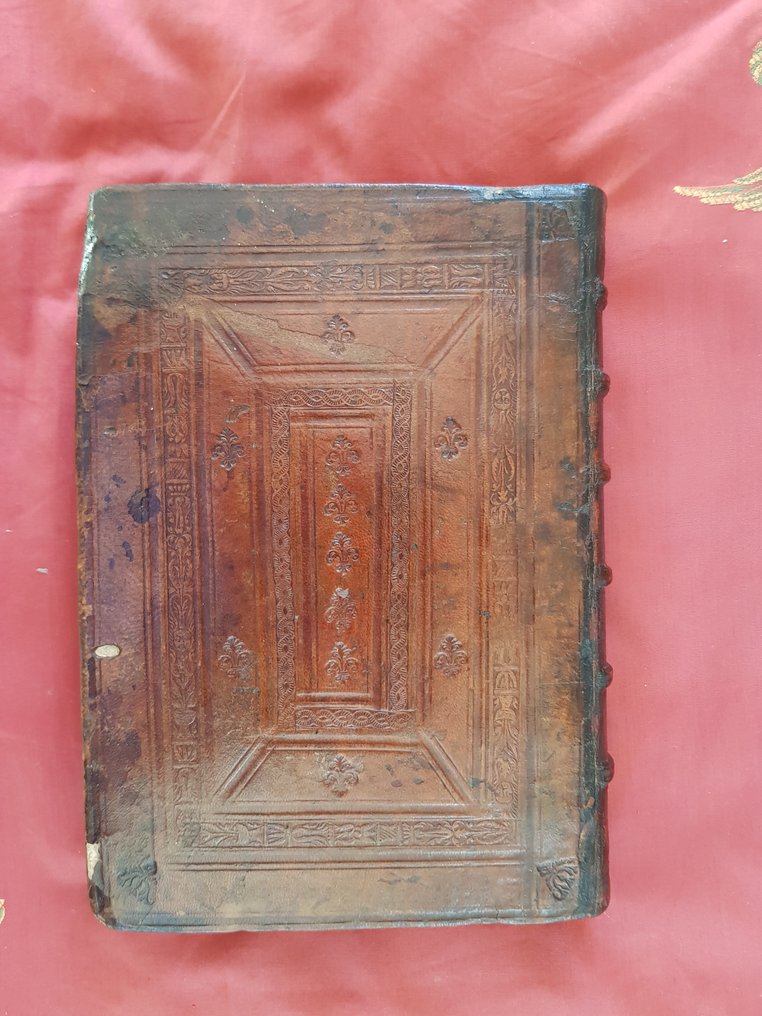
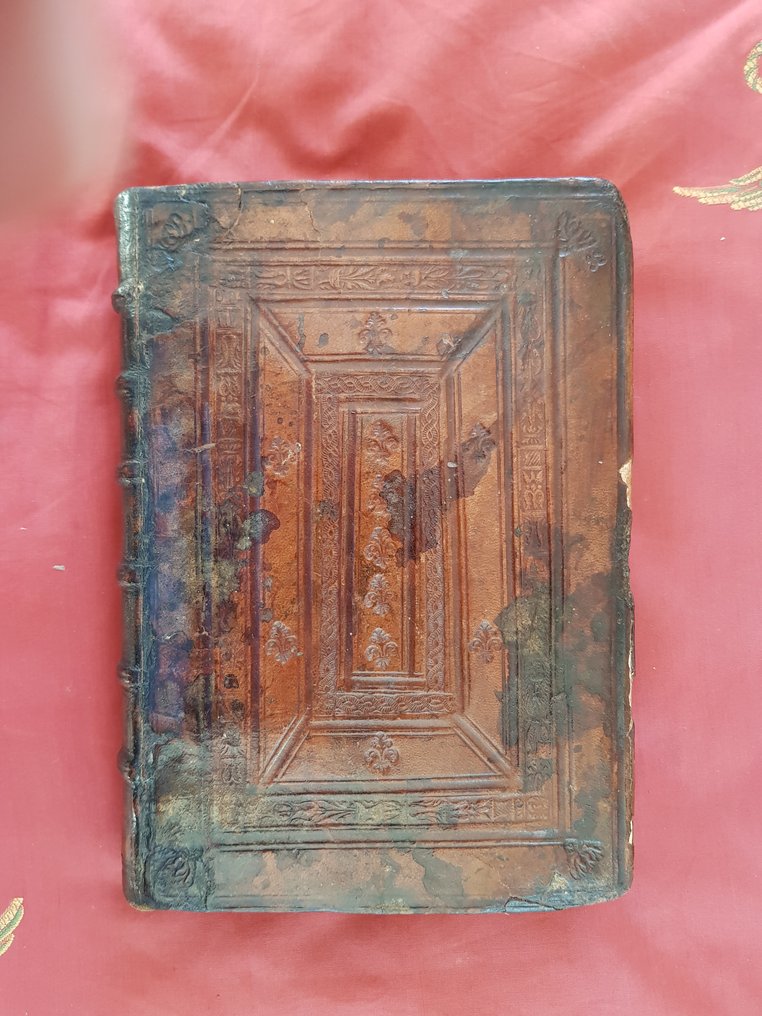
4to (220x150 mm); [16], 367, [1], [16] pp. Signature: AA-BB4, A-Z4, aa-bb4. G (pp. 232-240) misbound after H (pp. 241-249). Woodcut printer’s device on title page, repeated on Z4 and b4; nicely historiated woodcut initials, ancient ownership signature on title page, fascinating contemporary brown calf, blind-tooled. Spine renewed, some stains and scratches on covers. External margin lightly soiled / stained, never affecting the text, otherwise a good copy on large paper.
Gaius Plinius Secundus (23 AD – August 25, 79 AD), better known as Pliny the Elder, was a Roman author, naturalist, and natural philosopher, as well as naval and army commander of the early Roman Empire, and personal friend of the emperor Vespasian. Spending most of his spare time studying, writing or investigating natural and geographic phenomena in the field, he wrote an encyclopedic work, Naturalis Historia, which became a model for all such works written subsequently. Pliny the Younger, his nephew, wrote of him in a letter to the historian Tacitus
The name of Francesco Massari is missing in the main bio-bibliographic repertories: His comment on the ninth book of the Plinius Naturalis Historiae is the result not only of a very skilled textual criticism, but also of an investigation conducted directly in the field. ... Massari like Belon travels in the Mediterranean area, especially in Greece and Byzantium, showing a decidedly terminological interest, common to the founders of scientific ictiography. ... Of the explorations carried out by Massari, thanks to which he was able to greatly proceed to the identification of the fish collected by Pliny in book IX, traces can punctually be found in his comment.” (Minonzio, pp. 427-428, translated). “Even a traditional humanist like Beatus Rhenanus knew that in theory scientific texts rested on observation of the world, and in his preface to the edition of the Pliny commentary by Massaria based his praise of Massaria’s commentary on the commentator’s extensive travels, especially in the Near East, so that his work rested on personal experience and not just on book-learning. Even so, Beatus firmly restated his general principle that commentators must stick to the authority of the manuscripts, as in fact Massaria had done.” (Nauert, p. 83, footnote 51).
ADAMS M 861; WALLER 10943; WELLCOME I, 4116; FRANCO MINONZIO Diffrazioni pliniane prima di Belon (1553): descrizione e classificazione di pesci in Paolo Giovio, Francesco Massari e Simone Porzio in: VANNA MARAGLINO (ed.) Scienza antica in età moderna Teoria e immagini Bari, Cacucci, 2012, PP. 401-439; C.G. NAUERT, JR. Humanists, Scientists, and Pliny: Changing Approaches to a Classical Author in: American Historical Rewiew, 1979, 84 (1), pp. 72-85.
(Sciences; biology; fishes; first editions; fine bindings). MASSARIUS, Franciscus. in nonum Plinii De Naturali historia librum Castigationes et annotationes. Quisquis de natura Aquatilium ac remotiore piscium cognitione edoceri cupis, hunc Massarij commentarium eme & lege. Admiraberis laborem ac ingeniu[m] hominis candidissimi, qui longè maximam operam in hijs indagandis, ut studiosi iuuarentur, insumpsit.Basileae, in officina Frobeniana per Hieronymum Froben. & Nicolaum Episcopium, 1537
4to (220x150 mm); [16], 367, [1], [16] pp. Signature: AA-BB4, A-Z4, aa-bb4. G (pp. 232-240) misbound after H (pp. 241-249). Woodcut printer’s device on title page, repeated on Z4 and b4; nicely historiated woodcut initials, ancient ownership signature on title page, fascinating contemporary brown calf, blind-tooled. Spine renewed, some stains and scratches on covers. External margin lightly soiled / stained, never affecting the text, otherwise a good copy on large paper.
Gaius Plinius Secundus (23 AD – August 25, 79 AD), better known as Pliny the Elder, was a Roman author, naturalist, and natural philosopher, as well as naval and army commander of the early Roman Empire, and personal friend of the emperor Vespasian. Spending most of his spare time studying, writing or investigating natural and geographic phenomena in the field, he wrote an encyclopedic work, Naturalis Historia, which became a model for all such works written subsequently. Pliny the Younger, his nephew, wrote of him in a letter to the historian Tacitus
The name of Francesco Massari is missing in the main bio-bibliographic repertories: His comment on the ninth book of the Plinius Naturalis Historiae is the result not only of a very skilled textual criticism, but also of an investigation conducted directly in the field. ... Massari like Belon travels in the Mediterranean area, especially in Greece and Byzantium, showing a decidedly terminological interest, common to the founders of scientific ictiography. ... Of the explorations carried out by Massari, thanks to which he was able to greatly proceed to the identification of the fish collected by Pliny in book IX, traces can punctually be found in his comment.” (Minonzio, pp. 427-428, translated). “Even a traditional humanist like Beatus Rhenanus knew that in theory scientific texts rested on observation of the world, and in his preface to the edition of the Pliny commentary by Massaria based his praise of Massaria’s commentary on the commentator’s extensive travels, especially in the Near East, so that his work rested on personal experience and not just on book-learning. Even so, Beatus firmly restated his general principle that commentators must stick to the authority of the manuscripts, as in fact Massaria had done.” (Nauert, p. 83, footnote 51).
ADAMS M 861; WALLER 10943; WELLCOME I, 4116; FRANCO MINONZIO Diffrazioni pliniane prima di Belon (1553): descrizione e classificazione di pesci in Paolo Giovio, Francesco Massari e Simone Porzio in: VANNA MARAGLINO (ed.) Scienza antica in età moderna Teoria e immagini Bari, Cacucci, 2012, PP. 401-439; C.G. NAUERT, JR. Humanists, Scientists, and Pliny: Changing Approaches to a Classical Author in: American Historical Rewiew, 1979, 84 (1), pp. 72-85.
Details
Number of Books
1
Subject
Fine Bindings, Incunabula & early printing, Natural History, Science
Book Title
PLINII..DE NATURALI HISTORIA .- Rare scientific work- Fine binding
Author/ Illustrator
Franciscus Massarius
Condition
Fine
Publication year oldest item
1537
Height
220 mm
Edition
1st Edition
Width
150 mm
Language
Latin
Original language
Yes
Publisher
Hieronymus Froben & Nicolaus Episcopius
Binding/ Material
Leather
Number of pages
400
Sold by
