Antoine de Courtin - Nouveau traité de la civilité qui se pratique en France parmi les honnestes gens. Dixiéme édition, - 1681



08
days
06
hours
06
minutes
57
seconds
Current bid
€ 10
No reserve price

Expert
Selected by Volker Riepenhausen
Specialist in travel literature and pre-1600 rare prints with 28 years experience.
Estimate € 150 - € 200
8 other people are watching this object
 Bidder 9910 Bidder 9910 | €10 |
|---|
Catawiki Buyer Protection
Your payment’s safe with us until you receive your object.View details
Trustpilot 4.4 | 123878 reviews
Rated Excellent on Trustpilot.
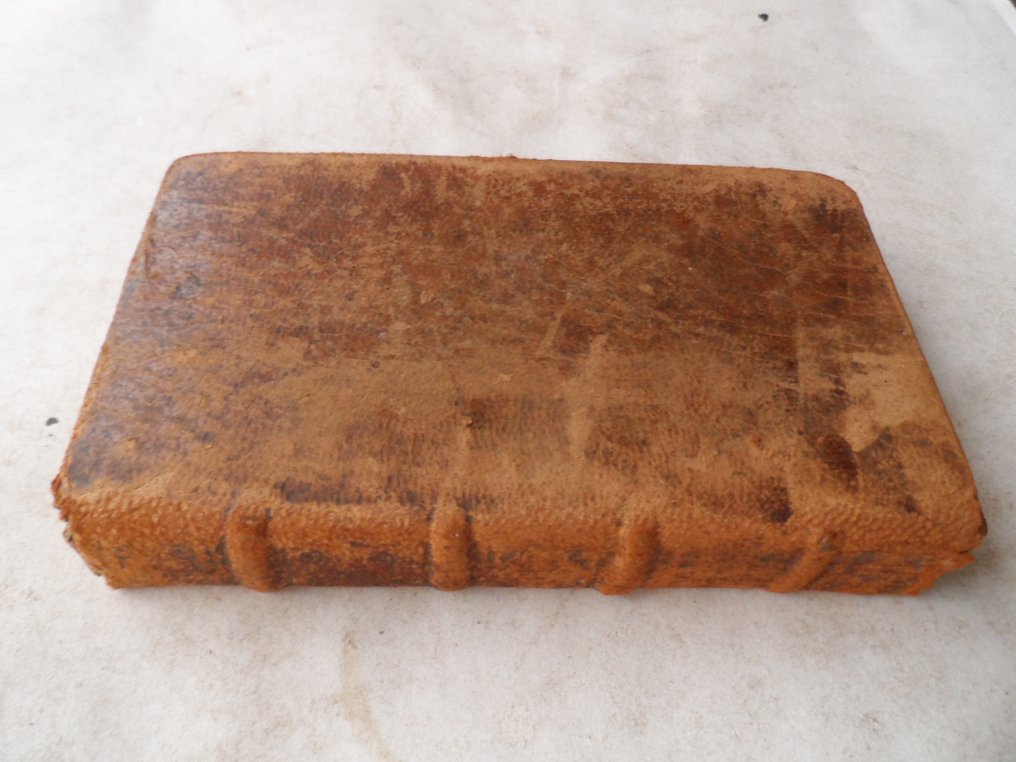
Antoine de Courtin presents Nouveau traité de la civilité qui se pratique en France parmi les honnestes gens, Dixiéme édition, Paris, 1681, in French, 286 pages, original leather binding in fair condition.
AI-assisted summary
Description from the seller
Antoine de Courtin: New treatise on civility practiced in France among honest people. Tenth edition, revised, corrected, and expanded by the author. In Paris, at Helie Josset's, rue S. Jacques at the Fleur-de-Lys d'Or, 1681. 12o: (16)266(4) pages. Original soft leather with ribs. The binding and spine are somewhat worn. The binding is good. The paper is good, with occasional old moisture stains or very light discoloration. The front endpaper is loose with an old handwritten note. The rear endpaper is missing. There is an old handwritten note on the title page. See the photos.
A classic among treatises on the rules of conduct in civilized society. Antoine Courtin's most famous work on etiquette, first published in 1671, was popular and went through numerous editions. The work, first published under the title Nouveau Traité de la Civilité in Paris in 1671, is full of wise advice for those who wish to avoid faux pas in refined society: 'It is indecent, in the company of ladies or other serious persons, to remove your cloak, wig, or doublet, to file your nails, brush your teeth, scratch your head or another part of your body, repair your garter or shoe lace, or to ask for your gown or slippers to make yourself comfortable. It would be just as ridiculous as a mounted officer appearing before his general during an audience in his shoes instead of his boots.' See: W. Lee Ustick, Seventeenth Century Books of Conduct: Further Light on Antoine de Courtin and the Rules of Civility, 1929.
Antoine de Courtin, born on February 27, 1622, in Riom, and died on September 5, 1685, in Paris, was a French diplomat and writer, best known for his New Treatise on Politeness.
Antoine Courtin was born in Auvergne, in Riom, into a family of lawyers: his paternal grandfather was a royal notary in Combronde, and his father held the position of chief secretary at the financial office of the general of Riom (he took office in 1619); his mother, Madeleine Delalande, was the daughter of a merchant and consul of Riom.
He accompanied ambassador Pierre Chanut to Sweden. He gained the favor of Queen Christina of Sweden and became her secretary. Subsequently, he was appointed by King Charles Gustav as the extraordinary envoy of Sweden in France. After the king's death in 1660, he left Swedish service and was appointed by Louis XIV as the resident-general for the princes and states of the North. In 1676-1677, he was tasked with leading an embassy to England to King Charles II.
In 1651, he was elevated to the nobility by Queen Christina; she granted him permission to complete his family crest with a border featuring the coat of arms of Sweden and bestowed upon him a lordship that adopted the name Courtin.
Antoine de Courtin: New treatise on civility practiced in France among honest people. Tenth edition, revised, corrected, and expanded by the author. In Paris, at Helie Josset's, rue S. Jacques at the Fleur-de-Lys d'Or, 1681. 12o: (16)266(4) pages. Original soft leather with ribs. The binding and spine are somewhat worn. The binding is good. The paper is good, with occasional old moisture stains or very light discoloration. The front endpaper is loose with an old handwritten note. The rear endpaper is missing. There is an old handwritten note on the title page. See the photos.
A classic among treatises on the rules of conduct in civilized society. Antoine Courtin's most famous work on etiquette, first published in 1671, was popular and went through numerous editions. The work, first published under the title Nouveau Traité de la Civilité in Paris in 1671, is full of wise advice for those who wish to avoid faux pas in refined society: 'It is indecent, in the company of ladies or other serious persons, to remove your cloak, wig, or doublet, to file your nails, brush your teeth, scratch your head or another part of your body, repair your garter or shoe lace, or to ask for your gown or slippers to make yourself comfortable. It would be just as ridiculous as a mounted officer appearing before his general during an audience in his shoes instead of his boots.' See: W. Lee Ustick, Seventeenth Century Books of Conduct: Further Light on Antoine de Courtin and the Rules of Civility, 1929.
Antoine de Courtin, born on February 27, 1622, in Riom, and died on September 5, 1685, in Paris, was a French diplomat and writer, best known for his New Treatise on Politeness.
Antoine Courtin was born in Auvergne, in Riom, into a family of lawyers: his paternal grandfather was a royal notary in Combronde, and his father held the position of chief secretary at the financial office of the general of Riom (he took office in 1619); his mother, Madeleine Delalande, was the daughter of a merchant and consul of Riom.
He accompanied ambassador Pierre Chanut to Sweden. He gained the favor of Queen Christina of Sweden and became her secretary. Subsequently, he was appointed by King Charles Gustav as the extraordinary envoy of Sweden in France. After the king's death in 1660, he left Swedish service and was appointed by Louis XIV as the resident-general for the princes and states of the North. In 1676-1677, he was tasked with leading an embassy to England to King Charles II.
In 1651, he was elevated to the nobility by Queen Christina; she granted him permission to complete his family crest with a border featuring the coat of arms of Sweden and bestowed upon him a lordship that adopted the name Courtin.
Details
Number of Books
1
Subject
Education, History, Science
Book Title
Nouveau traité de la civilité qui se pratique en France parmi les honnestes gens. Dixiéme édition,
Author/ Illustrator
Antoine de Courtin
Condition
Fair
Publication year oldest item
1681
Edition
Reprint
Language
French
Original language
Yes
Publisher
A Paris, Chez Helie Josset, rue S. Jacques a la Fleur-de-Lys d'or, 1681.
Binding/ Material
Leather
Number of pages
286
Sold by
