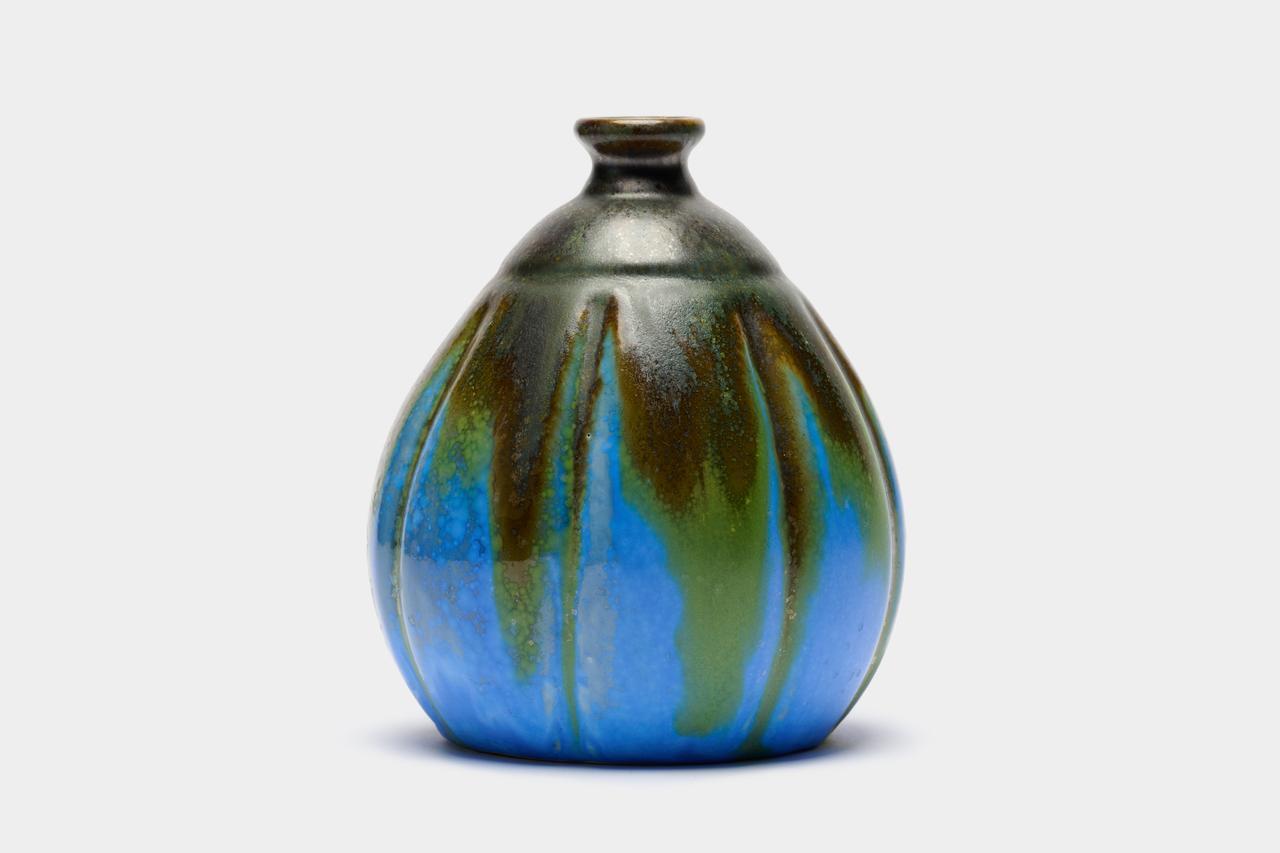
Max Laeuger - Vase - Pottery - Art Nouveau


Art historian with extensive experience working at various auction houses in antiques.
| €250 |
|---|
Catawiki Buyer Protection
Your payment’s safe with us until you receive your object.View details
Trustpilot 4.4 | 124246 reviews
Rated Excellent on Trustpilot.
Antique Max Laeuger earthenware vase from Germany in Art Nouveau/Jugendstil style, circa 1898, height 33 cm and diameter 19 cm, in good condition with minor glaze loss at the rim.
Description from the seller
Description
Large antique Max Laeuger vase 1898
Germany
Height 33 cm
Drsnd 19 cm
marked underside
In good condition, with minimal glaze loss on the upper edge.
See pictures
Art pottery Tonwerke Kandern (KTK)
Workshop of the important ceramicist Prof. Max Laeuger.
One of the first art pottery workshops in Germany. Director from 1897 to 1913.
from Max Lauger. From 1920 under the leadership of Herman Hakenjos.
Max Laeuger (* September 30, 1864, in Lörrach; † December 12, 1952, ibid; full name: Josef Maximilian Laeuger)
was a German ceramicist, artist, and architect.
Laeuger was born as the son of the weaponsmith Tobias Laeuger and the daughter of architect Sophie Adler. From 1880 to 1883, he studied, among others, with Franz Sales Meyer at the Karlsruhe School of Applied Arts. There, he became an assistant teacher in 1884 and later an assistant for two years. In 1898, he received an extraordinary professorship for model drawing at the Technical University of Karlsruhe, and in 1904, a full professorship. His teaching activities expanded to interior design and garden art.
In 1933, the regular pensioning took place; the actual farewell occurred two years later.
Having worked with ceramics in Kandern and Karlsruhe since 1892, he founded the company Prof. Laeuger'sche Kunsttöpfereien in 1897, which belonged to the Tonwerke Kandern. In 1914, 738 ship designs and 320 architectural ceramic designs were created here. In 1916, he established his own ceramics studio on Hoffstrasse in Karlsruhe. Here, until 1944, he created approximately 5,000 unique ceramics among others. From 1921 to 1929, he provided designs for the majolica factory in Karlsruhe, which were produced in series. From 1920 to 1922, he taught ceramics at the Badische Landeskunstschule Karlsruhe.
Max Laeuger was one of the founders of the Deutscher Werkbund in 1907. He was artistically active in various fields, working as a graphic designer, painter, glass painter, ceramicist, architect, interior designer, and landscape architect, and he designed craft objects. He also authored several works on art education.
Max Laeuger is considered one of the pioneers of German art ceramics of the 20th century. The art pottery by Prof. Laeuger, produced at Tonwerke Kandern between 1897 and 1914, made a significant contribution to German Art Nouveau. These decorative vessels and architectural ceramics displayed colorful decorations painted with slip, mostly plant-based, naturalistic to abstract, on colored backgrounds. The mark for the Kanderner products consists of the embossed mark MLK in a square, plus GESETZL.: SCHZT., often associated with SAMPLE GESETZL. BESCHERMD. The signature KTK in the square, which is often confused with this mark, has nothing to do with Max Laeuger. With his unique pieces, Laeuger later took an artistic quantum leap. Between 1916 and 1944, he consistently broke down the boundaries between individual art genres with the tile panels, reliefs, and sculptures he created in his own studio in Karlsruhe, paving the way for modern artist ceramics.
Description
Large antique Max Laeuger vase 1898
Germany
Height 33 cm
Drsnd 19 cm
marked underside
In good condition, with minimal glaze loss on the upper edge.
See pictures
Art pottery Tonwerke Kandern (KTK)
Workshop of the important ceramicist Prof. Max Laeuger.
One of the first art pottery workshops in Germany. Director from 1897 to 1913.
from Max Lauger. From 1920 under the leadership of Herman Hakenjos.
Max Laeuger (* September 30, 1864, in Lörrach; † December 12, 1952, ibid; full name: Josef Maximilian Laeuger)
was a German ceramicist, artist, and architect.
Laeuger was born as the son of the weaponsmith Tobias Laeuger and the daughter of architect Sophie Adler. From 1880 to 1883, he studied, among others, with Franz Sales Meyer at the Karlsruhe School of Applied Arts. There, he became an assistant teacher in 1884 and later an assistant for two years. In 1898, he received an extraordinary professorship for model drawing at the Technical University of Karlsruhe, and in 1904, a full professorship. His teaching activities expanded to interior design and garden art.
In 1933, the regular pensioning took place; the actual farewell occurred two years later.
Having worked with ceramics in Kandern and Karlsruhe since 1892, he founded the company Prof. Laeuger'sche Kunsttöpfereien in 1897, which belonged to the Tonwerke Kandern. In 1914, 738 ship designs and 320 architectural ceramic designs were created here. In 1916, he established his own ceramics studio on Hoffstrasse in Karlsruhe. Here, until 1944, he created approximately 5,000 unique ceramics among others. From 1921 to 1929, he provided designs for the majolica factory in Karlsruhe, which were produced in series. From 1920 to 1922, he taught ceramics at the Badische Landeskunstschule Karlsruhe.
Max Laeuger was one of the founders of the Deutscher Werkbund in 1907. He was artistically active in various fields, working as a graphic designer, painter, glass painter, ceramicist, architect, interior designer, and landscape architect, and he designed craft objects. He also authored several works on art education.
Max Laeuger is considered one of the pioneers of German art ceramics of the 20th century. The art pottery by Prof. Laeuger, produced at Tonwerke Kandern between 1897 and 1914, made a significant contribution to German Art Nouveau. These decorative vessels and architectural ceramics displayed colorful decorations painted with slip, mostly plant-based, naturalistic to abstract, on colored backgrounds. The mark for the Kanderner products consists of the embossed mark MLK in a square, plus GESETZL.: SCHZT., often associated with SAMPLE GESETZL. BESCHERMD. The signature KTK in the square, which is often confused with this mark, has nothing to do with Max Laeuger. With his unique pieces, Laeuger later took an artistic quantum leap. Between 1916 and 1944, he consistently broke down the boundaries between individual art genres with the tile panels, reliefs, and sculptures he created in his own studio in Karlsruhe, paving the way for modern artist ceramics.