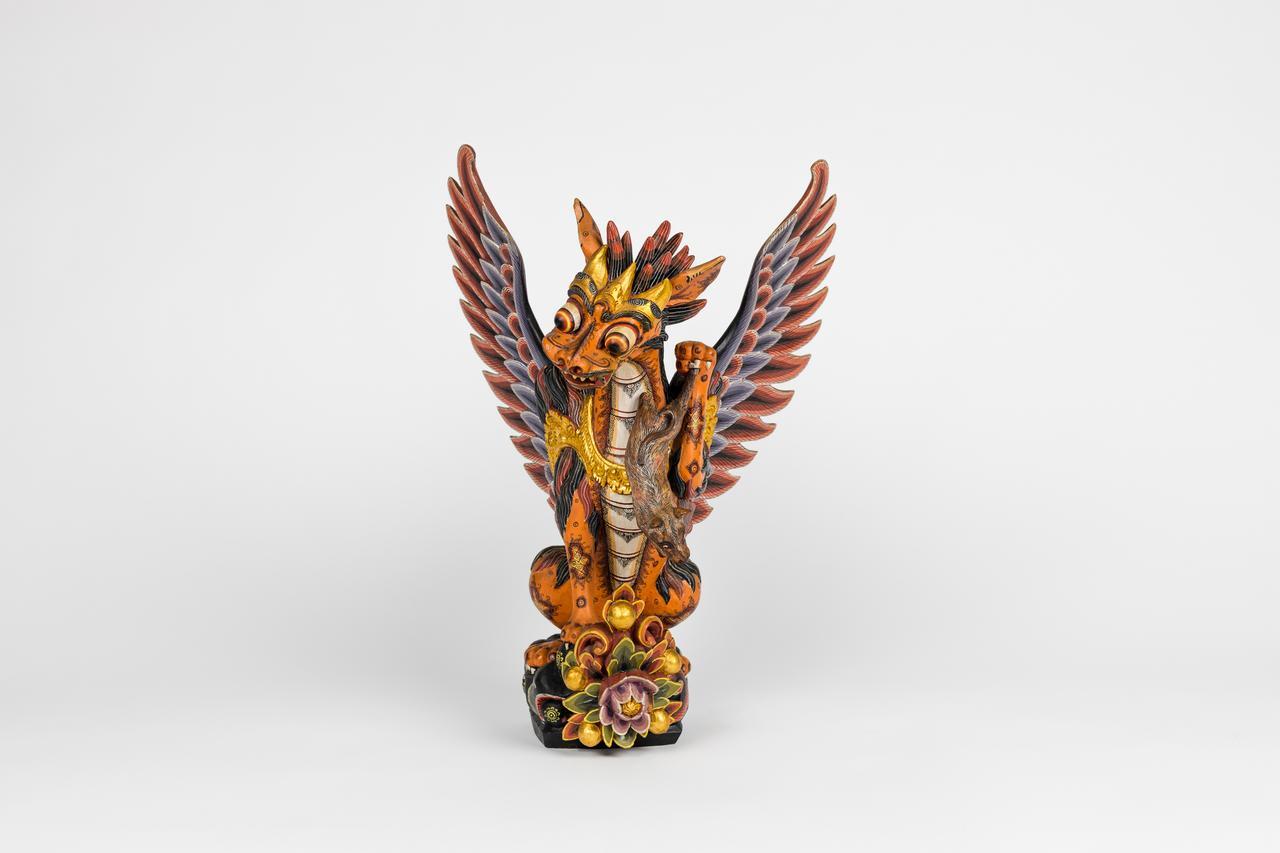
Grande poupée - Doll style Kachina - 1990-2000 - U.S.


Opens 11:00
Starting bid
€ 1
Add to your favourites to get an alert when the auction starts.

Catawiki Buyer Protection
Your payment’s safe with us until you receive your object.View details
Trustpilot 4.4 | 127726 reviews
Rated Excellent on Trustpilot.
Description from the seller
Large doll in the Kachina style,
Linked to dances and spiritual ceremonies, Kachina dolls are reminders of Hopi traditions in North America.
Tall at a maximum of about fifty centimeters, made from cottonwood, sometimes adorned with feathers and colored blue, white or yellow: the Kachina dolls look quite mysterious to the lay observer. “They come from the Hopi tribe in northern Arizona, and they are used to teach non-initiates, mainly the youngest, the dances and ceremonies that shape daily life. A bit like children's books,” These rituals involving the Kachinas take place between the winter solstice and the summer solstice, and there are more than thirty during which the spirits are embodied by masked and costumed dancers in the image of the Kachinas.
An art that dates back to the 14th century
Historically, the existence of Kachinas has been attested since around the 14th century, but the most interesting period is between the 1880s and 1920s. The first Kachinas are flat and sparsely decorated, without legs, and the craft has become finer and more sophisticated over the years.
Before those years, the Kachina dolls represented both the spirits of Hopi mythology and their functions. Each detail has its importance: on the Palhik Mana, two ears of corn symbolize good harvests, encouraged by rain that adorns the cheeks in the form of red chevrons. The Sikya Heheya, which also goes by the name Yellow Ogre, is known for threatening children and misbehaving until the ogress, his wife, scolds him. The Mud Head Kachina is happier since it is a clown representation asking little girls to crush corn to taste the meal. And the Püch Tihu is intended for young women who wish to have children.
Country of origin
United States
Region
Dakota
Height
45 cm
Weight in grams
1050
Shipping Colissimo
Large doll in the Kachina style,
Linked to dances and spiritual ceremonies, Kachina dolls are reminders of Hopi traditions in North America.
Tall at a maximum of about fifty centimeters, made from cottonwood, sometimes adorned with feathers and colored blue, white or yellow: the Kachina dolls look quite mysterious to the lay observer. “They come from the Hopi tribe in northern Arizona, and they are used to teach non-initiates, mainly the youngest, the dances and ceremonies that shape daily life. A bit like children's books,” These rituals involving the Kachinas take place between the winter solstice and the summer solstice, and there are more than thirty during which the spirits are embodied by masked and costumed dancers in the image of the Kachinas.
An art that dates back to the 14th century
Historically, the existence of Kachinas has been attested since around the 14th century, but the most interesting period is between the 1880s and 1920s. The first Kachinas are flat and sparsely decorated, without legs, and the craft has become finer and more sophisticated over the years.
Before those years, the Kachina dolls represented both the spirits of Hopi mythology and their functions. Each detail has its importance: on the Palhik Mana, two ears of corn symbolize good harvests, encouraged by rain that adorns the cheeks in the form of red chevrons. The Sikya Heheya, which also goes by the name Yellow Ogre, is known for threatening children and misbehaving until the ogress, his wife, scolds him. The Mud Head Kachina is happier since it is a clown representation asking little girls to crush corn to taste the meal. And the Püch Tihu is intended for young women who wish to have children.
Country of origin
United States
Region
Dakota
Height
45 cm
Weight in grams
1050
Shipping Colissimo
Details
Era
1900-2000
Brand
Grande poupée
Model/ Name
style Kachina
Period
1990-2000
Country of Origin
U.S.
Condition
Good
Packaging
In replacement packaging
Material
Wood
Width
10 cm
Height
45 cm
Depth
8 cm
Sold by