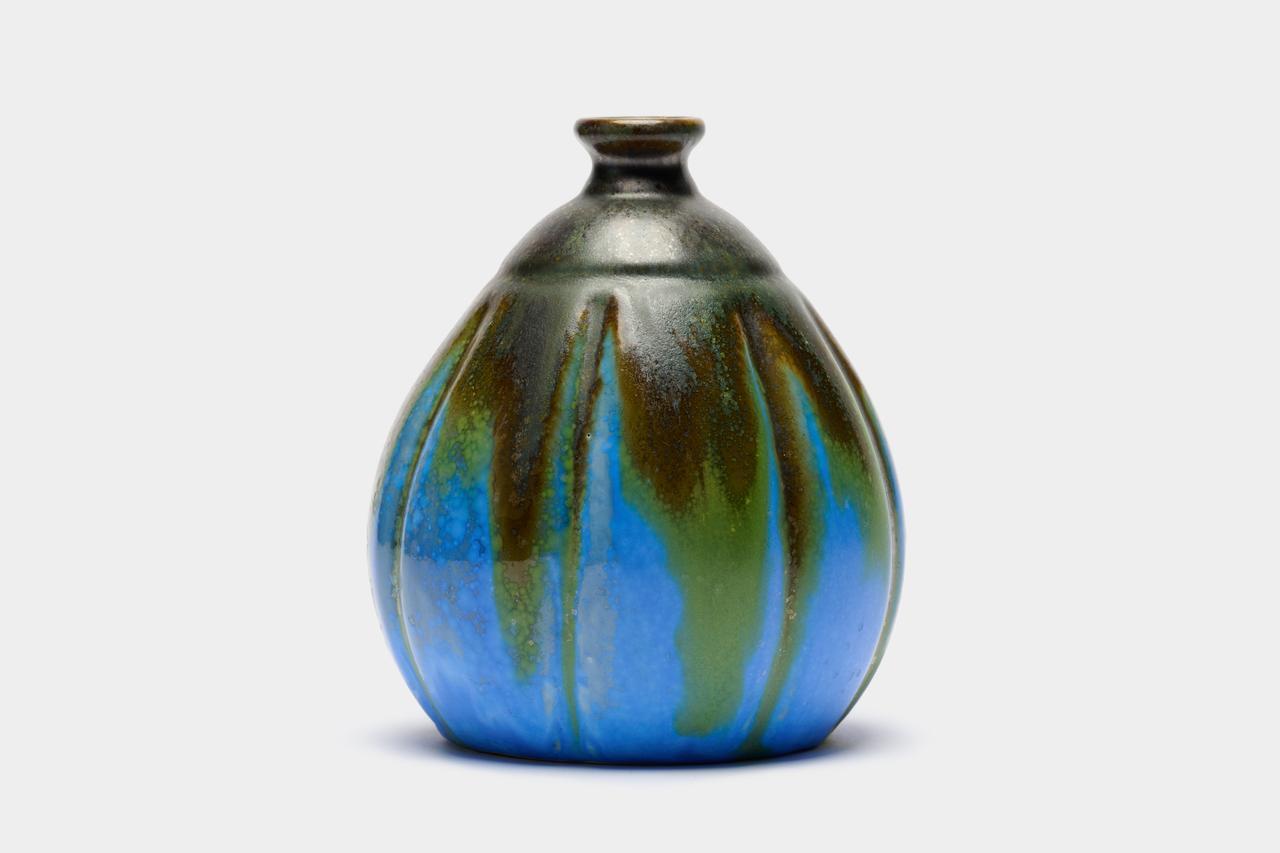
Vase - Porcelain


09
days
01
hour
04
minutes
00
seconds
Starting bid
€ 1
Reserve price not met

Expert
Selected by Florentin Brunz Gaborieau
Holds a master’s in Art History, specialising in Second French Empire and Dutch Golden Age.
Estimate € 400 - € 450
No bids placed
Catawiki Buyer Protection
Your payment’s safe with us until you receive your object.View details
Trustpilot 4.4 | 126370 reviews
Rated Excellent on Trustpilot.
Antique 19th‑century porcelain vase from Italy, 50 cm high and 30 x 30 cm, hand‑painted with gilding and figures of dancers and Maenads on a black background; in good condition with small signs of aging.
AI-assisted summary
Description from the seller
Antique Large Porcelain Vase from the 19th century with a height of 50 cm
The representations are hand-painted, gilding with representations that develop circularly across the entire surface of the neck of the vase.
Naples, mid-late 19th century in French porcelain painted in Naples
The body with a black background has reserves between columns with colored figures of dancers and maenads!
In Greek mythology, the Maenads are the nymphs who are presented as companions and attendants of the god Dionysus.
The theory of the maenads and dancers comes directly from the iconographic cycle of the frescoes, on a black background, of the villa of Cicero in Pompeii, which is now preserved in the halls of the National Archaeological Museum of Naples.
A similar vase is in the Capodimonte Museum, the pinnacle of the famous "giardiniera" decorated by Raffaele Giovine, between 1828 and 1831.
The vase is an authentic 19th century antique
Height approx. 50cm
Width appox. 30cm max
Attention:
We are sorry to USA customers but temporarily Hellenic post cant ship to USA
Apologize about it
Antique Large Porcelain Vase from the 19th century with a height of 50 cm
The representations are hand-painted, gilding with representations that develop circularly across the entire surface of the neck of the vase.
Naples, mid-late 19th century in French porcelain painted in Naples
The body with a black background has reserves between columns with colored figures of dancers and maenads!
In Greek mythology, the Maenads are the nymphs who are presented as companions and attendants of the god Dionysus.
The theory of the maenads and dancers comes directly from the iconographic cycle of the frescoes, on a black background, of the villa of Cicero in Pompeii, which is now preserved in the halls of the National Archaeological Museum of Naples.
A similar vase is in the Capodimonte Museum, the pinnacle of the famous "giardiniera" decorated by Raffaele Giovine, between 1828 and 1831.
The vase is an authentic 19th century antique
Height approx. 50cm
Width appox. 30cm max
Attention:
We are sorry to USA customers but temporarily Hellenic post cant ship to USA
Apologize about it
Details
Era
1900-2000
Country of Origin
Italy
Material
Porcelain
Condition
Good condition - used with small signs of aging & blemishes
Height
50 cm
Width
30 cm
Depth
30 cm
Sold by