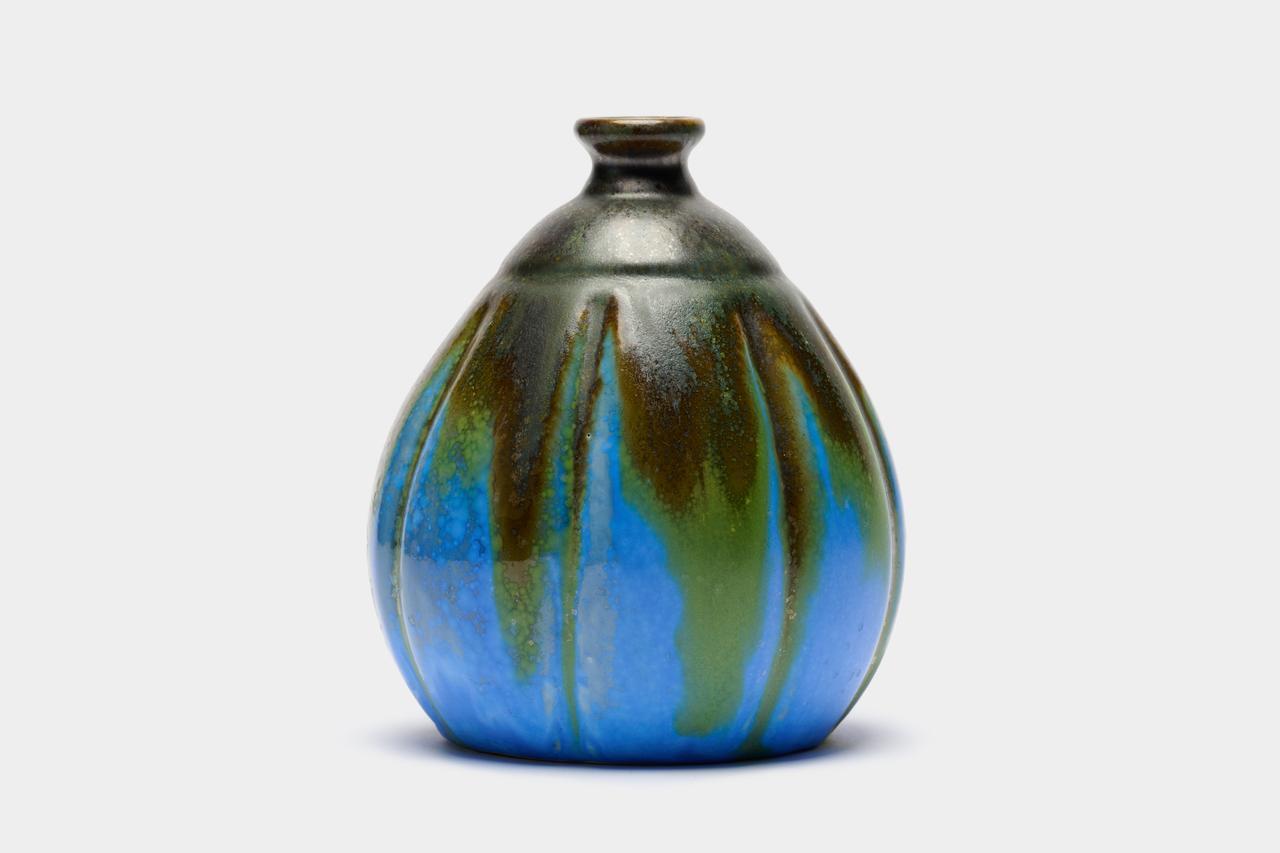
Vase - Softpaste porcelain - JP Vintage Porcelain Vase


03
days
16
hours
36
minutes
19
seconds
Current bid
€ 34
No reserve price

Expert
Selected by Florentin Brunz Gaborieau
Holds a master’s in Art History, specialising in Second French Empire and Dutch Golden Age.
Estimate € 170 - € 210
16 other people are watching this object
 Bidder 8227 Bidder 8227 | €34 | |
|---|---|---|
 Bidder 7453 Bidder 7453 | €29 | |
 Bidder 9364 Bidder 9364 | €24 | |
Catawiki Buyer Protection
Your payment’s safe with us until you receive your object.View details
Trustpilot 4.4 | 126842 reviews
Rated Excellent on Trustpilot.
Japanese Kutani porcelain vase dating to circa 1910–1920, with a bulbous baluster shape in white softpaste porcelain, multicolour overglaze depicting the Seven Lucky Gods, gold rim, dimensions 25 cm W × 26 cm H × 25 cm D (Ø 80 cm), weight 3.7 kg, in unused/as new condition.
AI-assisted summary
Description from the seller
This is a Japanese Kutani ware porcelain vase, a traditional craft from the Ishikawa Prefecture, known for its vibrant overglaze enamel colors. The specific design features the Seven Lucky Gods (Shichifukujin), a popular Japanese motif representing good fortune.
Detailed Description
Origin and Style: The vase is a style of Japanese porcelain, likely from the Meiji era (1868-1912) or later revival periods, a time when Kutani ware was heavily produced for export. The painting style, which uses a variety of colors and fine black line work to detail human figures, aligns with typical Kutani decoration styles.
Design and Motif: The central motif is a detailed, hand-painted depiction of the seven deities associated with good fortune in Japan: Ebisu, Daikoku-ten, Bishamon-ten, Benzai-ten, Fuku-roku-ju, Juro-jin, and Hotei-son. These figures are painted in bold, three-dimensional-looking strokes using the classic Kutani five-color (gosai) palette of red, green, yellow, purple, and dark blue. One figure (center-left) is depicted playing a stringed instrument (biwa), and a small pagoda structure is visible in the background (right).
Vase Shape and Finish: The vase has a classic bulbous, baluster shape, with a narrowed neck and a gold-colored rim at the mouth and the foot. The porcelain body is white with a glossy finish. Faint evidence of a crackle glaze (kannyu) may be present in some examples, adding to the texture. A reddish-brown band encircles the base.
Marking: Kutani ware pieces often have marks on the base, typically hand-painted in red script, indicating the region ("Kutani"), a kiln name, or an artist's signature. The specific mark would need to be visually inspected to provide more precise details on the maker or era.
Dear customer. Kindly notice. All packages we ship are shipped without any shiping charges. Since it is shipped from Japan via Japan Post. It takes at least 12 to 17 days. If you need to receive your package sooner, please contact us after your successful bid. We will ship it sooner as per your request. Please note that an additional fee will be charged for that. Thank you for your understanding.
This is a Japanese Kutani ware porcelain vase, a traditional craft from the Ishikawa Prefecture, known for its vibrant overglaze enamel colors. The specific design features the Seven Lucky Gods (Shichifukujin), a popular Japanese motif representing good fortune.
Detailed Description
Origin and Style: The vase is a style of Japanese porcelain, likely from the Meiji era (1868-1912) or later revival periods, a time when Kutani ware was heavily produced for export. The painting style, which uses a variety of colors and fine black line work to detail human figures, aligns with typical Kutani decoration styles.
Design and Motif: The central motif is a detailed, hand-painted depiction of the seven deities associated with good fortune in Japan: Ebisu, Daikoku-ten, Bishamon-ten, Benzai-ten, Fuku-roku-ju, Juro-jin, and Hotei-son. These figures are painted in bold, three-dimensional-looking strokes using the classic Kutani five-color (gosai) palette of red, green, yellow, purple, and dark blue. One figure (center-left) is depicted playing a stringed instrument (biwa), and a small pagoda structure is visible in the background (right).
Vase Shape and Finish: The vase has a classic bulbous, baluster shape, with a narrowed neck and a gold-colored rim at the mouth and the foot. The porcelain body is white with a glossy finish. Faint evidence of a crackle glaze (kannyu) may be present in some examples, adding to the texture. A reddish-brown band encircles the base.
Marking: Kutani ware pieces often have marks on the base, typically hand-painted in red script, indicating the region ("Kutani"), a kiln name, or an artist's signature. The specific mark would need to be visually inspected to provide more precise details on the maker or era.
Dear customer. Kindly notice. All packages we ship are shipped without any shiping charges. Since it is shipped from Japan via Japan Post. It takes at least 12 to 17 days. If you need to receive your package sooner, please contact us after your successful bid. We will ship it sooner as per your request. Please note that an additional fee will be charged for that. Thank you for your understanding.
Details
Specific region of origin
Japan
Porcelain type
Softpaste porcelain
Ceramics type
Porcelain
Style subtype
Arts & Crafts
Weight
3.7 kg
Era
1900-2000
Title additional information
JP Vintage Porcelain Vase
No. of items
1
Country of Origin
Japan
Material
Ceramic, Porcelain
Style
Antique
Colour
Multicolour
Condition
As new - unused
Height
26 cm
Width
25 cm
Depth
25 cm
Diameter
80 cm
Estimated Period
1910-1920
Sold by