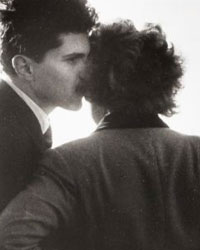
Anatol Weclawski - Warsovie 1934


05
days
17
hours
13
minutes
26
seconds
Current bid
€ 1
Reserve price not met

Expert
Selected by Kai Brückner
Over 35 years' experience; former gallery owner and Museum Folkwang curator.
Estimate € 1,200 - € 1,500
2 other people are watching this object
 Bidder 3684 Bidder 3684 | €1 |
|---|
Catawiki Buyer Protection
Your payment’s safe with us until you receive your object.View details
Trustpilot 4.4 | 126498 reviews
Rated Excellent on Trustpilot.
Description from the seller
Print on baryta photographic paper, signed and numbered 4/30.
Antoni Anatol Węcławski
(1891, Bialystok - 1985, Warsaw)
An outstanding Polish nocturnal photographer, pedagogue, collector. A leading figure of pictorialism in the interwar period in Poland. He came from the declassed szlachta (noble) family of Wadwicz coat of arms, from the Kresy. A graduate of the Russian officer school (1917), a professional soldier of the Russian and Polish armies, participant in three wars. In the mid-1920s, as a reserve lieutenant, employed daily as a bank clerk at the Warszawsko–Towarzystwo Pożyczkowe, he began to develop his youthful passions. In 1925 he took one of the first photography courses for beginners organized in Warsaw by the Polish Society of Photo Enthusiasts in Warsaw (renamed in 1931 to the Polish Photographic Society), and then trained in noble techniques. Initially planning to become a professional photographer, in 1926 for several months he ran his own seasonal studio in Druskieniki (documenting among other things previously unknown, official and private scenes from Marshal Józef Piłsudski’s stay at the spa). In the following years he pursued artistic photography and became intensively involved in Polish and international exhibitions. From 1929 to 1933 and 1935–1937 he participated in dozens of collective exhibitions in Warsaw, Poland, and abroad. He was the laureate of many decorations and prizes in international and national competitions (including: IV Salon Internacional de Fotografia de Zaragoza, 1930; II International Salon, Sopron, Hungary, 1932; in 1933 for “Light Effects” he won: first prize at the Pomeranian Art of Photography Exhibition in Grudziądz and a bronze medal at the International Salon in Kosice; and in 1937 in the competition for “The Beauty of Warsaw” – the prize of the Minister of Religious Denominations and Public Instruction). In 1932, after a series of successes in the field of photography, he was invited to the prestigious circle of Poland’s most eminent photographers, the Polish Photoclub. Independently of his artistic work, he collaborated with the monthly “Fotograf Polski,” “Miesięcznik Fotograficzny,” “Polski Przegląd Fotograficzny,” and “Moją Leicą.” Their pages also frequently published Węclawski’s award-winning photographs. During World War II, he stayed in German POW camps. In the Prenzlau camp he gave photography lectures to his fellow prisoners in misery. He was one of the founding members of the postwar Union of Polish Photographers (ZPAF, 1947). From 1946 to 1961 he taught phototechnics and photography knowledge in phototechnical schools at Spokojna 13 Street in Warsaw. He also conducted lectures, talks, and courses on photography: in the 1930s at the Polish Society of Photographers; after the war at the Scout House and as head of the Photography Section of MDK “Ogniisko” on Kole Street in Warsaw, and as a retired teacher at the Post-Secondary Photography School in Warsaw.
A. Węcławski photographed for most of his life, but his fame came primarily from the poetic, melancholic, undersaid nocturnes created during his most prolific period (in the years 1926–1935). During that time he produced his most valuable photographs (e.g., Stone Steps. Nocturne; Entrance to the viaduct; Effects of lights; Shadows of the bridge on the Vistula; Draga on the Vistula at night; Motif from the Saski Garden at night). Besides night scenes, he also captured: portraits, nudes, still lifes, genre scenes, folkloric, ethnographic, nautical, urban landscapes (including from: Kazimierz nad Wisłą, Inowrocław, Krzemieniec, Gdańsk, Hel), among which stand out views of Warsaw's Old Town (e.g., Stone Steps; Kanonja; On the Old Town). Although he is categorized within the Polish pictorialism movement, he also captured scenes framed in a thoroughly modern manner, marked by the influence of constructivism, with a bold diagonal arrangement of lines and an unconventional perspective (e.g., Sunny Dam; Cauliflowers, cauliflowers…).
Print on baryta photographic paper, signed and numbered 4/30.
Antoni Anatol Węcławski
(1891, Bialystok - 1985, Warsaw)
An outstanding Polish nocturnal photographer, pedagogue, collector. A leading figure of pictorialism in the interwar period in Poland. He came from the declassed szlachta (noble) family of Wadwicz coat of arms, from the Kresy. A graduate of the Russian officer school (1917), a professional soldier of the Russian and Polish armies, participant in three wars. In the mid-1920s, as a reserve lieutenant, employed daily as a bank clerk at the Warszawsko–Towarzystwo Pożyczkowe, he began to develop his youthful passions. In 1925 he took one of the first photography courses for beginners organized in Warsaw by the Polish Society of Photo Enthusiasts in Warsaw (renamed in 1931 to the Polish Photographic Society), and then trained in noble techniques. Initially planning to become a professional photographer, in 1926 for several months he ran his own seasonal studio in Druskieniki (documenting among other things previously unknown, official and private scenes from Marshal Józef Piłsudski’s stay at the spa). In the following years he pursued artistic photography and became intensively involved in Polish and international exhibitions. From 1929 to 1933 and 1935–1937 he participated in dozens of collective exhibitions in Warsaw, Poland, and abroad. He was the laureate of many decorations and prizes in international and national competitions (including: IV Salon Internacional de Fotografia de Zaragoza, 1930; II International Salon, Sopron, Hungary, 1932; in 1933 for “Light Effects” he won: first prize at the Pomeranian Art of Photography Exhibition in Grudziądz and a bronze medal at the International Salon in Kosice; and in 1937 in the competition for “The Beauty of Warsaw” – the prize of the Minister of Religious Denominations and Public Instruction). In 1932, after a series of successes in the field of photography, he was invited to the prestigious circle of Poland’s most eminent photographers, the Polish Photoclub. Independently of his artistic work, he collaborated with the monthly “Fotograf Polski,” “Miesięcznik Fotograficzny,” “Polski Przegląd Fotograficzny,” and “Moją Leicą.” Their pages also frequently published Węclawski’s award-winning photographs. During World War II, he stayed in German POW camps. In the Prenzlau camp he gave photography lectures to his fellow prisoners in misery. He was one of the founding members of the postwar Union of Polish Photographers (ZPAF, 1947). From 1946 to 1961 he taught phototechnics and photography knowledge in phototechnical schools at Spokojna 13 Street in Warsaw. He also conducted lectures, talks, and courses on photography: in the 1930s at the Polish Society of Photographers; after the war at the Scout House and as head of the Photography Section of MDK “Ogniisko” on Kole Street in Warsaw, and as a retired teacher at the Post-Secondary Photography School in Warsaw.
A. Węcławski photographed for most of his life, but his fame came primarily from the poetic, melancholic, undersaid nocturnes created during his most prolific period (in the years 1926–1935). During that time he produced his most valuable photographs (e.g., Stone Steps. Nocturne; Entrance to the viaduct; Effects of lights; Shadows of the bridge on the Vistula; Draga on the Vistula at night; Motif from the Saski Garden at night). Besides night scenes, he also captured: portraits, nudes, still lifes, genre scenes, folkloric, ethnographic, nautical, urban landscapes (including from: Kazimierz nad Wisłą, Inowrocław, Krzemieniec, Gdańsk, Hel), among which stand out views of Warsaw's Old Town (e.g., Stone Steps; Kanonja; On the Old Town). Although he is categorized within the Polish pictorialism movement, he also captured scenes framed in a thoroughly modern manner, marked by the influence of constructivism, with a bold diagonal arrangement of lines and an unconventional perspective (e.g., Sunny Dam; Cauliflowers, cauliflowers…).
Details
Artist
Anatol Weclawski
Title of artwork
Warsovie 1934
Condition
Extremely fine
Technique
C-Print
Height
50 cm
Edition
April 30
Width
36 cm
Signature
Signed
Sold by