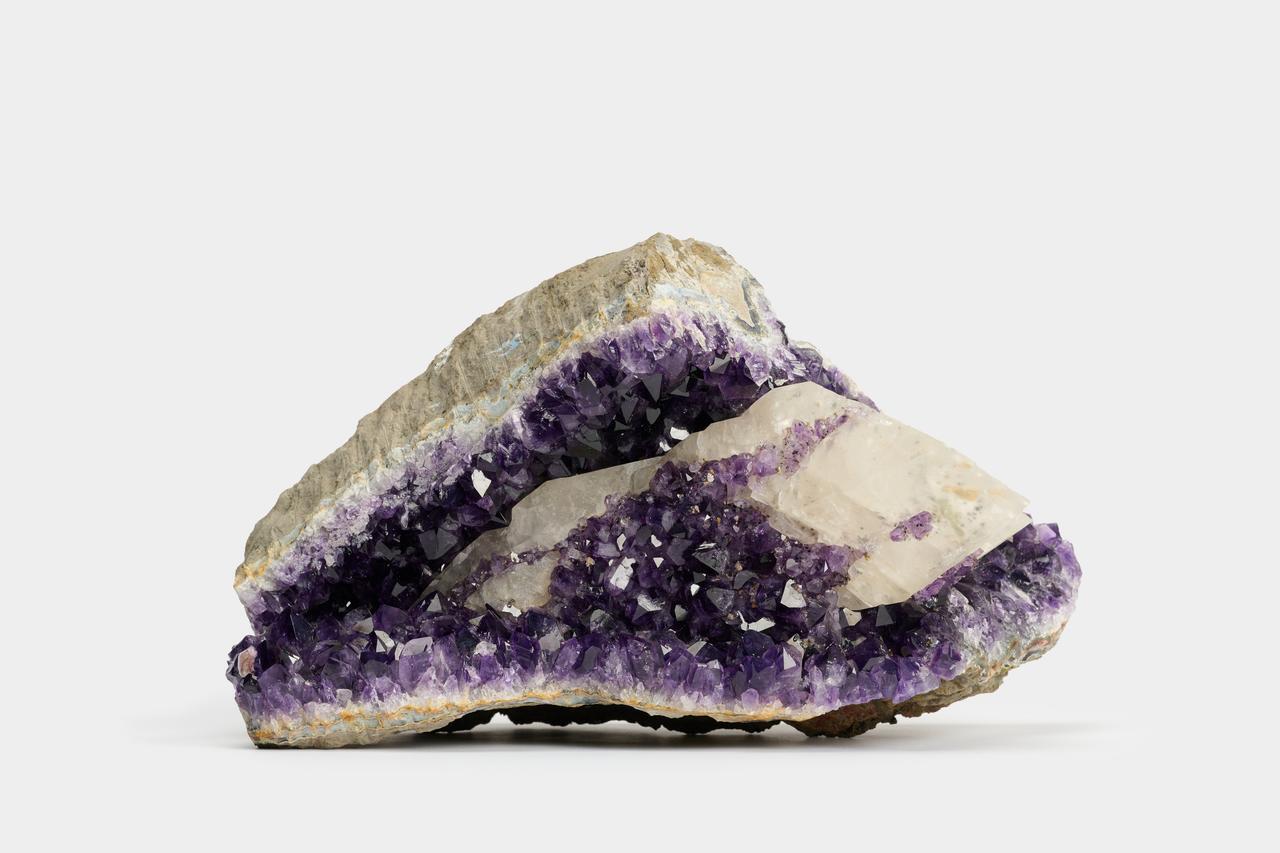
Chelyabinsk meteorite Chondrite Meteorite - Width: 3 cm - 14 g - (1)


05
days
19
hours
35
minutes
15
seconds
Current bid
€ 10
Reserve price not met

Expert
Selected by Francesco Moser
Over 20 years collecting meteorites; former museum curator and experienced restorer.
Estimate € 300 - € 350
6 other people are watching this object
 Bidder 2357 Bidder 2357 | €10 |
|---|
Catawiki Buyer Protection
Your payment’s safe with us until you receive your object.View details
Trustpilot 4.4 | 127145 reviews
Rated Excellent on Trustpilot.
Meteorite Chelyabinsk, a condrite meteorite from Chelyabinsk, Russia, weighing 14 g and 3 cm wide.
AI-assisted summary
Description from the seller
Nice piece of the Chelyabinsk meteorite, and now we’re at its anniversary, since it fell on February 15, 2013.
An asteroid about 20 meters wide entered Earth's atmosphere over Russia at a speed of nearly 19 kilometers per second.
Unlike other space objects, this one was not detected in advance because it was coming from the direction of the Sun.
It disintegrated at an altitude of about 30 km, releasing energy equivalent to about 500 kilotons of TNT (roughly 30 times the power of the Hiroshima bomb).
The shock wave shattered windows in thousands of buildings across six different cities. About 1,500 people were injured, mainly from cuts caused by glass that flew through the air when people leaned out of their windows to see what that very bright flash was.
The discovery was at Lake Chebarkul.
Most of the meteorite turned to dust, and many fragments like the one we have here, but a giant fragment of about 600 kg managed to survive and fell into the frozen Chebarkul Lake, leaving a seven-meter hole in the ice. Months later, scientists managed to recover it from the bottom.
Why was it so important for science?
Chelyabinsk was a 'wake-up call'. Thanks to thousands of videos recorded by security cameras and dashcams (very common in Russia), scientists were able to reconstruct its trajectory with unprecedented precision.
This spurred the creation of better planetary defense systems to monitor Near-Earth Objects (NEOs).
I am passionate about meteorites and astronomy. I’m excited to offer this piece.
Best regards and thanks.
Nice piece of the Chelyabinsk meteorite, and now we’re at its anniversary, since it fell on February 15, 2013.
An asteroid about 20 meters wide entered Earth's atmosphere over Russia at a speed of nearly 19 kilometers per second.
Unlike other space objects, this one was not detected in advance because it was coming from the direction of the Sun.
It disintegrated at an altitude of about 30 km, releasing energy equivalent to about 500 kilotons of TNT (roughly 30 times the power of the Hiroshima bomb).
The shock wave shattered windows in thousands of buildings across six different cities. About 1,500 people were injured, mainly from cuts caused by glass that flew through the air when people leaned out of their windows to see what that very bright flash was.
The discovery was at Lake Chebarkul.
Most of the meteorite turned to dust, and many fragments like the one we have here, but a giant fragment of about 600 kg managed to survive and fell into the frozen Chebarkul Lake, leaving a seven-meter hole in the ice. Months later, scientists managed to recover it from the bottom.
Why was it so important for science?
Chelyabinsk was a 'wake-up call'. Thanks to thousands of videos recorded by security cameras and dashcams (very common in Russia), scientists were able to reconstruct its trajectory with unprecedented precision.
This spurred the creation of better planetary defense systems to monitor Near-Earth Objects (NEOs).
I am passionate about meteorites and astronomy. I’m excited to offer this piece.
Best regards and thanks.
Details
Number of items
1
Name of meteorite
Chelyabinsk meteorite
Type of meteorite
Chondrite Meteorite
Weight
14 g
Origin (Region/ City)
Chelyabinsk
Country of Origin
Russia
Width
3 cm
Sold by