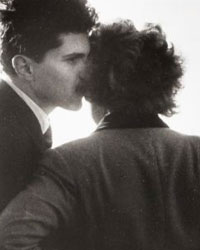
Tommaso Grella - Castore e Polluce


05
days
17
hours
23
minutes
40
seconds
Current bid
€ 2
No reserve price

Expert
Selected by Kai Brückner
Over 35 years' experience; former gallery owner and Museum Folkwang curator.
Estimate € 200 - € 250
5 other people are watching this object
 Bidder 4869 Bidder 4869 | €2 | |
|---|---|---|
| Bidder 0953 | €1 |
Catawiki Buyer Protection
Your payment’s safe with us until you receive your object.View details
Trustpilot 4.4 | 127342 reviews
Rated Excellent on Trustpilot.
Description from the seller
-Series Title: Deus ex Machina 2015-2024.
-Artwork Title: Castore e Polluce.
-Prints in a limited edition of only ten, numbered and signed on the back by the artist.
-The work is ready to hang on the wall.
-Print size: 40x50 cm, satin finish.
-Frame size: 42x52 cm, 2 cm deep, white.
-Photographic print in perfect condition.
-Personal technique.
The work in question was born from a need to deal with the topic of "divinity".
The gods and their manifestations, belonging both to the Greek pantheon and to the Christian and Middle Eastern tradition, have not completely abandoned modern man; in a more evanescent way, they still show themselves to us, they communicate through myths and legends that remain ever-current, they are still part of our profound interiority.
The simulacra photographed by me, with this technique that recalls the dawn of photography, well represent the idea, emerging as archetypes from our unconscious.
Tommaso Grella was born in Roccapiemonte on October 29, 1973. From a very young age he devoted himself to author and reportage photography.
His works, both photographic and painterly, have been exhibited in various shows at the Caritas Diocesan of Salerno.
founder of the association "Bianco Fotografico" in 1996 with which he presents various events.
He designs together with others "Estate in Villa", the 1997 series "Quetzalcóatl", in 1998 "Visione Zen" and also "On Voyage" inspired by the great American photographer Lee Friedlander.
The 1998 work "Dream" is instead a homage to cinema; among others it is influenced by the works of Michelangelo Antonioni, François Truffaut, Federico Fellini, Terrence Malick, Quentin Tarantino, Francis Ford Coppola and Bernardo Bertolucci.
He collaborates as a photographer for the magazine "Sposa Magazine".
Other works to follow draw inspiration from the greats of world photography: Sarah Moon, Masao Yamamoto, Peter Lindbergh, Ralph Gibson, Joel-Peter Witkin, Josef Koudelka, Mimmo Jodice.
He continues with various solo shows and in 1999 opens a studio gallery in the province of Salerno, focusing on ceremonial photo reportage; he publishes various art calendars for the territory.
He dedicates himself successfully to advertising and industrial photography.
Working digitally and in other sector magazines, he publishes his photos.
He develops an interest in web design and in the new opportunities offered by the web, combining classic photographic techniques with cutting-edge software.
Over the years other researches follow in the portfolio section; next to the title of the work there is the series to which it belongs.
The central pivot of his production is to capture non-trivial images, capable of awakening consciousness with themes such as: reflection on the now-silent relationship with divinity, nature that is within us but forgotten, daily affections diminished, the alien gaze on what one wants to define as reality.
immersion in a dreamlike world can only do good to our being, lobotomized by ethical and economic values that do not belong to us, opening doors to other realities mistreated by modern society, but worthy of attention and dignity.
-Series Title: Deus ex Machina 2015-2024.
-Artwork Title: Castore e Polluce.
-Prints in a limited edition of only ten, numbered and signed on the back by the artist.
-The work is ready to hang on the wall.
-Print size: 40x50 cm, satin finish.
-Frame size: 42x52 cm, 2 cm deep, white.
-Photographic print in perfect condition.
-Personal technique.
The work in question was born from a need to deal with the topic of "divinity".
The gods and their manifestations, belonging both to the Greek pantheon and to the Christian and Middle Eastern tradition, have not completely abandoned modern man; in a more evanescent way, they still show themselves to us, they communicate through myths and legends that remain ever-current, they are still part of our profound interiority.
The simulacra photographed by me, with this technique that recalls the dawn of photography, well represent the idea, emerging as archetypes from our unconscious.
Tommaso Grella was born in Roccapiemonte on October 29, 1973. From a very young age he devoted himself to author and reportage photography.
His works, both photographic and painterly, have been exhibited in various shows at the Caritas Diocesan of Salerno.
founder of the association "Bianco Fotografico" in 1996 with which he presents various events.
He designs together with others "Estate in Villa", the 1997 series "Quetzalcóatl", in 1998 "Visione Zen" and also "On Voyage" inspired by the great American photographer Lee Friedlander.
The 1998 work "Dream" is instead a homage to cinema; among others it is influenced by the works of Michelangelo Antonioni, François Truffaut, Federico Fellini, Terrence Malick, Quentin Tarantino, Francis Ford Coppola and Bernardo Bertolucci.
He collaborates as a photographer for the magazine "Sposa Magazine".
Other works to follow draw inspiration from the greats of world photography: Sarah Moon, Masao Yamamoto, Peter Lindbergh, Ralph Gibson, Joel-Peter Witkin, Josef Koudelka, Mimmo Jodice.
He continues with various solo shows and in 1999 opens a studio gallery in the province of Salerno, focusing on ceremonial photo reportage; he publishes various art calendars for the territory.
He dedicates himself successfully to advertising and industrial photography.
Working digitally and in other sector magazines, he publishes his photos.
He develops an interest in web design and in the new opportunities offered by the web, combining classic photographic techniques with cutting-edge software.
Over the years other researches follow in the portfolio section; next to the title of the work there is the series to which it belongs.
The central pivot of his production is to capture non-trivial images, capable of awakening consciousness with themes such as: reflection on the now-silent relationship with divinity, nature that is within us but forgotten, daily affections diminished, the alien gaze on what one wants to define as reality.
immersion in a dreamlike world can only do good to our being, lobotomized by ethical and economic values that do not belong to us, opening doors to other realities mistreated by modern society, but worthy of attention and dignity.
Details
Artist
Tommaso Grella
Sold by
Direct from the artist
Title of artwork
Castore e Polluce
Condition
Extremely fine
Technique
Digital print
Height
42 cm
Edition
1/10
Width
52 cm
Signature
Hand signed
Genre
Fine art photography
Sold by