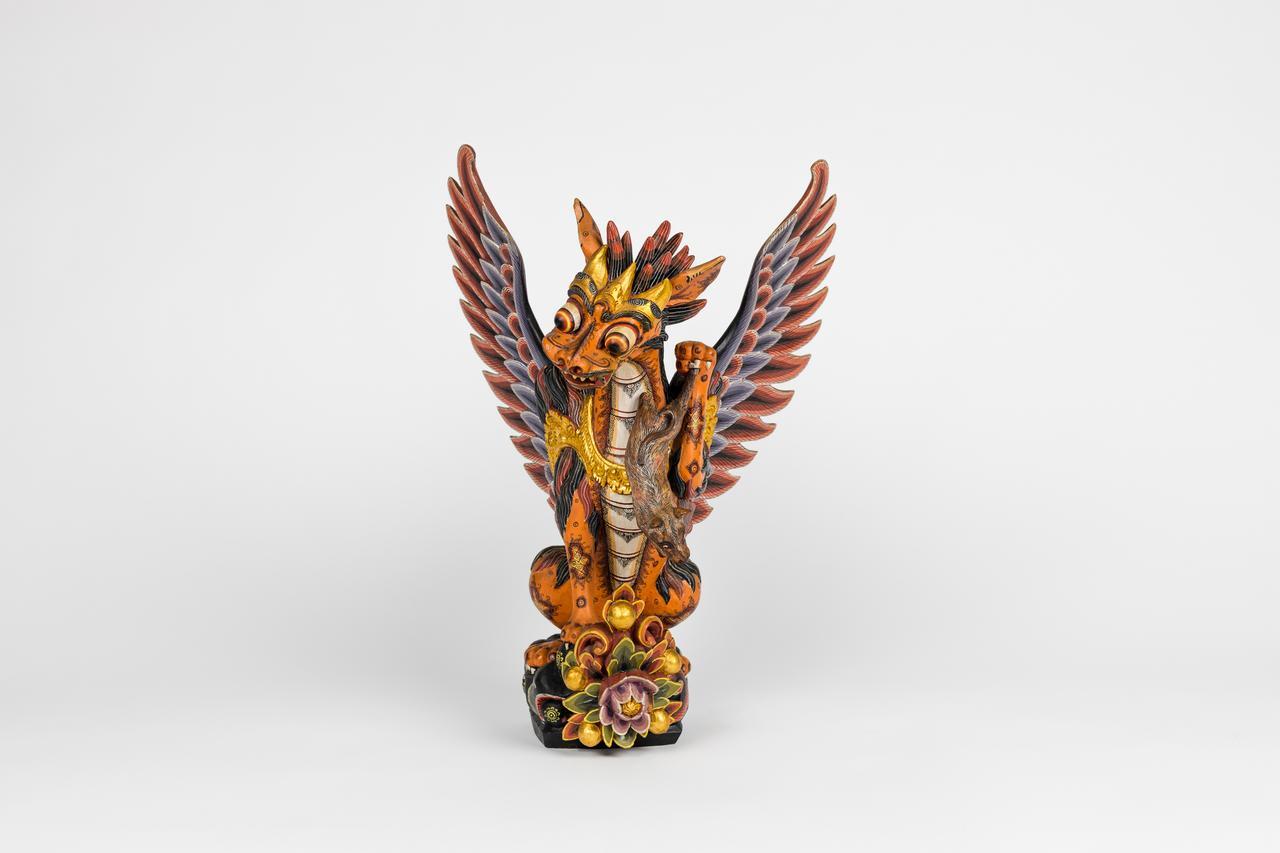
Shamanic charm - Nanai - Siberia


02
days
20
hours
47
minutes
41
seconds
Starting bid
€ 1
Reserve price not met

Expert
Selected by Surya Rutten
Has over 25 years' experience in Asian art and owned an art gallery.
Estimate € 220 - € 250
No bids placed
Catawiki Buyer Protection
Your payment’s safe with us until you receive your object.View details
Trustpilot 4.4 | 129594 reviews
Rated Excellent on Trustpilot.
Shamanic charm from Siberia, mid-20th century, 22 cm high by 1 cm wide by 1 cm deep, weighing 1 g, in excellent condition with original authenticity from a private collection.
AI-assisted summary
Description from the seller
In the vast expanses of the Great North — from Siberia to Alaska, through Greenland and the Inuit territories of Canada — shamanic practices and the use of masks play a central role in spirituality and community life. These traditions, deeply rooted in the relationship with nature and spirits, reflect a worldview where humans, animals and invisible forces are closely linked.
Shamanism: a link between worlds
The shaman, a key figure in these societies, acts as an intermediary between the living and the spirits. Through rituals, songs, drums and trances, he journeys in altered states of consciousness to heal illnesses, calm the spirits or ensure hunting success. In Siberia, for example, the Yakut or Evenk shamans wear costumes adorned with symbols and accessories such as reindeer-skin drums to evoke the spirits. Among the Inuit, the angakkuq (shaman) plays a similar role, often in relation to Sedna, the sea goddess, to guarantee the abundance of marine resources.
Masks: objects of transformation and protection
Masks, carved from wood, ivory or bone, are powerful ritual tools. They represent animal spirits (such as the bear, the raven or the whale), ancestors, or supernatural entities. Worn during seasonal ceremonies or initiation rites, they allow the wearer — often the shaman — to embody these forces and communicate with them.
- In Alaska and among the Yupik, yua masks are used during winter celebrations to honor the hunting spirits and ensure the return of game.
- In Siberia, masks of the Chukotkans or Koriaks are used to drive away bad spirits or to celebrate the cycles of nature.
- Among the Inuit, certain masks, such as those of the drum dance, symbolize the connection with sea spirits and the protection of hunters.
A living heritage
Although these practices were threatened by colonization and religious missions, they are experiencing a revival today. Contemporary artists of the Great North reinterpret traditional masks, while communities reclaim shamanic rituals to preserve their identity and their bond with the land.
Presentation of our expertise house
Based in Belgium, our house of expertise and sale specializes in African art and ethnography. A leading seller on Catawiki for over 8 years, we enjoy a solid reputation and a history of several hundred sales with an almost 100% satisfaction rate.
We regularly assist with liquidations, successions and dispersals of collections, in collaboration with individuals and families in Belgium and neighboring countries. Our approach is rigorous, transparent and accessible, with many sales offered without reserve.
Some pieces that have passed through our hands have joined international private collections and, for some, museum institutions.
Shipping guaranteed within 24 hours, with careful packaging, insurance and tracking.
Contact 7 days a week: we remain available for any questions or requests for additional information.
In the vast expanses of the Great North — from Siberia to Alaska, through Greenland and the Inuit territories of Canada — shamanic practices and the use of masks play a central role in spirituality and community life. These traditions, deeply rooted in the relationship with nature and spirits, reflect a worldview where humans, animals and invisible forces are closely linked.
Shamanism: a link between worlds
The shaman, a key figure in these societies, acts as an intermediary between the living and the spirits. Through rituals, songs, drums and trances, he journeys in altered states of consciousness to heal illnesses, calm the spirits or ensure hunting success. In Siberia, for example, the Yakut or Evenk shamans wear costumes adorned with symbols and accessories such as reindeer-skin drums to evoke the spirits. Among the Inuit, the angakkuq (shaman) plays a similar role, often in relation to Sedna, the sea goddess, to guarantee the abundance of marine resources.
Masks: objects of transformation and protection
Masks, carved from wood, ivory or bone, are powerful ritual tools. They represent animal spirits (such as the bear, the raven or the whale), ancestors, or supernatural entities. Worn during seasonal ceremonies or initiation rites, they allow the wearer — often the shaman — to embody these forces and communicate with them.
- In Alaska and among the Yupik, yua masks are used during winter celebrations to honor the hunting spirits and ensure the return of game.
- In Siberia, masks of the Chukotkans or Koriaks are used to drive away bad spirits or to celebrate the cycles of nature.
- Among the Inuit, certain masks, such as those of the drum dance, symbolize the connection with sea spirits and the protection of hunters.
A living heritage
Although these practices were threatened by colonization and religious missions, they are experiencing a revival today. Contemporary artists of the Great North reinterpret traditional masks, while communities reclaim shamanic rituals to preserve their identity and their bond with the land.
Presentation of our expertise house
Based in Belgium, our house of expertise and sale specializes in African art and ethnography. A leading seller on Catawiki for over 8 years, we enjoy a solid reputation and a history of several hundred sales with an almost 100% satisfaction rate.
We regularly assist with liquidations, successions and dispersals of collections, in collaboration with individuals and families in Belgium and neighboring countries. Our approach is rigorous, transparent and accessible, with many sales offered without reserve.
Some pieces that have passed through our hands have joined international private collections and, for some, museum institutions.
Shipping guaranteed within 24 hours, with careful packaging, insurance and tracking.
Contact 7 days a week: we remain available for any questions or requests for additional information.
Details
Indigenous object name
Shamanic charm
Ethnic group/ culture
Nanai
Country of Origin
Siberia
Period
Mid 20th century
Sold with stand
No
Condition
Excellent condition
Height
22 cm
Width
1 cm
Depth
1 cm
Weight
1 g
Provenance
Private collection
Authenticity
Original/official
Sold by