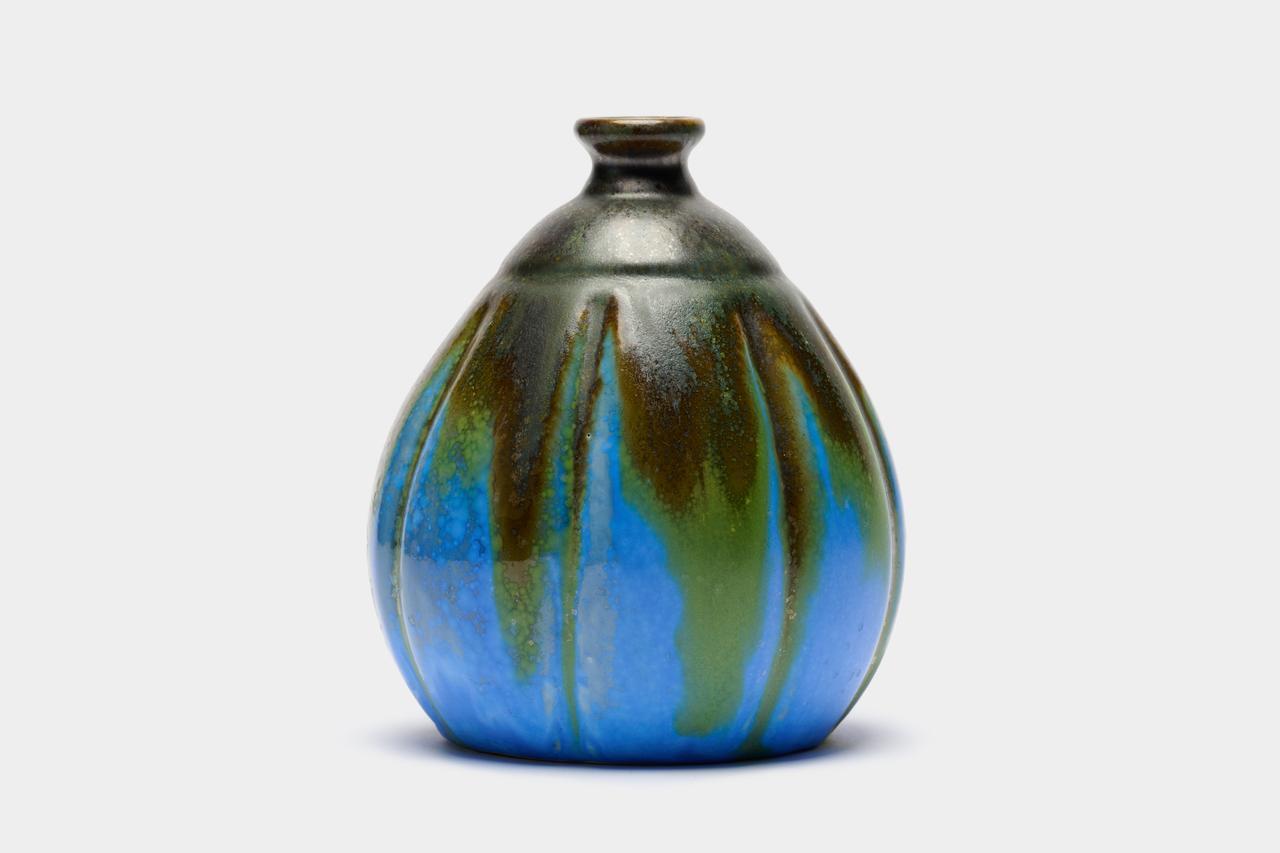
Vase - Ceramic - Large Japanese vase


Opens 11:00
Starting bid
€ 1
Add to your favourites to get an alert when the auction starts.

Expert
Selected by Florentin Brunz Gaborieau
Holds a master’s in Art History, specialising in Second French Empire and Dutch Golden Age.
Estimate € 350 - € 400
Catawiki Buyer Protection
Your payment’s safe with us until you receive your object.View details
Trustpilot 4.4 | 129747 reviews
Rated Excellent on Trustpilot.
Description from the seller
Japanese Satsuma vase with moriage decoration – figurative scene with 12 figures – large size (36 cm)
General identification
• Type: Japanese vase in Satsuma style.
• Technique: cracked glaze earthenware with polychrome decoration, gilding and moriage reliefs.
• Marking: red signature under the base accompanied by the inscription “SATSUMA” in gold Latin letters.
• Likely stylistic origin: Kyoto production / Kyō-Satsuma.
• Estimated period: late 19th – early 20th century (approximately 1890–1920).
Dimensions and physical characteristics
• Height: about 36 cm.
• Weight: about 3,015 kg.
• Shape: baluster vase with a fluted neck.
• Condition: intact structure, decoration well preserved with gilding still very present.
Detailed description of the decoration
The vase features a narrative scene composed of about 12 female figures (bijin), arranged around a palanquin or ceremonial litter. The vase exudes an incomparable presence for Satsumas of average manufacture.
The figures wear richly decorated kimonos and are accompanied by architectural and plant elements.
The following characteristics were observed:
• faces painted with pink gradients on the cheeks and temples,
• eyes outlined with a fine brush with a double line for the eyelids,
• individualized eyebrows,
• red lips finely drawn,
• complex hairstyles in multiple layers of black paint with red contours.
Some visible hands show:
• separated fingers,
• wrist articulation,
• precision of the stroke comparable to that of the faces.
Decorative techniques observed
a) Moriage
The vase presents numerous enamel reliefs (moriage) forming decorative dots on the colored backgrounds, notably in the red areas and in certain borders.
b) Gilding
The gilding is abundant and applied with a very fine brush.
We observe:
• extremely precise gold lines,
• gold fillings in floral motifs,
• slight crazing of the gilding indicating gilding applied before firing.
c) Red nanako background
The red panels are decorated with micro-relief dots (technique called nanako), typical of certain decorative Satsuma productions.
d) Craquelure
The glaze presents a very fine and regular network of craquelure, characteristic of Satsuma ware.
Quality of figurative painting
The twelve visible figures appear executed with a homogeneous level of finesse, suggesting the involvement of an experienced principal painter.
The following elements attest to high-quality painting:
• carnation gradients,
• refinement of facial features,
• precision of kimono lines,
• details in hairstyles and accessories.
Signature
Under the base there are:
• the inscription “SATSUMA” in gold Latin letters,
• a red brush-painted calligraphic sign.
Stylistic attribution
The following characteristics are typical of Kyō-Satsuma production (Kyoto):
• red backgrounds with nanako decoration,
• very rich gilding,
• figurative scenes with numerous bijin,
• fine and regular craquelure glaze.
These elements are typical of productions aimed at European and American markets between the late Meiji era.
Significance of the format
The vase size (36 cm) is larger than many common decorative Satsuma vases, often between 20 and 25 cm.
The grand format and the complexity of the scene with many figures make this piece more impressive and more decorative.
Notable elements
• large number of characters (about 12)
• homogeneous quality of faces
• abundant gilding
• significant moriage decoration
• complete narrative composition
• large size and substantial weight
Conclusion
This is a large decorative Satsuma vase featuring a rich figurative decoration and careful execution.
Estimate
€1,200 – €1,800
Two elements that could push the value even higher:
If an expert identifies the red signature as a Kyoto atelier artist’s kakihan, the piece could reach €1,500 – €2,500.
If the piece is confirmed as late Meiji (before 1912) rather than Taishō, the range could rise to €3,000 or more.
Detailed justification of the estimate
1. Size and visual presence
The most common Satsuma vases on the market measure 20–25 cm.
This vase is a large decorative format, more sought-after.
36 cm
3,015 kg
2. Complexity of the decoration
The scene includes about 12 characters.
Common comparison:
Number of characters
2–4 simple decor
5–8 medium decor
10–15 complex decor
This vase clearly belongs to the upper tier of decorative category.
3. Quality of painting
The photos show:
- carnation gradients
- double eyelids
- fine eyebrows
- lips painted in multiple strokes
- multi-layered hair
This level of painting is above standard tourist Satsuma.
4. Gilding
The gilding is:
- abundant
- applied with a fine brush
- sometimes slightly engraved.
This corresponds to artisanal workshop gilding, not merely industrial decorative gilding.
5. Moriage
The enamel reliefs (moriage) are numerous, especially on the red panels.
Dense moriage is a common indicator of high-end decorative pieces.
6. Red nanako background
Red backgrounds with micro-relief dots (nanako) are characteristic of certain Kyoto productions.
This gives a richer and more textured decoration.
7. Consistency of style
The faces appear executed by the same hand, suggesting:
- a principal painter rather than a fragmented workshop production.
Market comparison
Comparable objects:
Medium decorative Satsuma: €150 – €400
Large figurative Satsuma: €400 – €900
Large high-quality Satsuma with many figures: €1,200 – €1,800
This vase sits in the upper part of the third category. It is in excellent condition.
Japanese Satsuma vase with moriage decoration – figurative scene with 12 figures – large size (36 cm)
General identification
• Type: Japanese vase in Satsuma style.
• Technique: cracked glaze earthenware with polychrome decoration, gilding and moriage reliefs.
• Marking: red signature under the base accompanied by the inscription “SATSUMA” in gold Latin letters.
• Likely stylistic origin: Kyoto production / Kyō-Satsuma.
• Estimated period: late 19th – early 20th century (approximately 1890–1920).
Dimensions and physical characteristics
• Height: about 36 cm.
• Weight: about 3,015 kg.
• Shape: baluster vase with a fluted neck.
• Condition: intact structure, decoration well preserved with gilding still very present.
Detailed description of the decoration
The vase features a narrative scene composed of about 12 female figures (bijin), arranged around a palanquin or ceremonial litter. The vase exudes an incomparable presence for Satsumas of average manufacture.
The figures wear richly decorated kimonos and are accompanied by architectural and plant elements.
The following characteristics were observed:
• faces painted with pink gradients on the cheeks and temples,
• eyes outlined with a fine brush with a double line for the eyelids,
• individualized eyebrows,
• red lips finely drawn,
• complex hairstyles in multiple layers of black paint with red contours.
Some visible hands show:
• separated fingers,
• wrist articulation,
• precision of the stroke comparable to that of the faces.
Decorative techniques observed
a) Moriage
The vase presents numerous enamel reliefs (moriage) forming decorative dots on the colored backgrounds, notably in the red areas and in certain borders.
b) Gilding
The gilding is abundant and applied with a very fine brush.
We observe:
• extremely precise gold lines,
• gold fillings in floral motifs,
• slight crazing of the gilding indicating gilding applied before firing.
c) Red nanako background
The red panels are decorated with micro-relief dots (technique called nanako), typical of certain decorative Satsuma productions.
d) Craquelure
The glaze presents a very fine and regular network of craquelure, characteristic of Satsuma ware.
Quality of figurative painting
The twelve visible figures appear executed with a homogeneous level of finesse, suggesting the involvement of an experienced principal painter.
The following elements attest to high-quality painting:
• carnation gradients,
• refinement of facial features,
• precision of kimono lines,
• details in hairstyles and accessories.
Signature
Under the base there are:
• the inscription “SATSUMA” in gold Latin letters,
• a red brush-painted calligraphic sign.
Stylistic attribution
The following characteristics are typical of Kyō-Satsuma production (Kyoto):
• red backgrounds with nanako decoration,
• very rich gilding,
• figurative scenes with numerous bijin,
• fine and regular craquelure glaze.
These elements are typical of productions aimed at European and American markets between the late Meiji era.
Significance of the format
The vase size (36 cm) is larger than many common decorative Satsuma vases, often between 20 and 25 cm.
The grand format and the complexity of the scene with many figures make this piece more impressive and more decorative.
Notable elements
• large number of characters (about 12)
• homogeneous quality of faces
• abundant gilding
• significant moriage decoration
• complete narrative composition
• large size and substantial weight
Conclusion
This is a large decorative Satsuma vase featuring a rich figurative decoration and careful execution.
Estimate
€1,200 – €1,800
Two elements that could push the value even higher:
If an expert identifies the red signature as a Kyoto atelier artist’s kakihan, the piece could reach €1,500 – €2,500.
If the piece is confirmed as late Meiji (before 1912) rather than Taishō, the range could rise to €3,000 or more.
Detailed justification of the estimate
1. Size and visual presence
The most common Satsuma vases on the market measure 20–25 cm.
This vase is a large decorative format, more sought-after.
36 cm
3,015 kg
2. Complexity of the decoration
The scene includes about 12 characters.
Common comparison:
Number of characters
2–4 simple decor
5–8 medium decor
10–15 complex decor
This vase clearly belongs to the upper tier of decorative category.
3. Quality of painting
The photos show:
- carnation gradients
- double eyelids
- fine eyebrows
- lips painted in multiple strokes
- multi-layered hair
This level of painting is above standard tourist Satsuma.
4. Gilding
The gilding is:
- abundant
- applied with a fine brush
- sometimes slightly engraved.
This corresponds to artisanal workshop gilding, not merely industrial decorative gilding.
5. Moriage
The enamel reliefs (moriage) are numerous, especially on the red panels.
Dense moriage is a common indicator of high-end decorative pieces.
6. Red nanako background
Red backgrounds with micro-relief dots (nanako) are characteristic of certain Kyoto productions.
This gives a richer and more textured decoration.
7. Consistency of style
The faces appear executed by the same hand, suggesting:
- a principal painter rather than a fragmented workshop production.
Market comparison
Comparable objects:
Medium decorative Satsuma: €150 – €400
Large figurative Satsuma: €400 – €900
Large high-quality Satsuma with many figures: €1,200 – €1,800
This vase sits in the upper part of the third category. It is in excellent condition.
Details
Era
1400-1900
Weight
3.02 kg
Title additional information
Large Japanese vase
Number of objects
1
Country of origin
Japan
Material
Ceramic
Dynastic style/period
Meiji period (1868-1912)
Provenance
Private collection
Condition
Good condition - used with small signs of aging & blemishes
Height
36 cm
Width
24.5 cm
Depth
24.5 cm
Diameter
24.5 cm
Estimated period
1850-1900
Sold by