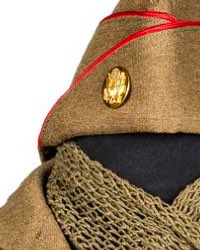
Life Magazine / Sovfoto - Sin titulo


Opens Friday
Starting bid
€ 1
Add to your favourites to get an alert when the auction starts.

Catawiki Buyer Protection
Your payment’s safe with us until you receive your object.View details
Trustpilot 4.4 | 131192 reviews
Rated Excellent on Trustpilot.
Description from the seller
Life Magazine (archive photograph)
- Untitled
Silver gelatin print - With stamp, provenance, and batch certificates.
Wonderful collection of 31 photographs from my private collection. It consists of 27 photographs measuring 25 cm high × 21 cm wide, two photographs of 21 cm × 20 cm, and finally two photographs of 26 cm × 22 cm.
All photos bear the seal of the Enrique Meneses Foundation, and some of Life Magazine.
31 photographs very well preserved from a very important period in the old Soviet Union under the leadership of Nikita Khrushchev and Stalin.
No photographs that form part of history, and this makes it a unique collection.
ENRIQUE MENESES
One of the pioneers of Spanish photojournalism, a master of photographers and journalists.
Born in Madrid in 1929, Enrique Meneses lived in France, Portugal, Egypt, and the United States, and traveled through India, the Middle East, sub-Saharan Africa, Cuba, etc. etc. An exceptional witness to the most important events of the second half of the twentieth century.
He secured world exclusives, published in the most powerful media. He was a journalist of pure stock. He hated being called a 'master'.
He spent part of his childhood in Paris, where he lived through the German occupation during World War II. At the end of the conflict he moved with his family to Portugal, while his father flew to Buenos Aires to work as a journalist. He completed the French and Spanish Baccalaureate.
He studied Law at the University of Salamanca and Madrid. He took special courses for professional journalists, although he had already published his first report in 1947 on the occasion of Manolete’s death at only 17. It was published in numerous newspapers in Latin America. He founded an agency, Prensa Universal, which was closed a year after its birth for having published articles by Jesús Galíndez, the exiled Basque in New York.
In 1954 he moved to Egypt where he collaborated with the local press. In 1956 he crossed Africa from Cairo to Cape Town and back to Cairo. Upon returning to the Egyptian capital in 1956, he covered the Suez Canal War for Paris Match and information.
In 1958 he moved to Cuba, where he became the first reporter to live for four months with the Cuban revolutionaries in the Sierra Maestra. There he met Fidel Castro and Che Guevara. A few months before leaving the island, where he was detained by Batista’s police for a week, he managed to send his report on the Cuban Revolution to Paris Match.
That article caused a huge sensation worldwide.
He was a correspondent in India and also in the Middle East for seven years for Paris Match. For two years he worked in Europe as a freelancer and founded the Delta Press cooperative. In 1962 he went to New York where he remained a freelancer until November 1963, the assassination of President Kennedy. In 1964 he founded the Fotopress agency for Grupo Prensa Española. On Televisión Española he directed the program "A toda Plana" (1964 and 1965). In 1972 he became general director of ABC de Las Américas. In 1973 he returned to Televisión Española to work on the program "Los Reporteros". He directed the Spanish edition of Lui and in 1976 he became director of the Spanish edition of Playboy.
In 1982 he created and served as director of the program Los Aventureros on Radio Nacional.
In 1983 he produced the series "Robinson in Africa" for TVE.
Life Magazine (archive photograph)
- Untitled
Silver gelatin print - With stamp, provenance, and batch certificates.
Wonderful collection of 31 photographs from my private collection. It consists of 27 photographs measuring 25 cm high × 21 cm wide, two photographs of 21 cm × 20 cm, and finally two photographs of 26 cm × 22 cm.
All photos bear the seal of the Enrique Meneses Foundation, and some of Life Magazine.
31 photographs very well preserved from a very important period in the old Soviet Union under the leadership of Nikita Khrushchev and Stalin.
No photographs that form part of history, and this makes it a unique collection.
ENRIQUE MENESES
One of the pioneers of Spanish photojournalism, a master of photographers and journalists.
Born in Madrid in 1929, Enrique Meneses lived in France, Portugal, Egypt, and the United States, and traveled through India, the Middle East, sub-Saharan Africa, Cuba, etc. etc. An exceptional witness to the most important events of the second half of the twentieth century.
He secured world exclusives, published in the most powerful media. He was a journalist of pure stock. He hated being called a 'master'.
He spent part of his childhood in Paris, where he lived through the German occupation during World War II. At the end of the conflict he moved with his family to Portugal, while his father flew to Buenos Aires to work as a journalist. He completed the French and Spanish Baccalaureate.
He studied Law at the University of Salamanca and Madrid. He took special courses for professional journalists, although he had already published his first report in 1947 on the occasion of Manolete’s death at only 17. It was published in numerous newspapers in Latin America. He founded an agency, Prensa Universal, which was closed a year after its birth for having published articles by Jesús Galíndez, the exiled Basque in New York.
In 1954 he moved to Egypt where he collaborated with the local press. In 1956 he crossed Africa from Cairo to Cape Town and back to Cairo. Upon returning to the Egyptian capital in 1956, he covered the Suez Canal War for Paris Match and information.
In 1958 he moved to Cuba, where he became the first reporter to live for four months with the Cuban revolutionaries in the Sierra Maestra. There he met Fidel Castro and Che Guevara. A few months before leaving the island, where he was detained by Batista’s police for a week, he managed to send his report on the Cuban Revolution to Paris Match.
That article caused a huge sensation worldwide.
He was a correspondent in India and also in the Middle East for seven years for Paris Match. For two years he worked in Europe as a freelancer and founded the Delta Press cooperative. In 1962 he went to New York where he remained a freelancer until November 1963, the assassination of President Kennedy. In 1964 he founded the Fotopress agency for Grupo Prensa Española. On Televisión Española he directed the program "A toda Plana" (1964 and 1965). In 1972 he became general director of ABC de Las Américas. In 1973 he returned to Televisión Española to work on the program "Los Reporteros". He directed the Spanish edition of Lui and in 1976 he became director of the Spanish edition of Playboy.
In 1982 he created and served as director of the program Los Aventureros on Radio Nacional.
In 1983 he produced the series "Robinson in Africa" for TVE.
Details
Date of print
1953
Artist
Life Magazine / Sovfoto
Sold by
Gallery
Title of artwork
Sin titulo
Condition
Good condition
Technique
Gelatin-silver print
Height
25 cm
Edition
1/1
Width
21 cm
Signature
Stamped
Genre
Photojournalism
Sold by