Medieval, Crusaders Era Marble Oil Lamp


17
days
13
hours
26
minutes
57
seconds
Starting bid
€ 1
Reserve price not met

Expert
Selected by Peter Reynaers
Has nearly 30 years’ experience and moderated multiple online art research groups.
Estimate € 750 - € 900
No bids placed
Catawiki Buyer Protection
Your payment’s safe with us until you receive your object.View details
Trustpilot 4.4 | 133090 reviews
Rated Excellent on Trustpilot.
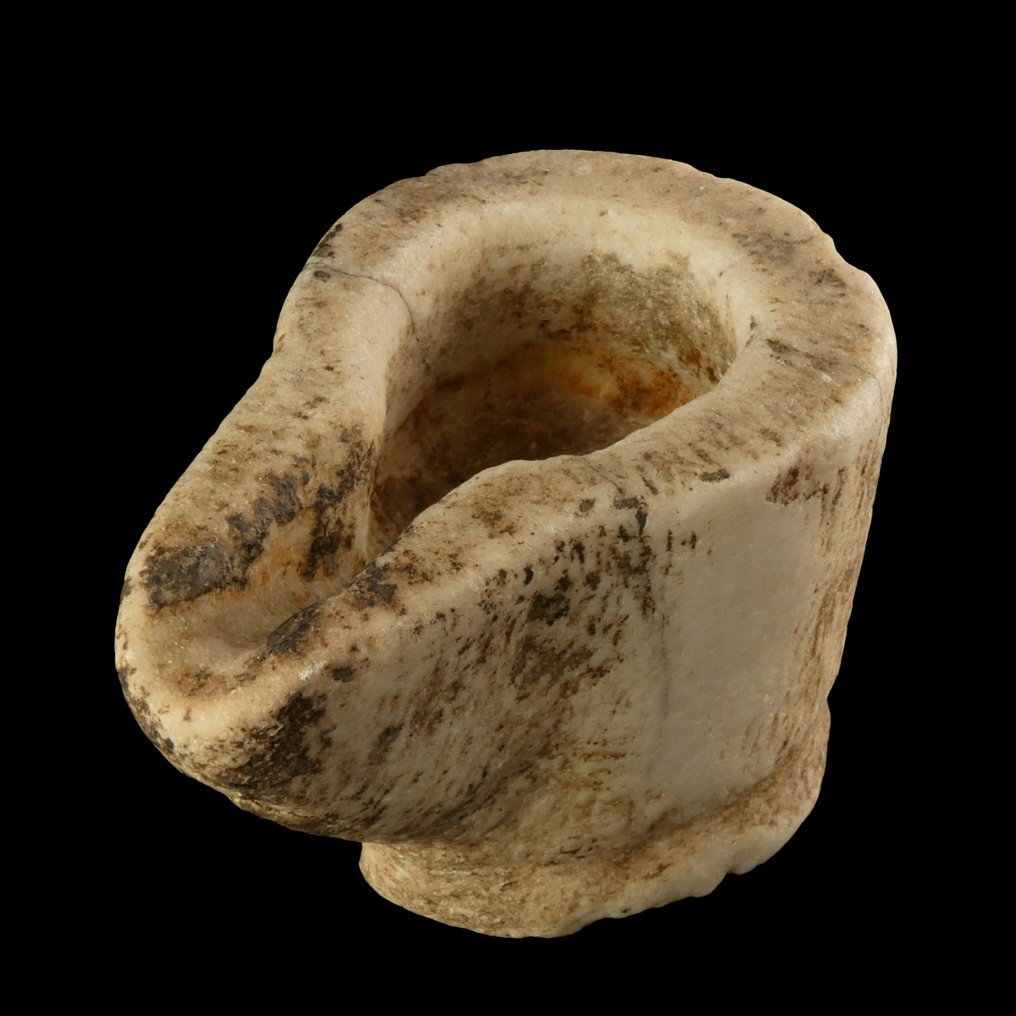
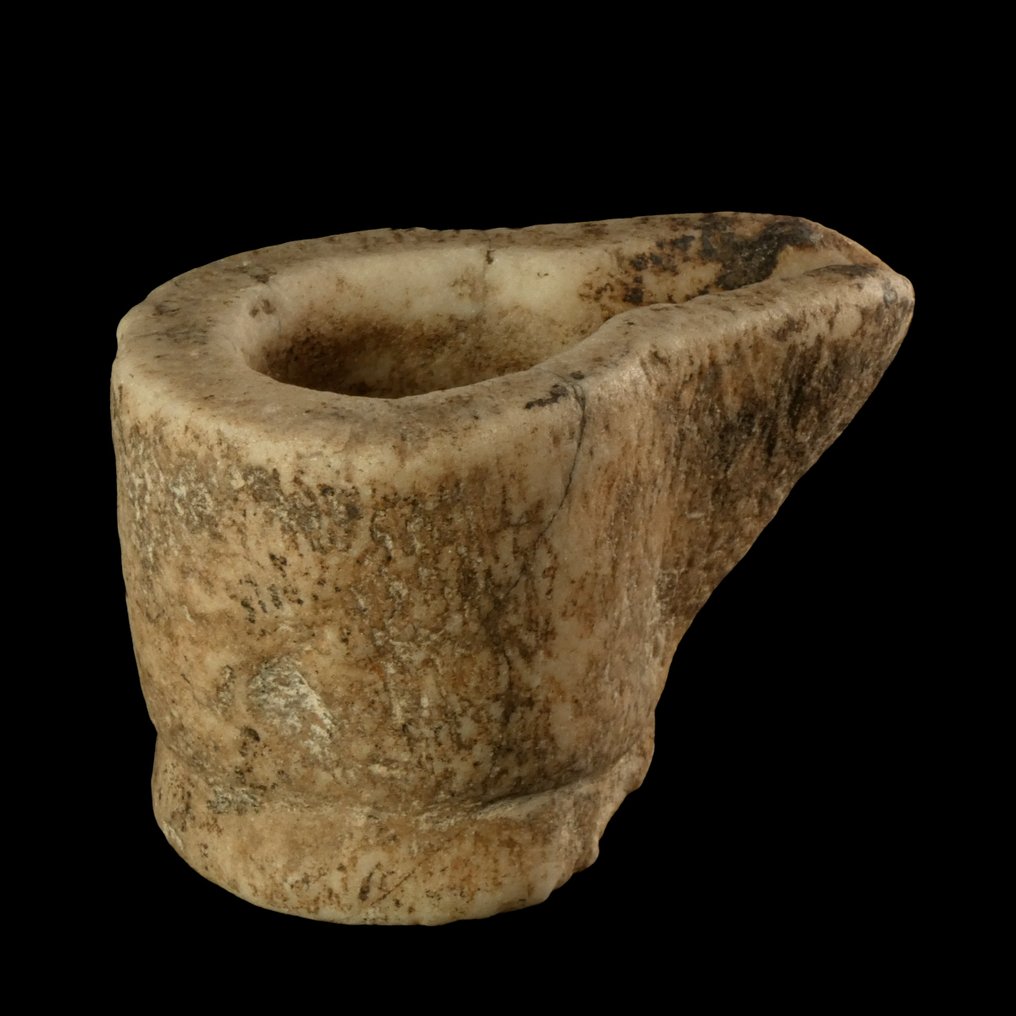
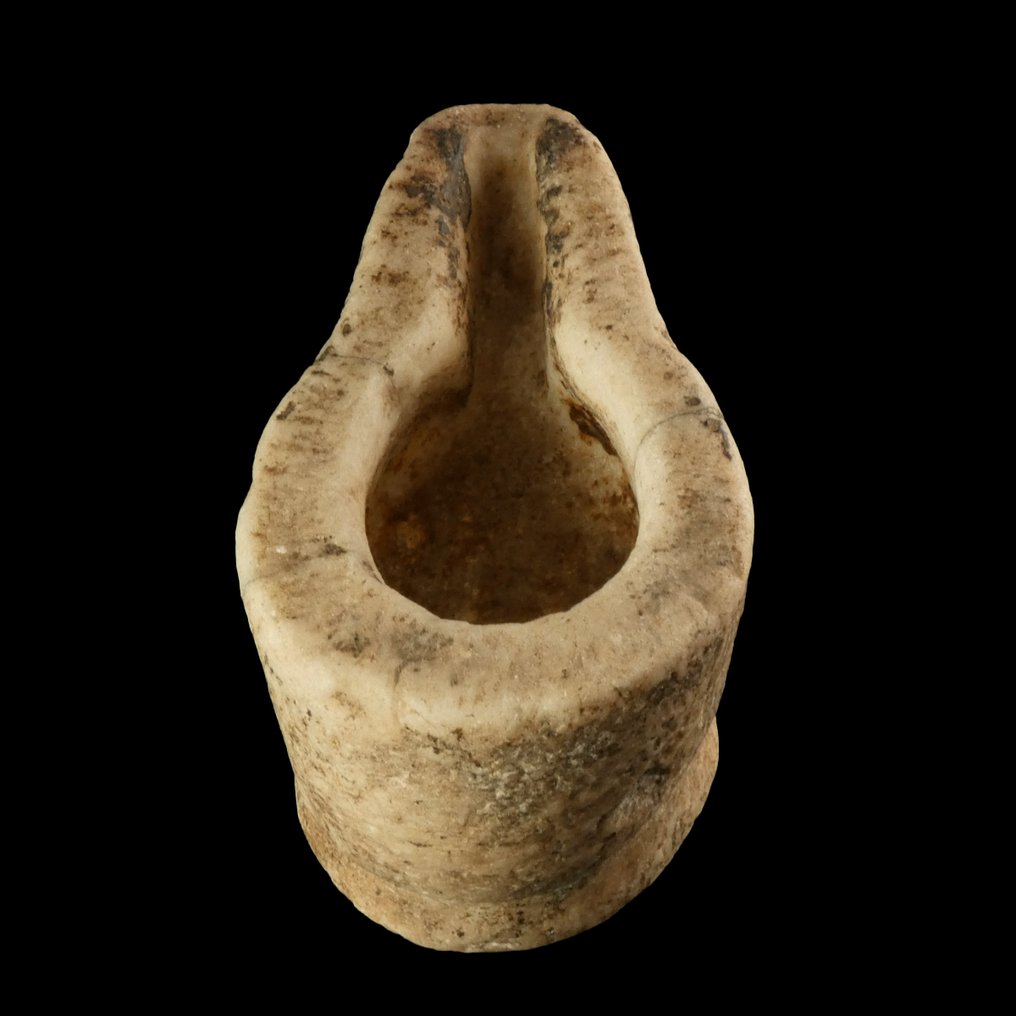
Medieval Crusaders Era marble oil lamp, named Oil Lamp, carved from a single piece of marble, dating to the 11th–12th century, in good condition with patina, height about 70 mm, length about 104.7 mm, weight about 532 g, acquired in 2024 from a Netherlands gallery/antique dealer, authentic/original, certificate available on request, and associated with Holy Land usage.
AI-assisted summary
Description from the seller
Attention: due to customs regulations we can only ship inside the European Union. Please ensure you have a valid EU shipping address before placing a bid.
Holy Land oil lamp, made of carved marble with a rounded body, circular filling hole, flat rim and a tapering nozzle for the wick. The form is simple and functional, made from a single piece of stone and designed for practical domestic or devotional use. The lamp has a fantastic patina and wear consisting with age and use.
-> These type of lamps were used during the Crusades in the Holy Land. Stone and marble lamps are less common than terracotta examples and offered a more durable alternative for lighting in the ancient world. Their solid material and restrained form reflect a preference for lasting utility.
Height: ± 70 mm
Length: ± 104,7 mm
Weight: ± 532 g
Good and solid condition, appealing patina, signs of wear consistent with age and use.
Certificate of Authenticity: available upon request (pdf-format).
-> Oil lamps were an essential part of daily life in antiquity, used to provide light in houses, workshops, shrines, and tombs. Most ancient lamps were made in clay, but examples in stone, marble, and metal are also known. These more durable versions may have been chosen for repeated use, for wealthier households, or for settings where a more permanent object was desired.
The basic principle of the ancient oil lamp remained remarkably consistent over many centuries: oil was poured into the reservoir, while a wick extended through the nozzle and was lit to provide a steady flame. Objects such as this show how even the most practical items of everyday life could be adapted into durable and carefully shaped forms, combining utility with the enduring qualities of carved stone.
-> The Holy Land was conquered by the Roman general Pompey the Great in 63 BC. The Romans deposed the ruling Hasmonean dynasty and installed Herod the Great as a Roman client King of Judea. Jewish-Roman tensions resulted in several Jewish-Roman wars and the destruction of Jerusalem. In the course of the 1st and 2nd centuries AD Christianity began to develop. Constantine the Great was the first Roman Emperor to convert to Christianity in 312 AD.
In 634 the Muslim conquests began, during which many Jews rose up against the Eastern Roman rulers.
Seller's Story
Please read our information carefully.
*SHIPPING INFO Due to insurance procedures, combined shipping is only possible with a single payment. (1 payment reference = 1 insured parcel.) If you accept an offer after the auction and pay separately, shipments cannot be manually combined afterward. Please ensure your shipping address is complete and correct before paying. Changes made after payment are not automatically forwarded to us.
* CERTIFICATE OF AUTHENTICITY (COA) For insurance purposes we can provide a digital Certificate of Authenticity (PDF) for every item with a hammer price of Euro 100 or more. The COA is available upon request within 20 days of the auction date. Instructions will be provided when your order is shipped. Certificates are not included in the package.
* INSURANCE & CLAIMS All our parcels are shipped with external insurance. This insurance requires the following:
-> Monitor the online tracking and notify delays to the seller within 14 days after the shipping date.
-> In case of damage: write a reservation on the delivery note and report the damage to the seller via the Catawiki online chat within 24 hours. Keep all packaging and send us photos of the damage.
* MARGIN SCHEME: All our sales are subject to the margin scheme; therefore, no VAT is charged or shown on our invoices.
* IMPORTANT BUYERS OUTSIDE THE EU: We cannot ship to countries outside the European Union. Please ensure you have an EU shipping address before bidding. No exceptions can be made. Switzerland, Norway and the United Kingdom are not part of the EU.
* DOCUMENTATION NOTICE: Previous invoices and import/export documents will not be shared with customers.
----------------------
Thank you for your interest, and best of luck with your bids!
Attention: due to customs regulations we can only ship inside the European Union. Please ensure you have a valid EU shipping address before placing a bid.
Holy Land oil lamp, made of carved marble with a rounded body, circular filling hole, flat rim and a tapering nozzle for the wick. The form is simple and functional, made from a single piece of stone and designed for practical domestic or devotional use. The lamp has a fantastic patina and wear consisting with age and use.
-> These type of lamps were used during the Crusades in the Holy Land. Stone and marble lamps are less common than terracotta examples and offered a more durable alternative for lighting in the ancient world. Their solid material and restrained form reflect a preference for lasting utility.
Height: ± 70 mm
Length: ± 104,7 mm
Weight: ± 532 g
Good and solid condition, appealing patina, signs of wear consistent with age and use.
Certificate of Authenticity: available upon request (pdf-format).
-> Oil lamps were an essential part of daily life in antiquity, used to provide light in houses, workshops, shrines, and tombs. Most ancient lamps were made in clay, but examples in stone, marble, and metal are also known. These more durable versions may have been chosen for repeated use, for wealthier households, or for settings where a more permanent object was desired.
The basic principle of the ancient oil lamp remained remarkably consistent over many centuries: oil was poured into the reservoir, while a wick extended through the nozzle and was lit to provide a steady flame. Objects such as this show how even the most practical items of everyday life could be adapted into durable and carefully shaped forms, combining utility with the enduring qualities of carved stone.
-> The Holy Land was conquered by the Roman general Pompey the Great in 63 BC. The Romans deposed the ruling Hasmonean dynasty and installed Herod the Great as a Roman client King of Judea. Jewish-Roman tensions resulted in several Jewish-Roman wars and the destruction of Jerusalem. In the course of the 1st and 2nd centuries AD Christianity began to develop. Constantine the Great was the first Roman Emperor to convert to Christianity in 312 AD.
In 634 the Muslim conquests began, during which many Jews rose up against the Eastern Roman rulers.
Seller's Story
Please read our information carefully.
*SHIPPING INFO Due to insurance procedures, combined shipping is only possible with a single payment. (1 payment reference = 1 insured parcel.) If you accept an offer after the auction and pay separately, shipments cannot be manually combined afterward. Please ensure your shipping address is complete and correct before paying. Changes made after payment are not automatically forwarded to us.
* CERTIFICATE OF AUTHENTICITY (COA) For insurance purposes we can provide a digital Certificate of Authenticity (PDF) for every item with a hammer price of Euro 100 or more. The COA is available upon request within 20 days of the auction date. Instructions will be provided when your order is shipped. Certificates are not included in the package.
* INSURANCE & CLAIMS All our parcels are shipped with external insurance. This insurance requires the following:
-> Monitor the online tracking and notify delays to the seller within 14 days after the shipping date.
-> In case of damage: write a reservation on the delivery note and report the damage to the seller via the Catawiki online chat within 24 hours. Keep all packaging and send us photos of the damage.
* MARGIN SCHEME: All our sales are subject to the margin scheme; therefore, no VAT is charged or shown on our invoices.
* IMPORTANT BUYERS OUTSIDE THE EU: We cannot ship to countries outside the European Union. Please ensure you have an EU shipping address before bidding. No exceptions can be made. Switzerland, Norway and the United Kingdom are not part of the EU.
* DOCUMENTATION NOTICE: Previous invoices and import/export documents will not be shared with customers.
----------------------
Thank you for your interest, and best of luck with your bids!
Details
Culture
Medieval, Crusaders Era
Century/timeframe
11th - 12th century AD
Name of object
Oil Lamp
Acquired from
Gallery / Antique dealer
Year acquired
2024
Material
Marble
Country acquired from
Netherlands
Condition
Good
Previous owner acquired from
Gallery / Antique dealer
Previous owner - year acquired
2024
Previous owner - country acquired from
Netherlands
I verify that I have obtained this object legally and that I am allowed to sell it
Yes
Authenticity
Original/official
Sold by
Disclaimer
The seller was informed by Catawiki about documentation requirements and guarantees the following: - the object was legally obtained, - the seller has the right to sell and/or export the object, as relevant, - the seller will provide the necessary provenance information and arrange required documentation and permits/licenses, as applicable and as per local laws, - the seller will notify the buyer of any delays in obtaining permits/licenses. By bidding, you acknowledge that import documentation may be required depending on your country of residence and that obtaining permits/licenses may cause delays in the delivery of your object.
The seller was informed by Catawiki about documentation requirements and guarantees the following: - the object was legally obtained, - the seller has the right to sell and/or export the object, as relevant, - the seller will provide the necessary provenance information and arrange required documentation and permits/licenses, as applicable and as per local laws, - the seller will notify the buyer of any delays in obtaining permits/licenses. By bidding, you acknowledge that import documentation may be required depending on your country of residence and that obtaining permits/licenses may cause delays in the delivery of your object.
