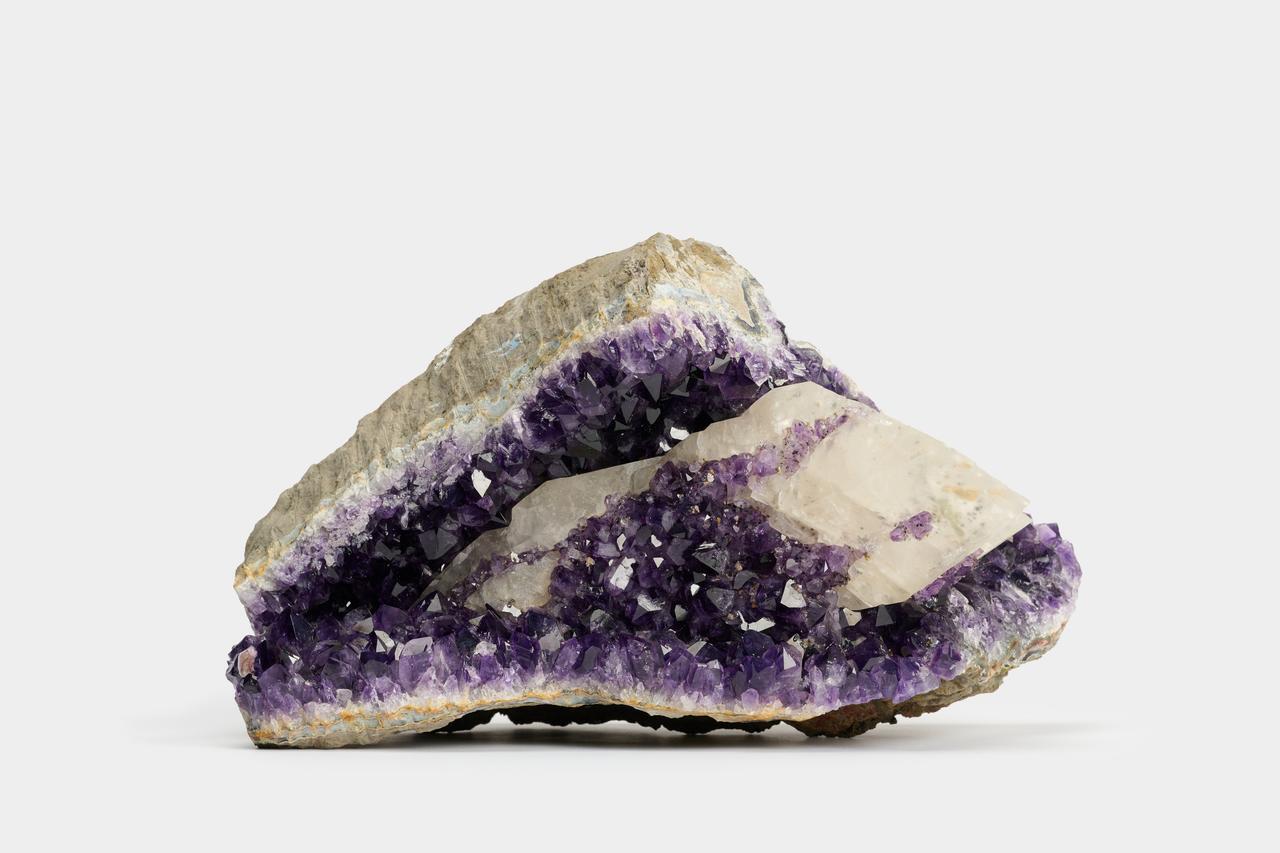
Dioptase Crystals on matrix - Height: 5 cm - Width: 3,8 cm- 38 g - (1)


Opens tomorrow
Starting bid
€ 1
Add to your favourites to get an alert when the auction starts.

Catawiki Buyer Protection
Your payment’s safe with us until you receive your object.View details
Trustpilot 4.4 | 133802 reviews
Rated Excellent on Trustpilot.
Description from the seller
1. Overview
Exceptional natural dioptase specimen in matrix, with well-formed prismatic crystals of intense emerald green color. Collector piece with high visual impact, where the transparency and luster of the crystals generate a vibrant and deep effect.
2. Measurements and weight
Weight: 38 grams
Dimensions: 5 x 3.5 x 1.4 cm
3. Mineralogical identification
Mineral: Dioptase
Crystal system: Trigonal
4. Chemical formula
CuSiO₃ · H₂O (hydrated copper silicate)
5. Hardness and density
Hardness: 5 (Mohs scale)
Density: ~3.2–3.4 g/cm³
6. Visual and geological assessment
Well-defined prismatic crystals on matrix, with sharp terminations and high vitreous luster. The intense green color comes from the presence of copper, responsible for its extraordinary chromatic saturation.
7. Mineral history
Dioptase is a mineral historically mistaken for emerald due to its color, but its rarity and formation place it among the most valued collectible minerals.
8. Formation and origin
Forms in oxidation zones of copper deposits, under very specific conditions, which explains the difficulty of finding specimens with well-developed crystals like this one.
9. Authenticity and tests
Observation of coherent crystal habit
Natural coloring due to copper
Characteristic vitreous luster
Not certified, but verified through our own gemological analysis
10. Condition
Very good overall condition, with crystals well preserved and minimal alteration in the matrix.
11. Provenance
Origin: Congo (classic high-quality dioptase localities)
12. Market, rarity and investment
Dioptase is a relatively uncommon mineral in crystallized quality.
Specimens with defined crystals, intense color, and good size are increasingly scarce in the market.
Authentic and well-formed specimens reinforce collector interest and their potential for value appreciation.
13. Gemological curiosities
Often confused with emerald due to its color
Its color comes directly from copper, not inclusions
It is a relatively fragile mineral despite its solid appearance
Knowing these differences helps avoid common market errors.
14. Human note
Each crystal results from extremely slow geological processes, combined with human work in complex mining environments.
15. Conclusion
A collection piece with powerful aesthetics, clear authenticity, and superior positioning within the mineralogical market.
Choosing an authentic piece is not just a purchase; it is a conscious decision that blends beauty, judgment, and real value.
1. Overview
Exceptional natural dioptase specimen in matrix, with well-formed prismatic crystals of intense emerald green color. Collector piece with high visual impact, where the transparency and luster of the crystals generate a vibrant and deep effect.
2. Measurements and weight
Weight: 38 grams
Dimensions: 5 x 3.5 x 1.4 cm
3. Mineralogical identification
Mineral: Dioptase
Crystal system: Trigonal
4. Chemical formula
CuSiO₃ · H₂O (hydrated copper silicate)
5. Hardness and density
Hardness: 5 (Mohs scale)
Density: ~3.2–3.4 g/cm³
6. Visual and geological assessment
Well-defined prismatic crystals on matrix, with sharp terminations and high vitreous luster. The intense green color comes from the presence of copper, responsible for its extraordinary chromatic saturation.
7. Mineral history
Dioptase is a mineral historically mistaken for emerald due to its color, but its rarity and formation place it among the most valued collectible minerals.
8. Formation and origin
Forms in oxidation zones of copper deposits, under very specific conditions, which explains the difficulty of finding specimens with well-developed crystals like this one.
9. Authenticity and tests
Observation of coherent crystal habit
Natural coloring due to copper
Characteristic vitreous luster
Not certified, but verified through our own gemological analysis
10. Condition
Very good overall condition, with crystals well preserved and minimal alteration in the matrix.
11. Provenance
Origin: Congo (classic high-quality dioptase localities)
12. Market, rarity and investment
Dioptase is a relatively uncommon mineral in crystallized quality.
Specimens with defined crystals, intense color, and good size are increasingly scarce in the market.
Authentic and well-formed specimens reinforce collector interest and their potential for value appreciation.
13. Gemological curiosities
Often confused with emerald due to its color
Its color comes directly from copper, not inclusions
It is a relatively fragile mineral despite its solid appearance
Knowing these differences helps avoid common market errors.
14. Human note
Each crystal results from extremely slow geological processes, combined with human work in complex mining environments.
15. Conclusion
A collection piece with powerful aesthetics, clear authenticity, and superior positioning within the mineralogical market.
Choosing an authentic piece is not just a purchase; it is a conscious decision that blends beauty, judgment, and real value.
Details
Number of objects
1
Main mineral
Dioptase
Mineral form
Crystals on matrix
Weight
38 g
Country of origin
Congo
Height
5 cm
Width
3.8 cm
Depth
1.4 cm
Sold by