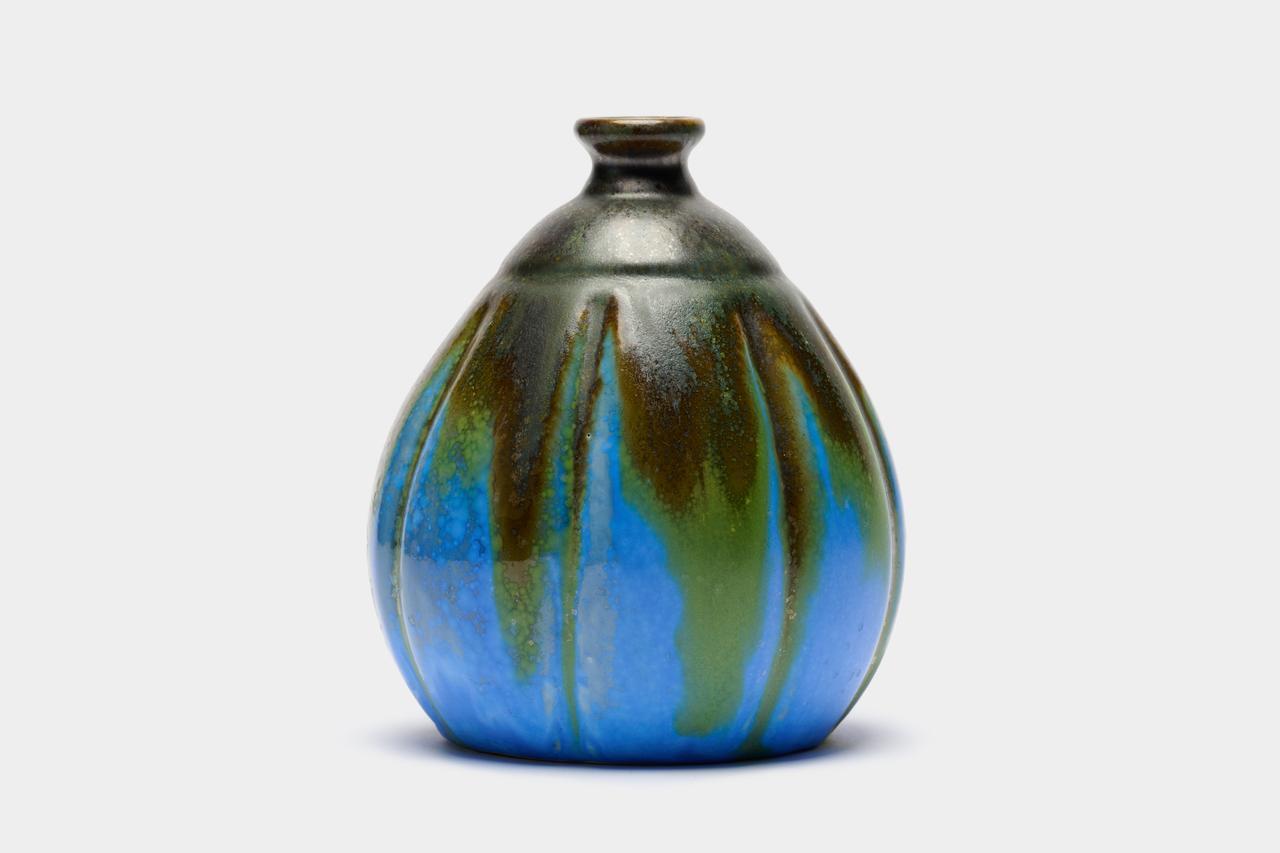
W. Schiller & Sohn - Vase (2) - Stoneware


05
days
16
hours
05
minutes
13
seconds
Current bid
€ 2
Reserve price not met

Expert
Selected by John Laurance
Thirty years' experience in decorative objects and two decades as shop owner.
Estimate € 280 - € 330
4 other people are watching this object
 | €2 | |
|---|---|---|
| €1 |
Catawiki Buyer Protection
Your payment’s safe with us until you receive your object.View details
Trustpilot 4.4 | 136909 reviews
Rated Excellent on Trustpilot.
Pair of two black hand-painted stoneware vases (craters) from Majolikafabrik W. Schiller & Sohn, Austria, circa 1900–1910, each about 12 cm high, 11 cm wide and 11 cm deep, in good used condition with signs of age.
AI-assisted summary
Description from the seller
Pair of WS&S vases, corresponding to Majolikafabrik W. Schiller (& Sohn) Austria
Material: hand-painted ceramic stoneware
Manufacture: Majolikafabrik W. Schiller (& Sohn)
Period: early 20th century
Country of origin: Austria
Provenance: Private collection
Good condition for age and use
Dimensions: 12 x 11 x 11 cm
Spectacular pair of small vases or crater-like vessels in ceramic with a black matte background and red-figure decoration, a fine-grained ceramic stoneware with a dull black unglazed finish.
Both take the form of small crater-like vases with two raised handles. The shape and the decorative frieze motifs are directly inspired by the engravings of classical antiquities compiled by Sir William Hamilton in the 18th century.
The winged figures painted with terracotta enamel represent the Erotes, small Cupid-like figures of allegorical scenes in classical mythology, devoted to love, festivity, and courtship. They emulate the red-figure vases of ancient Greece. WS&S used glaze pigments mixed with liquid clay fixed in the kiln to achieve this textured matte finish.
At the end of the 18th century there was a revival of classical forms in all aspects of art and design, driven mainly by the printing press, which allowed the upper classes to access freshly translated editions of ancient mythology and philosophy. The growing imperialism of the British aristocracy was reflected in stories of ancient Rome, as a continuation of this Romantic era.
The Austrian manufacture was founded in 1850 in Obergrund, Austria by Wilhelm Schiller. Two years later WS&S was founded, with his son.
Specialized in earthenware and glazed ceramic or majolica pieces. Plant and zoomorphic decorations were the most common motifs.
Shipping for the product will be paid by the buyer according to dimensions, weight, and destination. Shipping costs include professional custom packaging; and personalized shipping with tracking number and warranty.
Seller's Story
- ABOUT US - Fragonard Interiors is a company with experience for more than 30 years, with a team of experts specialized in antiques, design pieces, works of art and interior design projects.
We always seek excellence and originality in each of the pieces, chasing as much customer satisfaction as possible.
By giving a new life to the pieces and works of art, we manage to perpetuate their soul and activate a circular economy of objects.
FOLLOW US ON INSTAGRAM: fragonard_interiors
The packaging is professional and adapted to each piece, with tracking number and shipping insurance. 100% AUTHENTICITY AND QUALITY CONTROL. Each item sold is analyzed, studied and authenticated by experts.
WORLD DELIVERY We ship to all countries served by international courier service providers such as DHL, UPS ...
You can also arrange for yourself to pick up at our physical location.
Translated by Google TranslatePair of WS&S vases, corresponding to Majolikafabrik W. Schiller (& Sohn) Austria
Material: hand-painted ceramic stoneware
Manufacture: Majolikafabrik W. Schiller (& Sohn)
Period: early 20th century
Country of origin: Austria
Provenance: Private collection
Good condition for age and use
Dimensions: 12 x 11 x 11 cm
Spectacular pair of small vases or crater-like vessels in ceramic with a black matte background and red-figure decoration, a fine-grained ceramic stoneware with a dull black unglazed finish.
Both take the form of small crater-like vases with two raised handles. The shape and the decorative frieze motifs are directly inspired by the engravings of classical antiquities compiled by Sir William Hamilton in the 18th century.
The winged figures painted with terracotta enamel represent the Erotes, small Cupid-like figures of allegorical scenes in classical mythology, devoted to love, festivity, and courtship. They emulate the red-figure vases of ancient Greece. WS&S used glaze pigments mixed with liquid clay fixed in the kiln to achieve this textured matte finish.
At the end of the 18th century there was a revival of classical forms in all aspects of art and design, driven mainly by the printing press, which allowed the upper classes to access freshly translated editions of ancient mythology and philosophy. The growing imperialism of the British aristocracy was reflected in stories of ancient Rome, as a continuation of this Romantic era.
The Austrian manufacture was founded in 1850 in Obergrund, Austria by Wilhelm Schiller. Two years later WS&S was founded, with his son.
Specialized in earthenware and glazed ceramic or majolica pieces. Plant and zoomorphic decorations were the most common motifs.
Shipping for the product will be paid by the buyer according to dimensions, weight, and destination. Shipping costs include professional custom packaging; and personalized shipping with tracking number and warranty.
Seller's Story
- ABOUT US - Fragonard Interiors is a company with experience for more than 30 years, with a team of experts specialized in antiques, design pieces, works of art and interior design projects.
We always seek excellence and originality in each of the pieces, chasing as much customer satisfaction as possible.
By giving a new life to the pieces and works of art, we manage to perpetuate their soul and activate a circular economy of objects.
FOLLOW US ON INSTAGRAM: fragonard_interiors
The packaging is professional and adapted to each piece, with tracking number and shipping insurance. 100% AUTHENTICITY AND QUALITY CONTROL. Each item sold is analyzed, studied and authenticated by experts.
WORLD DELIVERY We ship to all countries served by international courier service providers such as DHL, UPS ...
You can also arrange for yourself to pick up at our physical location.
Translated by Google TranslateDetails
Era
1900-2000
Weight
2 kg
Number of objects
2
Country of origin
Austria
Material
Stoneware
Manufacturer/brand
W. Schiller & Sohn
Colour
Black
Condition
Good condition - used with small signs of aging & blemishes
Height
12 cm
Width
11 cm
Depth
11 cm
Estimated period
1900-1910
Sold by