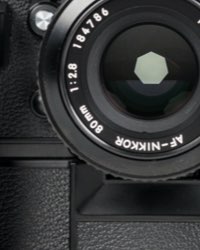
Pentax, Asahi Stereo Adapter 49mm Camera accessories


Starting bid
€ 1
Add to your favourites to get an alert when the auction starts.

Catawiki Buyer Protection
Your payment’s safe with us until you receive your object.View details
Trustpilot 4.4 | 134638 reviews
Rated Excellent on Trustpilot.
Description from the seller
Pentax Accessories:
Pentax Stereo Adapter 49 mm (Type No.: 30349); tested, working, new in box; + manual EN.
The photos and the description give a good view of the outer condition of the material.
******************
Important: The information below was researched with AI and may contain errors!
The Pentax Stereo Adapter 49 mm (Type No. 30349) is an optical attachment that allows you to take 3D photos (stereophotos) with a standard single-lens reflex camera on a single film or sensor frame. The accessory is threaded onto the lens filter thread like a filter. Inside the adapter are four mirrors/prisms that split the incoming image into two vertical halves.
The left side of the photo records the image from the perspective of the left eye.
The right side records the image from the perspective of the right eye.
This creates a stereoscopic pair on one photo which, when viewed with a special stereoscope or software, gives a realistic sense of depth.
Thread size: 49 mm (fits directly onto lenses with a 49 mm filter size).
Optimal focal length: Designed for standard 50 mm or 55 mm lenses (for example the classic SMC Pentax 50mm f/1.4, f/1.7 or Takumar 55mm f/1.8).
Base width: The mirrors have a separation of about 7 cm, which matches the average distance between human eyes.
Tips for best results:
Ensure the adapter sits straight; screw the adapter on firmly. Then, if desired, loosen it a small amount until the split line in the viewfinder is exactly vertical and parallel to the camera body.
Choose the right aperture: Use a smaller aperture (such as f/5.6 or f/8). At too large an aperture (like f/1.4) the central split line becomes too blurred and the two images merge.
Avoid rotating lenses: Use a lens whose front (the filter thread) does not rotate during focusing. Otherwise the 3D effect is lost.
Digital processing: If you use the adapter on a digital camera, you can easily convert the captured photos to digital 3D formats (such as red/cour*anaglyph) with the free computer program StereoPhoto Maker.
"Asahi Pentax": Does this full name appear on the front? Then you have an early model from the 1970s. This matches the era of the Spotmatic cameras."} } } } } }}```
Pentax Accessories:
Pentax Stereo Adapter 49 mm (Type No.: 30349); tested, working, new in box; + manual EN.
The photos and the description give a good view of the outer condition of the material.
******************
Important: The information below was researched with AI and may contain errors!
The Pentax Stereo Adapter 49 mm (Type No. 30349) is an optical attachment that allows you to take 3D photos (stereophotos) with a standard single-lens reflex camera on a single film or sensor frame. The accessory is threaded onto the lens filter thread like a filter. Inside the adapter are four mirrors/prisms that split the incoming image into two vertical halves.
The left side of the photo records the image from the perspective of the left eye.
The right side records the image from the perspective of the right eye.
This creates a stereoscopic pair on one photo which, when viewed with a special stereoscope or software, gives a realistic sense of depth.
Thread size: 49 mm (fits directly onto lenses with a 49 mm filter size).
Optimal focal length: Designed for standard 50 mm or 55 mm lenses (for example the classic SMC Pentax 50mm f/1.4, f/1.7 or Takumar 55mm f/1.8).
Base width: The mirrors have a separation of about 7 cm, which matches the average distance between human eyes.
Tips for best results:
Ensure the adapter sits straight; screw the adapter on firmly. Then, if desired, loosen it a small amount until the split line in the viewfinder is exactly vertical and parallel to the camera body.
Choose the right aperture: Use a smaller aperture (such as f/5.6 or f/8). At too large an aperture (like f/1.4) the central split line becomes too blurred and the two images merge.
Avoid rotating lenses: Use a lens whose front (the filter thread) does not rotate during focusing. Otherwise the 3D effect is lost.
Digital processing: If you use the adapter on a digital camera, you can easily convert the captured photos to digital 3D formats (such as red/cour*anaglyph) with the free computer program StereoPhoto Maker.
"Asahi Pentax": Does this full name appear on the front? Then you have an early model from the 1970s. This matches the era of the Spotmatic cameras."} } } } } }}```
Details
Era
1900-2000
Brand
Asahi, Pentax
Model/type nr
Stereo Adapter 49mm
Physical condition
Near mint
Functional condition
Tested and working
Estimated period
1970-1980
Sold by