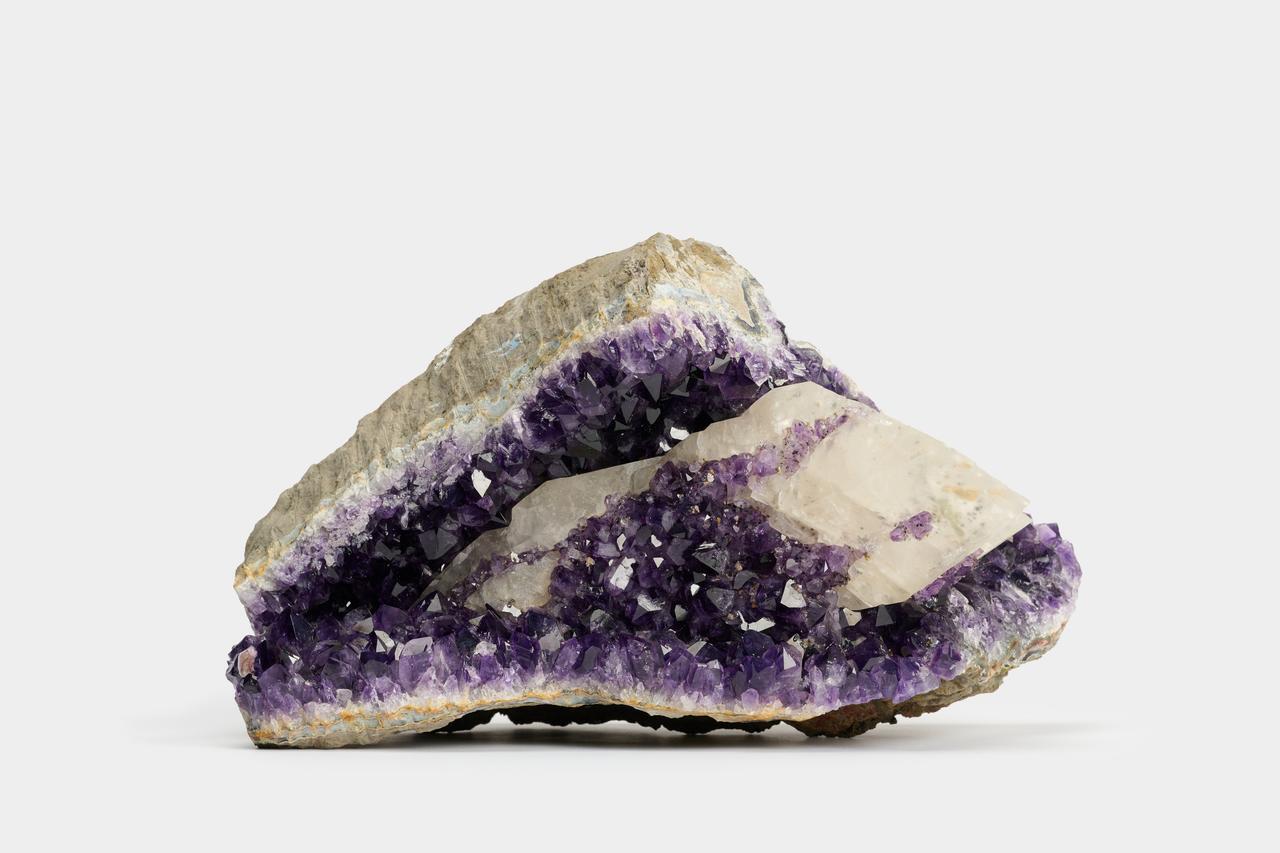
Ruby Crystals - Height: 22 mm - Width: 20 mm- 103.35 g - (7)


06
days
07
hours
31
minutes
55
seconds

No bids placed
Catawiki Buyer Protection
Your payment’s safe with us until you receive your object.View details
Trustpilot 4.4 | 134742 reviews
Rated Excellent on Trustpilot.
Lot of seven rough rubies from Mozambique, in crystal form, with total weight 103.35 g (516.75 carats).
AI-assisted summary
Description from the seller
MINERALOGICAL EXPERTISE REPORT
Classification: Corundum
GEMOLOGICAL EXPERTISE REPORT
LOT OF 7 RAW RUBIES — MOZAMBIQUE
Total lot weight: 103.35 grams 516.75 Carats
Number of pieces: 7 specimens
Origin: Mozambique (declared provenance, lab not certified)
Condition: Mine roughs, untreated, with natural gangue
Analysis method: Morphological examination and study of fluorescence under ultraviolet (UV) light
I. DETAILED DESCRIPTION OF THE SPECIMENS
Specimen No.1: Massive mass
Morphology: Compact, rough texture typical of massive corundas with a cracked surface.
UV Behavior: Exhibits intense, saturated, uniform red-purple fluorescence across all faces.
Specimen No.2: Perfect hexagonal prism (Trapiche type)
Morphology: Prism crystal of superb crystal geometry. Its flat, hexagonal terminal face is remarkably regular.
UV Behavior: Displays a sectorized star-like structure (Trapiche type) with absolute clarity emanating from a central, lighter core. Its natural raw base shows a clear intergrowth with its beige matrix.
Specimen No.3: Crystal with geometric faces
Morphology: Large rough crystal with a textured surface and a plane terminal face with well-defined polygonal contours.
UV Behavior: Strong orange-red fluorescence on the plane face. Its flanks and base show a complex, authentic interlocking with the original gray-green and beige host rock.
Specimen No.4: Elongated hexagonal prism (Trapiche type)
Morphology: Crystalline habit elongated with six clearly distinct sides.
UV Behavior: The main face reveals sectorized star-like growth (Trapiche type) ideally defined under UV. Its body is enveloped by a green/gray natural gangue on the lateral faces, with a strong concentration of sparkling rubies at one end.
Specimen No.5: Geometric conical crystal (Trapiche type)
Morphology: Stone body adopts a truncated cone/pyramidal profile.
UV Behavior: Confirms hexagonal sectorized growth. Its terminal face shows clearly defined straight, parallel growth lines. Prominent lateral fluorescence contrasted with a rougher, speckled rear tied to its gangue.
Specimen No.6: Transition crystal
Morphology: General pyramid shape, rounded and softened by its gangue at the summit.
UV Behavior: Shows an extremely bright neon-red main face, crossed by fine light-colored natural veins. Its flanks reveal a predominant presence of the gray-green matrix rock where the ruby appears more grainy.
Specimen No.7: Contrast mass
Morphology: Two-layer sample offering an excellent view in natural cross-section.
UV Behavior: Reveals a broad, continuous sheet of rubies with very bright neon red fluorescence. A clear transitional face shows how the crystal interlocks with its beige gangue, while the reverse is almost entirely covered by a dark gray-green matrix rock.
- Lot homogeneity: The identical fluorescent response (neon red/purple) under UV across all 7 pieces confirms a common and coherent geological origin (Mozambique).
- The presence of three specimens (No.2, No.4 and No.5) displaying hexagonal geometric crystal criteria and star-like sectorized structures (Trapiche type) greatly increases the value of this lot for raw mineral collectors.
- Natural guarantee: The systematic and intact intergrowth between ruby and its various gangues (beige, gray-green) is the best visual indicator of the total absence of treatment or stabilization. Conclusion
This lot is of real mineralogical and gemological interest. Several pieces show features highly compatible with natural rough ruby corundums, notably fluorescence, crystal structure, and the presence of natural matrix.
To allow you to bid with confidence, this lot of 7 rough rubies (103.35 g) has been photographed under two specific lighting conditions:
Image files image_56.png to image_65.png (Natural sunlight): These shots highlight the stones’ real appearance to the naked eye. You will see their natural red-purple hues as well as their natural matrices and gangues, absolute proof of authentic, mine-rough stones with no treatment (no heating, no glass filling).
Image files image_66.png to image_75.png (Under UV lamp): These photos reveal exceptional chromium content in these rubies, which respond with spectacular neon red fluorescence. This lighting beautifully highlights the rare 6-branch star-shaped geometric structure (sectorized growth of Trapiche type) on the lot’s master pieces.
MINERALOGICAL EXPERTISE REPORT
Classification: Corundum
GEMOLOGICAL EXPERTISE REPORT
LOT OF 7 RAW RUBIES — MOZAMBIQUE
Total lot weight: 103.35 grams 516.75 Carats
Number of pieces: 7 specimens
Origin: Mozambique (declared provenance, lab not certified)
Condition: Mine roughs, untreated, with natural gangue
Analysis method: Morphological examination and study of fluorescence under ultraviolet (UV) light
I. DETAILED DESCRIPTION OF THE SPECIMENS
Specimen No.1: Massive mass
Morphology: Compact, rough texture typical of massive corundas with a cracked surface.
UV Behavior: Exhibits intense, saturated, uniform red-purple fluorescence across all faces.
Specimen No.2: Perfect hexagonal prism (Trapiche type)
Morphology: Prism crystal of superb crystal geometry. Its flat, hexagonal terminal face is remarkably regular.
UV Behavior: Displays a sectorized star-like structure (Trapiche type) with absolute clarity emanating from a central, lighter core. Its natural raw base shows a clear intergrowth with its beige matrix.
Specimen No.3: Crystal with geometric faces
Morphology: Large rough crystal with a textured surface and a plane terminal face with well-defined polygonal contours.
UV Behavior: Strong orange-red fluorescence on the plane face. Its flanks and base show a complex, authentic interlocking with the original gray-green and beige host rock.
Specimen No.4: Elongated hexagonal prism (Trapiche type)
Morphology: Crystalline habit elongated with six clearly distinct sides.
UV Behavior: The main face reveals sectorized star-like growth (Trapiche type) ideally defined under UV. Its body is enveloped by a green/gray natural gangue on the lateral faces, with a strong concentration of sparkling rubies at one end.
Specimen No.5: Geometric conical crystal (Trapiche type)
Morphology: Stone body adopts a truncated cone/pyramidal profile.
UV Behavior: Confirms hexagonal sectorized growth. Its terminal face shows clearly defined straight, parallel growth lines. Prominent lateral fluorescence contrasted with a rougher, speckled rear tied to its gangue.
Specimen No.6: Transition crystal
Morphology: General pyramid shape, rounded and softened by its gangue at the summit.
UV Behavior: Shows an extremely bright neon-red main face, crossed by fine light-colored natural veins. Its flanks reveal a predominant presence of the gray-green matrix rock where the ruby appears more grainy.
Specimen No.7: Contrast mass
Morphology: Two-layer sample offering an excellent view in natural cross-section.
UV Behavior: Reveals a broad, continuous sheet of rubies with very bright neon red fluorescence. A clear transitional face shows how the crystal interlocks with its beige gangue, while the reverse is almost entirely covered by a dark gray-green matrix rock.
- Lot homogeneity: The identical fluorescent response (neon red/purple) under UV across all 7 pieces confirms a common and coherent geological origin (Mozambique).
- The presence of three specimens (No.2, No.4 and No.5) displaying hexagonal geometric crystal criteria and star-like sectorized structures (Trapiche type) greatly increases the value of this lot for raw mineral collectors.
- Natural guarantee: The systematic and intact intergrowth between ruby and its various gangues (beige, gray-green) is the best visual indicator of the total absence of treatment or stabilization. Conclusion
This lot is of real mineralogical and gemological interest. Several pieces show features highly compatible with natural rough ruby corundums, notably fluorescence, crystal structure, and the presence of natural matrix.
To allow you to bid with confidence, this lot of 7 rough rubies (103.35 g) has been photographed under two specific lighting conditions:
Image files image_56.png to image_65.png (Natural sunlight): These shots highlight the stones’ real appearance to the naked eye. You will see their natural red-purple hues as well as their natural matrices and gangues, absolute proof of authentic, mine-rough stones with no treatment (no heating, no glass filling).
Image files image_66.png to image_75.png (Under UV lamp): These photos reveal exceptional chromium content in these rubies, which respond with spectacular neon red fluorescence. This lighting beautifully highlights the rare 6-branch star-shaped geometric structure (sectorized growth of Trapiche type) on the lot’s master pieces.
Details
Number of objects
7
Main mineral
Ruby
Mineral form
Crystals
Supplement
7 Mozambican rubies, 516.75 carats
Weight
103.35 g
Origin (region/city)
516.75 Mozambican carats
Country of origin
Mozambique
Height
22 mm
Width
20 mm
Sold by