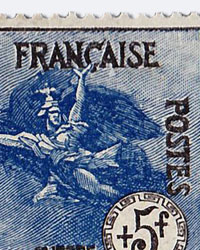
GDR - small collection of phase prints **


06
days
16
hours
19
minutes
41
seconds

6 other people are watching this object
 | €1 |
|---|
Catawiki Buyer Protection
Your payment’s safe with us until you receive your object.View details
Trustpilot 4.4 | 135773 reviews
Rated Excellent on Trustpilot.
Origin: DDR; Title: 'kleine Sammlung Phasendrucke **'; Condition: MNH (postfrisch).
AI-assisted summary
Description from the seller
small collection of phase prints ** Michel value over €2700.00
Buy-it-now for €102
What are phase prints:
Anyone who likes to grab a brush themselves – whether as an artist or as a DIY enthusiast – knows the inescapable truth: after the actual work comes the big cleanup – and it sometimes costs as much nerves as the work itself. It may be a small consolation that others don’t fare any better. Every industry that handles colors faces the same problem. In the printing industry, color rollers and printing formes must be cleaned continuously to free up the color droplets again and thus guarantee constant color absorption capacity and print quality. Here the cleaning is not done with a rag and soap, but with dry ice, ultrasound, or laser.
In postage stamp printing, these cleaning processes not only yield razor-sharp and high-quality postage stamps. They also create philatelic features that beautifully document the production process of a stamp. After cleaning, the cleanliness of the printing formes is tested before the actual print job begins. This is how proofs are created: trial prints, press proofs, or phase prints.
In multi-color printing, the stamp image is gradually assembled with the help of several printing formes. So for one stamp, several inspection passes are required – after all, every color should come from a perfectly cleaned printing forme. At the same time, the fit (registration) of the different printing formes should also be checked. So every phase of the print is tested individually. The result are the so-called phase prints.
Using the DDR postage stamp issue for example (not in lot here) “20 Years of the Society for Sport and Technology” from 1972, one can pictorially follow the process. The stamp image of MiNr. 1777 consists of four colors: gray, turquoise blue, olive yellow, and violet ultramarine.
In the first step of print inspection, only the gray color is applied to unperforated paper. It is still impossible to guess what motif this could be. The second phase adds gray and turquoise blue – it creates an image that could depict a rotor. In the third phase olive yellow is added. Now we already clearly recognize that it is about shipping – and that the registration marks align, the image parts fit together perfectly. The fourth and final phase shows the finished image and is – aside from the perforation – identical to the final stamp.
By the way, these phase prints of MiNr. 1777 are being showcased for the first time in MICHEL-Deutschland-Spezial 2023. To illustrate the valuation principle, we reveal their price here exceptionally: a price range is given from €20 to €80. The lower price applies to the first printing phase, i.e., the “stamp” in pure gray. The value then increases evenly until the phase print with four colors is reached, i.e., the two-color is €40, the three-color €60, and the four-color €80. Not bad when you consider that normal stamps lie in the cent range.
Phase prints, by the way, never carried postage value – not even the four-color ones. They don’t have to. They’re still beautiful.
Source: Michel
see photos
small collection of phase prints ** Michel value over €2700.00
Buy-it-now for €102
What are phase prints:
Anyone who likes to grab a brush themselves – whether as an artist or as a DIY enthusiast – knows the inescapable truth: after the actual work comes the big cleanup – and it sometimes costs as much nerves as the work itself. It may be a small consolation that others don’t fare any better. Every industry that handles colors faces the same problem. In the printing industry, color rollers and printing formes must be cleaned continuously to free up the color droplets again and thus guarantee constant color absorption capacity and print quality. Here the cleaning is not done with a rag and soap, but with dry ice, ultrasound, or laser.
In postage stamp printing, these cleaning processes not only yield razor-sharp and high-quality postage stamps. They also create philatelic features that beautifully document the production process of a stamp. After cleaning, the cleanliness of the printing formes is tested before the actual print job begins. This is how proofs are created: trial prints, press proofs, or phase prints.
In multi-color printing, the stamp image is gradually assembled with the help of several printing formes. So for one stamp, several inspection passes are required – after all, every color should come from a perfectly cleaned printing forme. At the same time, the fit (registration) of the different printing formes should also be checked. So every phase of the print is tested individually. The result are the so-called phase prints.
Using the DDR postage stamp issue for example (not in lot here) “20 Years of the Society for Sport and Technology” from 1972, one can pictorially follow the process. The stamp image of MiNr. 1777 consists of four colors: gray, turquoise blue, olive yellow, and violet ultramarine.
In the first step of print inspection, only the gray color is applied to unperforated paper. It is still impossible to guess what motif this could be. The second phase adds gray and turquoise blue – it creates an image that could depict a rotor. In the third phase olive yellow is added. Now we already clearly recognize that it is about shipping – and that the registration marks align, the image parts fit together perfectly. The fourth and final phase shows the finished image and is – aside from the perforation – identical to the final stamp.
By the way, these phase prints of MiNr. 1777 are being showcased for the first time in MICHEL-Deutschland-Spezial 2023. To illustrate the valuation principle, we reveal their price here exceptionally: a price range is given from €20 to €80. The lower price applies to the first printing phase, i.e., the “stamp” in pure gray. The value then increases evenly until the phase print with four colors is reached, i.e., the two-color is €40, the three-color €60, and the four-color €80. Not bad when you consider that normal stamps lie in the cent range.
Phase prints, by the way, never carried postage value – not even the four-color ones. They don’t have to. They’re still beautiful.
Source: Michel
see photos
Details
Era
1900-2000
Geographic origin
GDR
Condition
MNH (Mint never hinged)
Title
small collection of phase prints **
Has certificate
No
Has expert signature
No