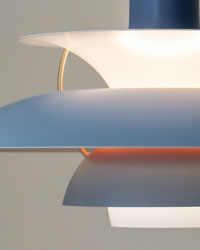
Mazzega - Chandelier - Murano glass


Starting bid
€ 1
Add to your favourites to get an alert when the auction starts.

Expert
Selected by John Bolt
Has over 20 years of trading experience and owned an independent business.
Estimate € 650 - € 750
Catawiki Buyer Protection
Your payment’s safe with us until you receive your object.View details
Trustpilot 4.4 | 136828 reviews
Rated Excellent on Trustpilot.
Description from the seller
ACCURATE AND TRACEABLE ADDENDUM!
IN COUNTRIES WITH CUSTOMS POSSIBLE ADDITIONAL COSTS!
Mazzega
Sculptural chandelier in Murano art glass – A rare example of organic experimentation and luminous modularity from the 1970s
Introduction
Among the most fascinating and sought-after productions of the Venetian craftsmanship of the second half of the 20th century, this extraordinary chandelier, attributed to Mazzega, represents a masterful synthesis between material research, design innovation, and sculptural value.
The specimen presented here stands out for its extreme rarity and for the presence of a cascade of elements in artistic glass that transform the lighting body into a true suspended luminous sculpture.
Formal and compositional analysis
The structure develops vertically around a robust central metal frame, chromed, characterized by a strict and functional geometry. From this core emerge numerous metal supports to which the decorative glass elements are attached.
The overall effect is that of a floating light column, in which the strict linearity of the structure is softened by the irregular and natural movement of the glass meshes.
What immediately strikes the observer is the extraordinary visual lightness of the whole: despite the considerable material presence of the glass, the chandelier appears almost ethereal, suspended between transparency and refraction.
The glass: matter, light and experimentation
The most significant element of the work is represented by the long modular chains in blown and pressed glass.
Each module presents an irregular hexagonal shape reminiscent of natural cellular structures, honeycombs, mineral crystallizations, or organic aggregations. The glass surface is characterized by a frosted and granular texture, obtained through specific treatments that amplify light diffusion.
This surface treatment represents one of the most innovative aspects of the project: the glass not only transmits light but transforms, fragments, and multiplies it.
Observing the elements closely one notices:
-subtle dimensional variations between one module and another;
-microbubbles and inclusions typical of Murano artisanal work;
-irregular surfaces that generate continuous refraction games;
-soft edges that soften the rigidity of the hexagonal geometry.
These characteristics confirm the strongly artisanal nature of the piece and enhance its collectible value.
The luminous effect
When lit, the chandelier fully reveals its artistic nature.
The internal light sources are not immediately visible, but emerge filtered through the weave of the glass modules. The light passes through the opalescent and textured glass, creating a soft, enveloping diffusion.
On the surrounding walls dynamic reflections and crystalline glows are generated, amplifying the perception of space. The effect recalls light passing through ice or a natural quartz formation.
The composition thus produces a double visual experience:
- when off, it appears as a material and architectural sculpture;
- when on, it transforms into a pulsating and vibrant luminous organism.
It is precisely this dual nature that makes Carlo Nason's projects particularly appreciated by design historians and international collectors.
Carlo Nason and the Murano design revolution
Carlo Nason belongs to that generation of designers who, between the 1960s and 1970s, helped usher Murano glass toward modernity.
Unlike many designers tied to traditional forms, Nason developed a personal language based on industrial experimentation, on the use of modularity, and on the search for new relationships between glass, light, and architecture.
His creations for Mazzega stand out for:
- strong sculptural identity;
- technical innovation;
- exploration of transparencies;
- balance between craftsmanship and industrial design.
This chandelier perfectly embodies these principles, representing one of the most refined examples of his production.
Collectible value and rarity
Complete and well-preserved specimens of this type are today extremely difficult to find on the market.
The fragility of the modular elements has led over the decades to the loss or replacement of many original components; therefore pieces that preserve the original configuration integralized are particularly sought after.
The growing international interest in 1970s Italian design has also contributed to increasing demand for Carlo Nason's works, especially among collectors specialized in:
- Murano art glass;
- Italian radical design;
- vintage sculptural lighting;
- 20th-century collectible furniture.
Critical conclusion
ACCURATE AND TRACEABLE ADDENDUM!
IN COUNTRIES WITH CUSTOMS POSSIBLE ADDITIONAL COSTS!
Mazzega
Sculptural chandelier in Murano art glass – A rare example of organic experimentation and luminous modularity from the 1970s
Introduction
Among the most fascinating and sought-after productions of the Venetian craftsmanship of the second half of the 20th century, this extraordinary chandelier, attributed to Mazzega, represents a masterful synthesis between material research, design innovation, and sculptural value.
The specimen presented here stands out for its extreme rarity and for the presence of a cascade of elements in artistic glass that transform the lighting body into a true suspended luminous sculpture.
Formal and compositional analysis
The structure develops vertically around a robust central metal frame, chromed, characterized by a strict and functional geometry. From this core emerge numerous metal supports to which the decorative glass elements are attached.
The overall effect is that of a floating light column, in which the strict linearity of the structure is softened by the irregular and natural movement of the glass meshes.
What immediately strikes the observer is the extraordinary visual lightness of the whole: despite the considerable material presence of the glass, the chandelier appears almost ethereal, suspended between transparency and refraction.
The glass: matter, light and experimentation
The most significant element of the work is represented by the long modular chains in blown and pressed glass.
Each module presents an irregular hexagonal shape reminiscent of natural cellular structures, honeycombs, mineral crystallizations, or organic aggregations. The glass surface is characterized by a frosted and granular texture, obtained through specific treatments that amplify light diffusion.
This surface treatment represents one of the most innovative aspects of the project: the glass not only transmits light but transforms, fragments, and multiplies it.
Observing the elements closely one notices:
-subtle dimensional variations between one module and another;
-microbubbles and inclusions typical of Murano artisanal work;
-irregular surfaces that generate continuous refraction games;
-soft edges that soften the rigidity of the hexagonal geometry.
These characteristics confirm the strongly artisanal nature of the piece and enhance its collectible value.
The luminous effect
When lit, the chandelier fully reveals its artistic nature.
The internal light sources are not immediately visible, but emerge filtered through the weave of the glass modules. The light passes through the opalescent and textured glass, creating a soft, enveloping diffusion.
On the surrounding walls dynamic reflections and crystalline glows are generated, amplifying the perception of space. The effect recalls light passing through ice or a natural quartz formation.
The composition thus produces a double visual experience:
- when off, it appears as a material and architectural sculpture;
- when on, it transforms into a pulsating and vibrant luminous organism.
It is precisely this dual nature that makes Carlo Nason's projects particularly appreciated by design historians and international collectors.
Carlo Nason and the Murano design revolution
Carlo Nason belongs to that generation of designers who, between the 1960s and 1970s, helped usher Murano glass toward modernity.
Unlike many designers tied to traditional forms, Nason developed a personal language based on industrial experimentation, on the use of modularity, and on the search for new relationships between glass, light, and architecture.
His creations for Mazzega stand out for:
- strong sculptural identity;
- technical innovation;
- exploration of transparencies;
- balance between craftsmanship and industrial design.
This chandelier perfectly embodies these principles, representing one of the most refined examples of his production.
Collectible value and rarity
Complete and well-preserved specimens of this type are today extremely difficult to find on the market.
The fragility of the modular elements has led over the decades to the loss or replacement of many original components; therefore pieces that preserve the original configuration integralized are particularly sought after.
The growing international interest in 1970s Italian design has also contributed to increasing demand for Carlo Nason's works, especially among collectors specialized in:
- Murano art glass;
- Italian radical design;
- vintage sculptural lighting;
- 20th-century collectible furniture.
Critical conclusion
Details
Era
1900-2000
Glass type
Murano glass
Number of objects
1
Material
Chrome, Glass, Metal
Manufacturer/brand
Mazzega
Country of origin
Italy
Style
Mid-century modern
Condition
Excellent condition: barely used with minimal signs of wear
In working order
Yes
Height
115 cm
Width
28 cm
Depth
28 cm
Colour
Transparent
Number Of Fittings
16
Estimated period
1960-1970
Sold by