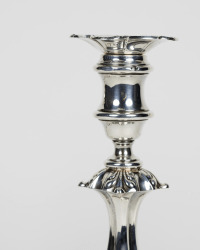
Chalice (2) - .900 silver - Chalice and Paten


Starting bid
€ 1
Add to your favourites to get an alert when the auction starts.

Expert
Selected by Inés Fernández
Specialised in Spanish and Portuguese silver with over 10 years in galleries and auctions.
Estimate € 2,000 - € 2,500
Catawiki Buyer Protection
Your payment’s safe with us until you receive your object.View details
Trustpilot 4.4 | 137154 reviews
Rated Excellent on Trustpilot.
Description from the seller
Neo-Gothic Liturgical Ensemble in Sterling Silver 900 (Chalice and Paten) – Jean-Baptiste Van Damme, Bruges, 19th Century
DetailedExcellent liturgical set comprising a chalice and its paten origin, made in the second half of the 19th century in Neo-Gothic style (Gothic Revival) by the famous Belgian goldsmith Jean-Baptiste Van Damme (Bruges). The chalice features a flared cup with interior vermeil (gold-plated silver), resting on an architectural stem with a central knot adorned with engraved medallions and a broad polylobed base decorated with a cross engraved. The original silver paten is entirely gilded with fine gold on its upper face and presents a finely engraved cross with double lines. The two pieces are in excellent condition, displaying a magnificent natural patina and official state punch marks as well as the master-goldsmith’s mark (“JVD” with a cross) perfectly legible, guaranteeing absolute authenticity and the historical value of this set.
Ensemble liturgique ecclésiastique (Calice et Patène)
Époque / Période : Seconde moitié du XIXe siècle (ca. 1870–1890)
Style : Néo-Gothique (Gothic Revival)
Auteur / Atelier : Jean-Baptiste Van Damme (Bruges, Belgique)
Matériau : Argent massif (Titre 900/1000) et Or (Technique du Vermeil / Argent doré)
Hauteur du Calice : 21 cm
Largeur de la Base (Calice) : 16 cm
Diamètre de la Coupe (Calice) : 11,7 cm
Diamètre de la Patène : 15 cm
Poids Total : 786 grammes (ensemble complet : calice + patène)
Poinçons de Garantie :
Poinçon de titre chiffré : « 900 » garantissant la pureté de l'argent.
Poinçon de maître-orfèvre centrale.
Poinçon officiel d'État : (Royaume de Belgique).
État de conservation : Excellent état général (Excellent antique condition).
Vermeil d'origine très bien préservé sur la coupe et la patène ; micro-rayures normales d'usage ecclésiastique historique (patine d'époque authentique) ; aucune restauration ni déformation structurelle.
Neo-Gothic Liturgical Ensemble in Sterling Silver 900 (Chalice and Paten) – Jean-Baptiste Van Damme, Bruges, 19th Century
DetailedExcellent liturgical set comprising a chalice and its paten origin, made in the second half of the 19th century in Neo-Gothic style (Gothic Revival) by the famous Belgian goldsmith Jean-Baptiste Van Damme (Bruges). The chalice features a flared cup with interior vermeil (gold-plated silver), resting on an architectural stem with a central knot adorned with engraved medallions and a broad polylobed base decorated with a cross engraved. The original silver paten is entirely gilded with fine gold on its upper face and presents a finely engraved cross with double lines. The two pieces are in excellent condition, displaying a magnificent natural patina and official state punch marks as well as the master-goldsmith’s mark (“JVD” with a cross) perfectly legible, guaranteeing absolute authenticity and the historical value of this set.
Ensemble liturgique ecclésiastique (Calice et Patène)
Époque / Période : Seconde moitié du XIXe siècle (ca. 1870–1890)
Style : Néo-Gothique (Gothic Revival)
Auteur / Atelier : Jean-Baptiste Van Damme (Bruges, Belgique)
Matériau : Argent massif (Titre 900/1000) et Or (Technique du Vermeil / Argent doré)
Hauteur du Calice : 21 cm
Largeur de la Base (Calice) : 16 cm
Diamètre de la Coupe (Calice) : 11,7 cm
Diamètre de la Patène : 15 cm
Poids Total : 786 grammes (ensemble complet : calice + patène)
Poinçons de Garantie :
Poinçon de titre chiffré : « 900 » garantissant la pureté de l'argent.
Poinçon de maître-orfèvre centrale.
Poinçon officiel d'État : (Royaume de Belgique).
État de conservation : Excellent état général (Excellent antique condition).
Vermeil d'origine très bien préservé sur la coupe et la patène ; micro-rayures normales d'usage ecclésiastique historique (patine d'époque authentique) ; aucune restauration ni déformation structurelle.
Details
Era
1400-1900
Style subtype
Gothic Style
Gross weight
786 g
Silver type
.900 silver
Title additional information
Chalice and Paten
Number of objects
2
Country of origin
Belgium
Material
Silver
Style
Antique
Condition
Good condition - used with small signs of ageing
Height
21 cm
Width
16 cm
Diameter
15 cm
Depth
11.7 cm
Estimated period
1850-1900