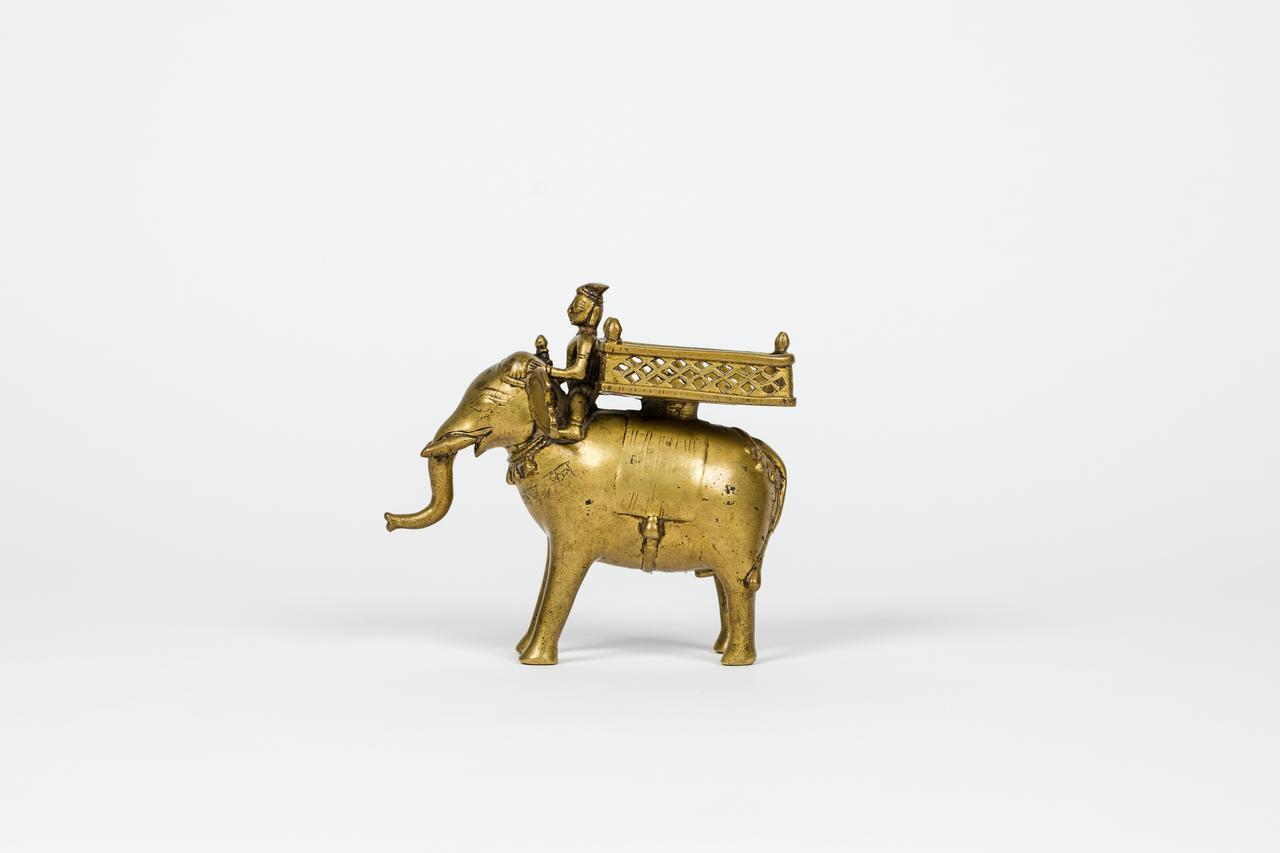
Bronze - India - 20th century


03
days
22
hours
23
minutes
25
seconds
Current bid
€ 1
Reserve price not met

Expert
Selected by Sarah Le Helley
Studied Asian art and art market management; researched art in Taipei; worked in auctions.
Estimate € 300 - € 380
 | €1 |
|---|
Catawiki Buyer Protection
Your payment’s safe with us until you receive your object.View details
Trustpilot 4.4 | 141835 reviews
Rated Excellent on Trustpilot.
Indian bronze Jain altarpiece, 40 cm high, 43 cm wide and 5.5 cm deep, with a central meditating Jina surrounded by 27 Jinas and two standing Jinas in kayotsarga, a lower plinth decorated with elephants, tigers and fly whisk bearers, in good condition from a gallery/antique dealer.
AI-assisted summary
Description from the seller
This large and unusual Jain altarpiece comprises a frame with a central seated Jina in a meditative posture surrounded by 27 other Jinas all seated uniformally and cast with srivastsa symbols on their chests, two standing Jinas in the kayotsarga meditative pose, and various attendants. The arrangement of the Jinas is very geometric, and other than a canopy over the central Jina, the frame is simple and serves to emphasise rather than distract from the Jinas. All the Jinas provide clear silhouettes on account of the voids that surround each one.
The lower plinth is decorated with elephants, tigers and fly whisk bearers.
The array suggests that all the Jinas have gathered to hear a sermon from the central figure. Alternatively, the unusually large number of Jinas in such a stylised setting suggests the endless nature of Jainism and the wisdom of the Jinas.
Altarpieces and plaques with larger numbers of Jinas are associated with the later period, hence a dating of 17th-18th century.
This large and unusual Jain altarpiece comprises a frame with a central seated Jina in a meditative posture surrounded by 27 other Jinas all seated uniformally and cast with srivastsa symbols on their chests, two standing Jinas in the kayotsarga meditative pose, and various attendants. The arrangement of the Jinas is very geometric, and other than a canopy over the central Jina, the frame is simple and serves to emphasise rather than distract from the Jinas. All the Jinas provide clear silhouettes on account of the voids that surround each one.
The lower plinth is decorated with elephants, tigers and fly whisk bearers.
The array suggests that all the Jinas have gathered to hear a sermon from the central figure. Alternatively, the unusually large number of Jinas in such a stylised setting suggests the endless nature of Jainism and the wisdom of the Jinas.
Altarpieces and plaques with larger numbers of Jinas are associated with the later period, hence a dating of 17th-18th century.
Details
Dynastic Style/Period
20th century
Number of objects
1
Country of Origin
India
Material
Bronze
Height
40 cm
Width
43 cm
Depth
5.5 cm
Condition
Good condition
Provenance
Gallery / Antique dealer
Sold by