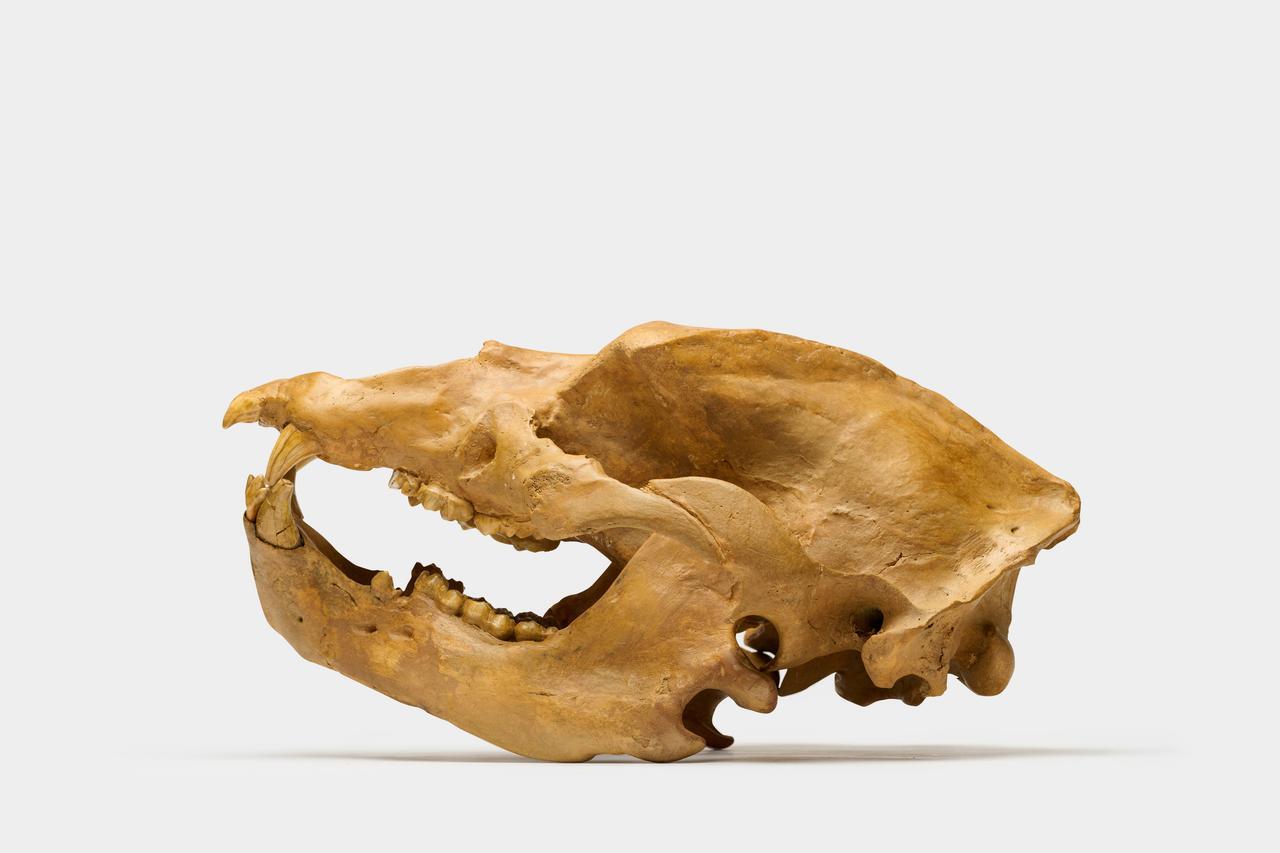
Steppe wisent - Fossil mandible bone - Bison priscus - 44 cm


02
days
06
hours
57
minutes
58
seconds

 | €32 | |
|---|---|---|
| €29 | |
 | €26 | |
Catawiki Buyer Protection
Your payment’s safe with us until you receive your object.View details
Trustpilot 4.4 | 137843 reviews
Rated Excellent on Trustpilot.
Fossil lower jaw of a Steppe wisent (Bison priscus), from the Pleistoceen period (Kwartair, 2.58–0.0117 million years ago), specimen Steppewisent, condition natural, treated with Paraloid B-72, width 44 cm, authenticity original/official.
AI-assisted summary
Description from the seller
Fossil lower jaw of a Steppe wisent (Bison priscus) – Pleistocene
An impressive fossil consisting of a complete lower jaw (mandible) of the steppe wisent, *Bison priscus*, one of the most characteristic large grazers of the Pleistocene. This imposing bovine-like animal crossed the mammoth steppes of Europe and Asia during the last glaciation, together with congeners such as the woolly mammoth and the woolly rhinoceros.
The lower jaw shows a beautifully preserved row of teeth with a clearly visible occlusion pattern, and the characteristic robust shape of the ramus and coronoid process is well recognizable.
The fossil is mineralized and exhibits the typical dark brown to ochre coloration that is characteristic for bone material from this period. The surface is conserved with Paraloid B-72, which brings out the details of the dentition and bone structure even more.
A splendid object for the serious collector of Pleistocene megafauna, suitable as a study piece or as a striking decorative element in a collection.
Exclusively black stand.
Fossil lower jaw of a Steppe wisent (Bison priscus) – Pleistocene
An impressive fossil consisting of a complete lower jaw (mandible) of the steppe wisent, *Bison priscus*, one of the most characteristic large grazers of the Pleistocene. This imposing bovine-like animal crossed the mammoth steppes of Europe and Asia during the last glaciation, together with congeners such as the woolly mammoth and the woolly rhinoceros.
The lower jaw shows a beautifully preserved row of teeth with a clearly visible occlusion pattern, and the characteristic robust shape of the ramus and coronoid process is well recognizable.
The fossil is mineralized and exhibits the typical dark brown to ochre coloration that is characteristic for bone material from this period. The surface is conserved with Paraloid B-72, which brings out the details of the dentition and bone structure even more.
A splendid object for the serious collector of Pleistocene megafauna, suitable as a study piece or as a striking decorative element in a collection.
Exclusively black stand.
Details
Specimen
Steppe wisent
Scientific name
Bison priscus
Geological period
Quaternary, Pleistocene (2.58 - 0.0117 million years)
Condition
Natural
Width
44 cm
Authenticity
Original/official
Sold by