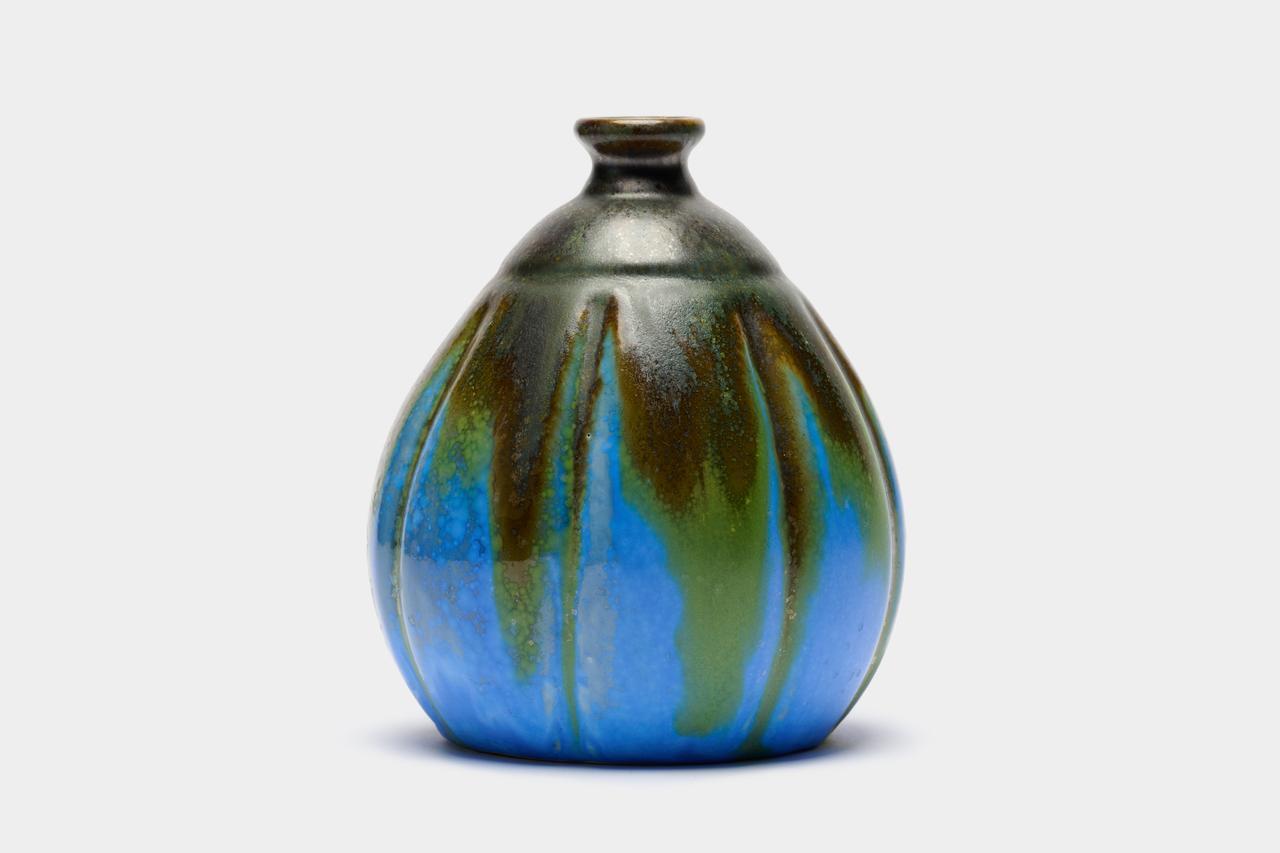
Antique Vessel - Earthenware - 1850-1900 - Iberian Faience Jar


04
days
01
hour
01
minute
52
seconds
Starting bid
€ 1
Reserve price not met

Expert
Selected by John Laurance
Thirty years' experience in decorative objects and two decades as shop owner.
Estimate € 150 - € 200
No bids placed
Catawiki Buyer Protection
Your payment’s safe with us until you receive your object.View details
Trustpilot 4.4 | 138658 reviews
Rated Excellent on Trustpilot.
An impressive large two-handled tin-glazed earthenware jar in amphora form of Iberian origin, most likely Portuguese, dating from 1850–1900, decorated in cobalt blue with ship cartouches and floral motifs, height 45 cm, top diameter 17 cm, base diameter 22 cm, with brass mounts and in good condition with glaze crazing and wear.
AI-assisted summary
Description from the seller
An impressive large two-handled tin-glazed earthenware (faience) jar of amphora form, Iberian origin (most likely Portuguese, possibly Spanish), dating from the 18th or 19th century.
The tall, slightly waisted body is covered in an opaque white tin glaze and richly decorated in cobalt blue. The main decorative elements consist of large cartouches containing stylised sailing ships with multi-tiered structures, sails and detailed hulls, flanked by dense floral and foliate motifs, dotted (“seeded”) grounds, geometric panels and scrolling borders. One side features a prominent radiating star or flower medallion.
The painting is freehand and vigorous, showing the characteristic blend of maritime themes (particularly common in Portuguese ceramics) and residual Hispano-Moresque/Islamic-influenced patterning that persisted in Iberian tin-glazed wares.
The jar has two small loop handles set high on the shoulder. Both the rim and the foot are fitted with later brass (copper-alloy) protective mounts.
This is a substantial and decorative example of Iberian blue-and-white faience, combining attractive scale with distinctive figurative (ship) decoration.
Dimensions:
Height: 45 cm
Diameter at top (rim): 17 cm
Diameter at base: 22 cm
Condition is good and consistent with age and use. The glaze shows overall crazing. There is general surface wear, and minor abrasion. There is a circular knock to the glaze approximately 2 cm in diameter, exposing the body beneath (see final photo). Small chips and glaze losses are present in places. The brass mounts remain in place. No major structural cracks are apparent. Please study the photographs carefully for a complete impression of condition.
The combination of form, blue-and-white palette, maritime subject matter and decorative style points strongly to Portuguese faience (Lisbon, Coimbra or related centres) or Spanish tin-glazed production of the period. The piece is unmarked.
Prompt and secure packing.
An impressive large two-handled tin-glazed earthenware (faience) jar of amphora form, Iberian origin (most likely Portuguese, possibly Spanish), dating from the 18th or 19th century.
The tall, slightly waisted body is covered in an opaque white tin glaze and richly decorated in cobalt blue. The main decorative elements consist of large cartouches containing stylised sailing ships with multi-tiered structures, sails and detailed hulls, flanked by dense floral and foliate motifs, dotted (“seeded”) grounds, geometric panels and scrolling borders. One side features a prominent radiating star or flower medallion.
The painting is freehand and vigorous, showing the characteristic blend of maritime themes (particularly common in Portuguese ceramics) and residual Hispano-Moresque/Islamic-influenced patterning that persisted in Iberian tin-glazed wares.
The jar has two small loop handles set high on the shoulder. Both the rim and the foot are fitted with later brass (copper-alloy) protective mounts.
This is a substantial and decorative example of Iberian blue-and-white faience, combining attractive scale with distinctive figurative (ship) decoration.
Dimensions:
Height: 45 cm
Diameter at top (rim): 17 cm
Diameter at base: 22 cm
Condition is good and consistent with age and use. The glaze shows overall crazing. There is general surface wear, and minor abrasion. There is a circular knock to the glaze approximately 2 cm in diameter, exposing the body beneath (see final photo). Small chips and glaze losses are present in places. The brass mounts remain in place. No major structural cracks are apparent. Please study the photographs carefully for a complete impression of condition.
The combination of form, blue-and-white palette, maritime subject matter and decorative style points strongly to Portuguese faience (Lisbon, Coimbra or related centres) or Spanish tin-glazed production of the period. The piece is unmarked.
Prompt and secure packing.
Details
Era
1400-1900
Weight
4500 g
Title additional information
Iberian Faience Jar
Number of objects
1
Material
Earthenware
Country of origin
Portugal
Height
45 cm
Width
22 cm
Depth
22 cm
Condition
Good condition - used with small signs of aging & blemishes
Style
Antique
Estimated period
1850-1900
Sold by