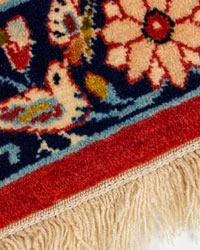
Hereke - Rug - 72 cm - 50 cm - Istanbuli Turkish


05
days
13
hours
40
minutes
32
seconds
Starting bid
€ 1
Reserve price not met

Expert
Selected by Richard Ebbers
Certified appraiser at Federation TMV with 30 years' professional antiques experience.
Estimate € 550 - € 700
No bids placed
Catawiki Buyer Protection
Your payment’s safe with us until you receive your object.View details
Trustpilot 4.4 | 138578 reviews
Rated Excellent on Trustpilot.
Turkish origin and model Istanbuli-Turc, a silk on silk wall tapestry measuring 72 × 50 cm, in overall good condition and professionally cleaned, dating to the mid 20th century.
AI-assisted summary
Description from the seller
True and Rare Old Turkish Istanbul Silk Rug: 49x72 cm - fringe in poor condition. Translation of the inscriptions
1. At the top: "شراب اندر کف" Translation: “Wine in hand” or “Wine in hand.”
2. On the left: "چنگ اندر کف" Translation: “The lute in hand” or “The zither in hand.”
3. On the right: "کتف اندر کف" This appears to be a deformation or stylization, but likely meant to rhyme with the others. The word "کتف" means “shoulder,” which here is probably metaphorical or poetic.
4. At the bottom: "جام بیدار هوش" Translation: “The cup that awakens the mind” or “The cup of awakening of the intellect.” The motif is typical of scenes of feasting or classical Persian poetry, often linked to the works of Hafez or Omar Khayyam, who sing of the pleasures of wine, music, and poetry. Perfect, I will explain the symbolism of this scene in Persian culture.
---
### 1. The Old Man (Sage or Poet) with the cup of wine:
- He often represents the Sufi or the mystical poet (like Hafez, Omar Khayyam, or Rumi).
- Wine in Persian poetry is not merely an alcoholic drink; it is a spiritual symbol:
- Mystical awakening, divine ecstasy.
- Transcendence of reason to reach divine love.
- Wine is a terrestrial “forbidden fruit” but allowed in the spiritual world, which denounces social hypocrisy.
### 2. The Dancing Woman (Wine Dancer):
- She embodies physical pleasure, earthly beauty.
- But in Sufi poetry, she also becomes an allegory of the free soul dancing in the quest for union with the Divine.
- The reclining, relaxed posture symbolizes relinquishing moral constraints.
### 3. The Musician (Lyre or Rubab Player):
- He symbolizes cosmic harmony.
- Music is seen as a means to reach spiritual ecstasy and to vibrate with the universe.
- It is the sonic equivalent of mystical wine: a path to self-forgetfulness in the All.
### 4. The Inscriptions (Epicurean Poetry):
- They evoke the three elements of the mystic feast: wine (شراب), music (چنگ), and pleasure (کتف).
- The bottom evokes the “cup that awakens the mind,” thus an invitation to transcend material life through pleasures that lead to higher consciousness.
---
### Global symbolism:
This kind of scene is not merely a celebration of earthly pleasures:
- It is a metaphor for the Sufi mystical path:
- One frees oneself from rigid rules (religious or social).
- One seeks divine truth through art, wine, beauty, and love.
- It is a soft rebellion against hypocrisy and a quest for authenticity.
True and Rare Old Turkish Istanbul Silk Rug: 49x72 cm - fringe in poor condition. Translation of the inscriptions
1. At the top: "شراب اندر کف" Translation: “Wine in hand” or “Wine in hand.”
2. On the left: "چنگ اندر کف" Translation: “The lute in hand” or “The zither in hand.”
3. On the right: "کتف اندر کف" This appears to be a deformation or stylization, but likely meant to rhyme with the others. The word "کتف" means “shoulder,” which here is probably metaphorical or poetic.
4. At the bottom: "جام بیدار هوش" Translation: “The cup that awakens the mind” or “The cup of awakening of the intellect.” The motif is typical of scenes of feasting or classical Persian poetry, often linked to the works of Hafez or Omar Khayyam, who sing of the pleasures of wine, music, and poetry. Perfect, I will explain the symbolism of this scene in Persian culture.
---
### 1. The Old Man (Sage or Poet) with the cup of wine:
- He often represents the Sufi or the mystical poet (like Hafez, Omar Khayyam, or Rumi).
- Wine in Persian poetry is not merely an alcoholic drink; it is a spiritual symbol:
- Mystical awakening, divine ecstasy.
- Transcendence of reason to reach divine love.
- Wine is a terrestrial “forbidden fruit” but allowed in the spiritual world, which denounces social hypocrisy.
### 2. The Dancing Woman (Wine Dancer):
- She embodies physical pleasure, earthly beauty.
- But in Sufi poetry, she also becomes an allegory of the free soul dancing in the quest for union with the Divine.
- The reclining, relaxed posture symbolizes relinquishing moral constraints.
### 3. The Musician (Lyre or Rubab Player):
- He symbolizes cosmic harmony.
- Music is seen as a means to reach spiritual ecstasy and to vibrate with the universe.
- It is the sonic equivalent of mystical wine: a path to self-forgetfulness in the All.
### 4. The Inscriptions (Epicurean Poetry):
- They evoke the three elements of the mystic feast: wine (شراب), music (چنگ), and pleasure (کتف).
- The bottom evokes the “cup that awakens the mind,” thus an invitation to transcend material life through pleasures that lead to higher consciousness.
---
### Global symbolism:
This kind of scene is not merely a celebration of earthly pleasures:
- It is a metaphor for the Sufi mystical path:
- One frees oneself from rigid rules (religious or social).
- One seeks divine truth through art, wine, beauty, and love.
- It is a soft rebellion against hypocrisy and a quest for authenticity.
Details
Era
1900-2000
Title additional information
Istanbuli Turkish
Number of objects
1
Model
Hereke
Length
72 cm
Width
50 cm
Material
Silk on silk
Country of origin
Türkiye
Condition
Overall in good condition
Professionally cleaned
Yes
Manufacturing period
Mid 20th century
Sold by