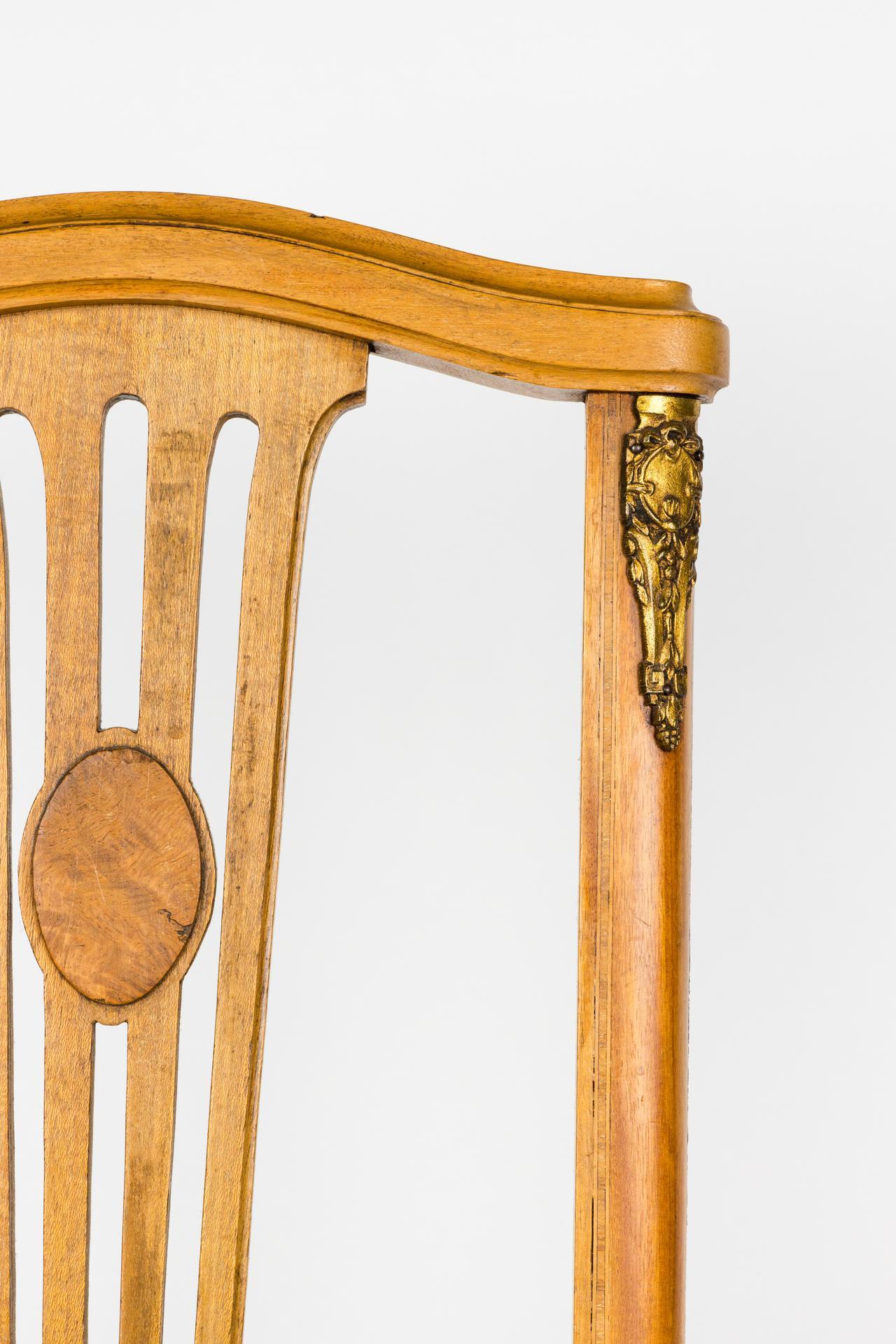
Side table - Walnut


05
days
23
hours
59
minutes
20
seconds
Starting bid
€ 1
Reserve price not met

Expert
Selected by Anna Hue-Roques
Holds bachelor's degrees in Law and Art History with an Ecole du Louvre auctioneer diploma.
Estimate € 180 - € 220
No bids placed
Catawiki Buyer Protection
Your payment’s safe with us until you receive your object.View details
Trustpilot 4.4 | 138733 reviews
Rated Excellent on Trustpilot.
Walnut wood Louis XVI style antique occasional table dating from 1850–1900, in good condition with minor signs of age and small stains, 67 cm wide, 54 cm deep, 74 cm high, underside height 27 cm.
AI-assisted summary
Description from the seller
Louis XVI-style walnut wood coffee table
This coffee table embodies the Louis XVI style, characterized by elegant and restrained lines that emerged in France in the second half of the eighteenth century. The style is distinguished by turned, fluted legs, curved crossbars, and classical details that reflect the neoclassical influence of the era. Such furniture was appreciated in aristocratic and bourgeois households as functional and decorative pieces.
This type of coffee table is particularly sought after by antique furniture collectors, enthusiasts of classic French décor, and interior designers who want to add a touch of historic elegance to spaces. Its charm lies in the refinement of its proportions, the quality of the cabinetmaking, and its ability to blend harmoniously into both traditional and contemporary settings. Similar pieces are highly valued on the European antique market for their historical and artistic value.
Seller's Story
Welcome to our profile. We are antique enthusiasts with a deep passion for art, history, and the charm of the past, cultivated through years of research and dedication. On Catawiki we offer a careful and curated selection of antiques: from period furniture to refined objets d'art, up to paintings and sculptures of quality.
Our goal is to offer collectors and lovers of beauty authentic pieces, selected rigorously for their quality, rarity, and condition. We guarantee maximum transparency in descriptions, detailed photographs, and secure and professional packaging, so that these wonders of the past can reach your homes intact to continue their story.
Translated by Google TranslateLouis XVI-style walnut wood coffee table
This coffee table embodies the Louis XVI style, characterized by elegant and restrained lines that emerged in France in the second half of the eighteenth century. The style is distinguished by turned, fluted legs, curved crossbars, and classical details that reflect the neoclassical influence of the era. Such furniture was appreciated in aristocratic and bourgeois households as functional and decorative pieces.
This type of coffee table is particularly sought after by antique furniture collectors, enthusiasts of classic French décor, and interior designers who want to add a touch of historic elegance to spaces. Its charm lies in the refinement of its proportions, the quality of the cabinetmaking, and its ability to blend harmoniously into both traditional and contemporary settings. Similar pieces are highly valued on the European antique market for their historical and artistic value.
Seller's Story
Welcome to our profile. We are antique enthusiasts with a deep passion for art, history, and the charm of the past, cultivated through years of research and dedication. On Catawiki we offer a careful and curated selection of antiques: from period furniture to refined objets d'art, up to paintings and sculptures of quality.
Our goal is to offer collectors and lovers of beauty authentic pieces, selected rigorously for their quality, rarity, and condition. We guarantee maximum transparency in descriptions, detailed photographs, and secure and professional packaging, so that these wonders of the past can reach your homes intact to continue their story.
Translated by Google TranslateDetails
Era
1400-1900
Weight
13 kg
Style subtype
Louis XVI
Country of origin
France
Material
Walnut
Style
Antique
Condition
Good condition - used with small signs of aging & blemishes
Height
74 cm
Width
67 cm
Depth
54 cm
Height of the underside of the table
27 cm
Estimated period
1850-1900
Sold by