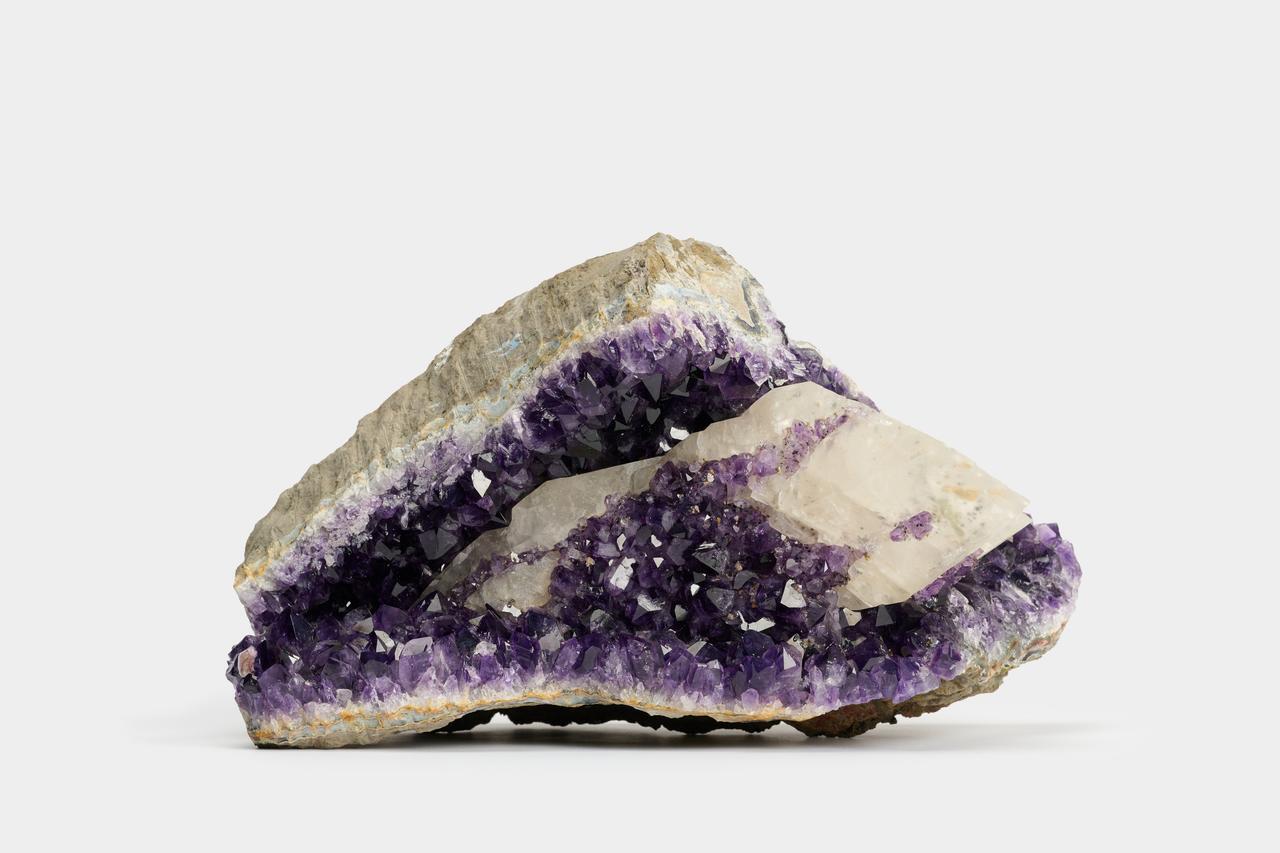
Nice specimen - Polished Chrysocolla on Malachite - Height: 147 mm - Width: 85 mm- 1095 g


03
days
12
hours
22
minutes
56
seconds
Current bid
€ 20
Reserve price not met

Expert
Selected by Georgia Foteinou
Holds BSc in geology and post-graduate qualifications in geochemistry.
Estimate € 220 - € 250
 | €20 |
|---|
Catawiki Buyer Protection
Your payment’s safe with us until you receive your object.View details
Trustpilot 4.4 | 138862 reviews
Rated Excellent on Trustpilot.
Description from the seller
This specimen of chrysocolla on malachite comes from the Congo, one of the most famous regions in the world for copper ore and for the variety of secondary minerals that derive from it. The formation of this sample dates back to ancient geological times: the oxidation processes of large copper deposits, started millions of years ago, have favored the crystallization of copper carbonates and silicates which, layer after layer, gave rise to these spectacular concretions. The malachite, with its dark green bands and typical botryoidal structure, forms the solid base of the specimen. On it developed chrysocolla, which coats the surface with an intense blue-turquoise color, traversed by fine natural reticulations and by silvery veins due to metallic residues. The union of the two minerals creates a striking color contrast, telling the ongoing transformation of matter in oxidized copper ore deposits. This specimen, with an aesthetic of rare beauty, is a geological document that testifies to the meeting between mining processes and the deep times of the Earth. An ideal display piece for natural history collections, mineralogical museums, or for those who wish to enrich their spaces with a mineral that combines science and natural art in a single form.
Seller's Story
The Mineral Art Gallery offers minerals, fossils, shells and natural elements.
Born in Italy in 2017, today she collaborates with international galleries and collectors, she is a direct importer of large minerals and naturalistic collectible elements; deals with the processing to insert them inside the living space. A section of the gallery was dedicated to the Wunderkammer, "chamber of wonders or cabinet of curiosities" in which Mirabilia elements are presented: naturalia and italiania, a union between "the present is the past".
All lots are shipped via DHL Express and Fercam couriers, with insured parcel and tracking.
Translated by Google TranslateThis specimen of chrysocolla on malachite comes from the Congo, one of the most famous regions in the world for copper ore and for the variety of secondary minerals that derive from it. The formation of this sample dates back to ancient geological times: the oxidation processes of large copper deposits, started millions of years ago, have favored the crystallization of copper carbonates and silicates which, layer after layer, gave rise to these spectacular concretions. The malachite, with its dark green bands and typical botryoidal structure, forms the solid base of the specimen. On it developed chrysocolla, which coats the surface with an intense blue-turquoise color, traversed by fine natural reticulations and by silvery veins due to metallic residues. The union of the two minerals creates a striking color contrast, telling the ongoing transformation of matter in oxidized copper ore deposits. This specimen, with an aesthetic of rare beauty, is a geological document that testifies to the meeting between mining processes and the deep times of the Earth. An ideal display piece for natural history collections, mineralogical museums, or for those who wish to enrich their spaces with a mineral that combines science and natural art in a single form.
Seller's Story
The Mineral Art Gallery offers minerals, fossils, shells and natural elements.
Born in Italy in 2017, today she collaborates with international galleries and collectors, she is a direct importer of large minerals and naturalistic collectible elements; deals with the processing to insert them inside the living space. A section of the gallery was dedicated to the Wunderkammer, "chamber of wonders or cabinet of curiosities" in which Mirabilia elements are presented: naturalia and italiania, a union between "the present is the past".
All lots are shipped via DHL Express and Fercam couriers, with insured parcel and tracking.
Translated by Google TranslateDetails
Main mineral
Nice specimen -
Mineral form
Polished Chrysocolla on Malachite
Weight
1095 g
Country of origin
Congo
Height
147 mm
Width
85 mm
Depth
46 mm
Sold by