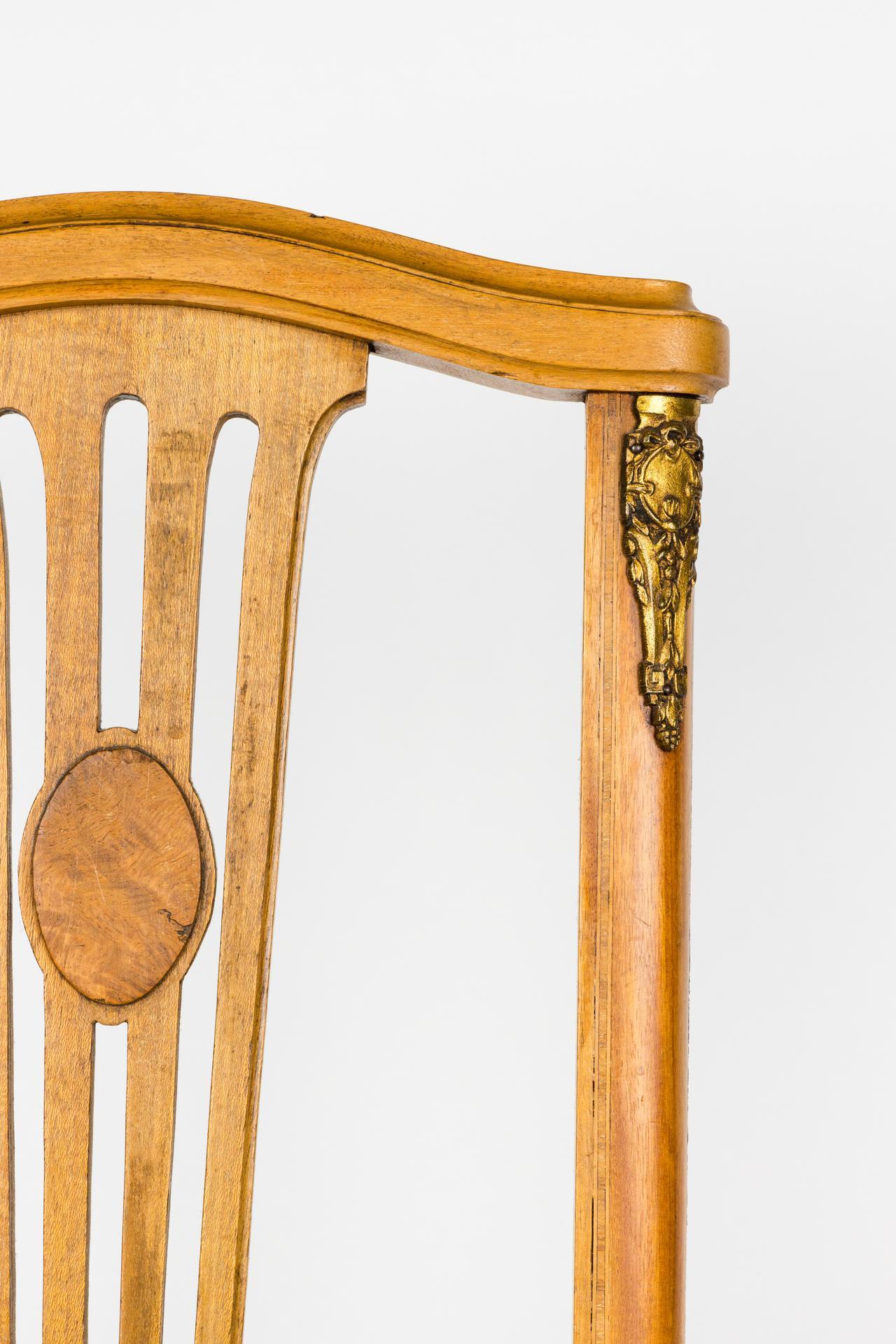
Display cabinet - Wood, Glass - D. Maria Showroom


07
days
08
hours
36
minutes
15
seconds

No bids placed
Catawiki Buyer Protection
Your payment’s safe with us until you receive your object.View details
Trustpilot 4.4 | 139803 reviews
Rated Excellent on Trustpilot.
19th‑century Portuguese mahogany two‑body vitrine/oratory, with an upper glazed chamber and a lower five‑drawer base, elaborately decorated with turned columns, a historicist arch, a knopped gallery and brass‑coloured mounts.
AI-assisted summary
Description from the seller
Oratory / D. Maria Cabinet
Portuguese, 19th century, executed in mahogany wood, with a vertical architectural structure and a two-part composition, combining functions of an oratory, cabinet and storage piece. The upper body features a niche or vitrine configuration, framed by scroll-cut columns and half-columns arranged in pairs, giving pronounced verticality to the whole. The central opening is topped with a pointed arch, inspired by historicist aesthetics, framed by a mahogany-molded surround. The interior is fitted with a door, sides and two glass shelves, intended for displaying devotional images, religious objects or decorative pieces. The side structure develops through turned balustraded-profile elements, interspersed with carved blocks bearing vegetal and geometric motifs, repeated on the different levels of the furniture. These elements create a particularly rich architectural articulation between the two bodies. The upper crown assumes special prominence, featuring a pierced wooden gallery formed by a sequence of interlaced geometric elements, laterally framed by small carved architectural bodies. At the ends rise turned pinnacles capped by flame- or button-shaped elements, reinforcing the monumental and decorative character of the piece. The upper area also presents carved decoration near the central arch, with stylized foliage and vegetal motifs symmetrically applied to the wood. The lower body consists of a dresser or base with five overlapping drawers, plain fronted and molded, integrated into the overall architecture of the piece. Each drawer is equipped with two metal pulls in brass, with a cut-out decorative design, probably inspired by Neoclassical or Historicist styles. The drawers are laterally framed by new pairs of turned columns, visually extending the vertical elements of the upper body and giving continuity to the composition. The transition between the two bodies is marked by a projecting, molded waist, enriched at the ends with carved vegetal motifs, also repeated in the lower area. Stands on a molded base, with small circular-section feet and protruding elements at the corners, maintaining structural robustness without compromising the elegance of the piece. The mahogany wood presents a warm, deep brown tone, with natural grain variations and patina compatible with the piece’s age. The contrast between smooth surfaces, turned elements, carvings and the gilded-toned hardware contributes to the furniture’s visual richness. Although traditionally identified as “D. Maria,” the piece also integrates elements of historicist and Neo-Gothic language, particularly evident in the pointed arch, pinnacles, pierced gallery and the architectural organization of the upper body, a characteristic of 19th-century Portuguese productions in which different decorative repertoires coexist.
Origin: Portugal
Era: 19th century
Material: mahogany wood
Structure: two bodies
Upper body: oratory/vitrine with a door, sides and two glass shelves
Lower body: five drawers
Decoration: turnings, vegetal and geometric carvings, pierced gallery and pinnacles
Hardware: metal pulls in yellow brass
Style: D. Maria with historicist/Neo-Gothic elements
Dimensions: 193 × 78 × 44 cm
Oratory / D. Maria Cabinet
Portuguese, 19th century, executed in mahogany wood, with a vertical architectural structure and a two-part composition, combining functions of an oratory, cabinet and storage piece. The upper body features a niche or vitrine configuration, framed by scroll-cut columns and half-columns arranged in pairs, giving pronounced verticality to the whole. The central opening is topped with a pointed arch, inspired by historicist aesthetics, framed by a mahogany-molded surround. The interior is fitted with a door, sides and two glass shelves, intended for displaying devotional images, religious objects or decorative pieces. The side structure develops through turned balustraded-profile elements, interspersed with carved blocks bearing vegetal and geometric motifs, repeated on the different levels of the furniture. These elements create a particularly rich architectural articulation between the two bodies. The upper crown assumes special prominence, featuring a pierced wooden gallery formed by a sequence of interlaced geometric elements, laterally framed by small carved architectural bodies. At the ends rise turned pinnacles capped by flame- or button-shaped elements, reinforcing the monumental and decorative character of the piece. The upper area also presents carved decoration near the central arch, with stylized foliage and vegetal motifs symmetrically applied to the wood. The lower body consists of a dresser or base with five overlapping drawers, plain fronted and molded, integrated into the overall architecture of the piece. Each drawer is equipped with two metal pulls in brass, with a cut-out decorative design, probably inspired by Neoclassical or Historicist styles. The drawers are laterally framed by new pairs of turned columns, visually extending the vertical elements of the upper body and giving continuity to the composition. The transition between the two bodies is marked by a projecting, molded waist, enriched at the ends with carved vegetal motifs, also repeated in the lower area. Stands on a molded base, with small circular-section feet and protruding elements at the corners, maintaining structural robustness without compromising the elegance of the piece. The mahogany wood presents a warm, deep brown tone, with natural grain variations and patina compatible with the piece’s age. The contrast between smooth surfaces, turned elements, carvings and the gilded-toned hardware contributes to the furniture’s visual richness. Although traditionally identified as “D. Maria,” the piece also integrates elements of historicist and Neo-Gothic language, particularly evident in the pointed arch, pinnacles, pierced gallery and the architectural organization of the upper body, a characteristic of 19th-century Portuguese productions in which different decorative repertoires coexist.
Origin: Portugal
Era: 19th century
Material: mahogany wood
Structure: two bodies
Upper body: oratory/vitrine with a door, sides and two glass shelves
Lower body: five drawers
Decoration: turnings, vegetal and geometric carvings, pierced gallery and pinnacles
Hardware: metal pulls in yellow brass
Style: D. Maria with historicist/Neo-Gothic elements
Dimensions: 193 × 78 × 44 cm
Details
Era
1400-1900
Over 200 years old
No
Title additional information
D. Maria Showroom
Country of origin
Portugal
Material
Glass, Wood
Condition
Good condition - used with small signs of aging & blemishes
Height
193 cm
Width
17 cm
Depth
44 cm
Estimated period
19th century
Can Be Locked
Yes
Sold by