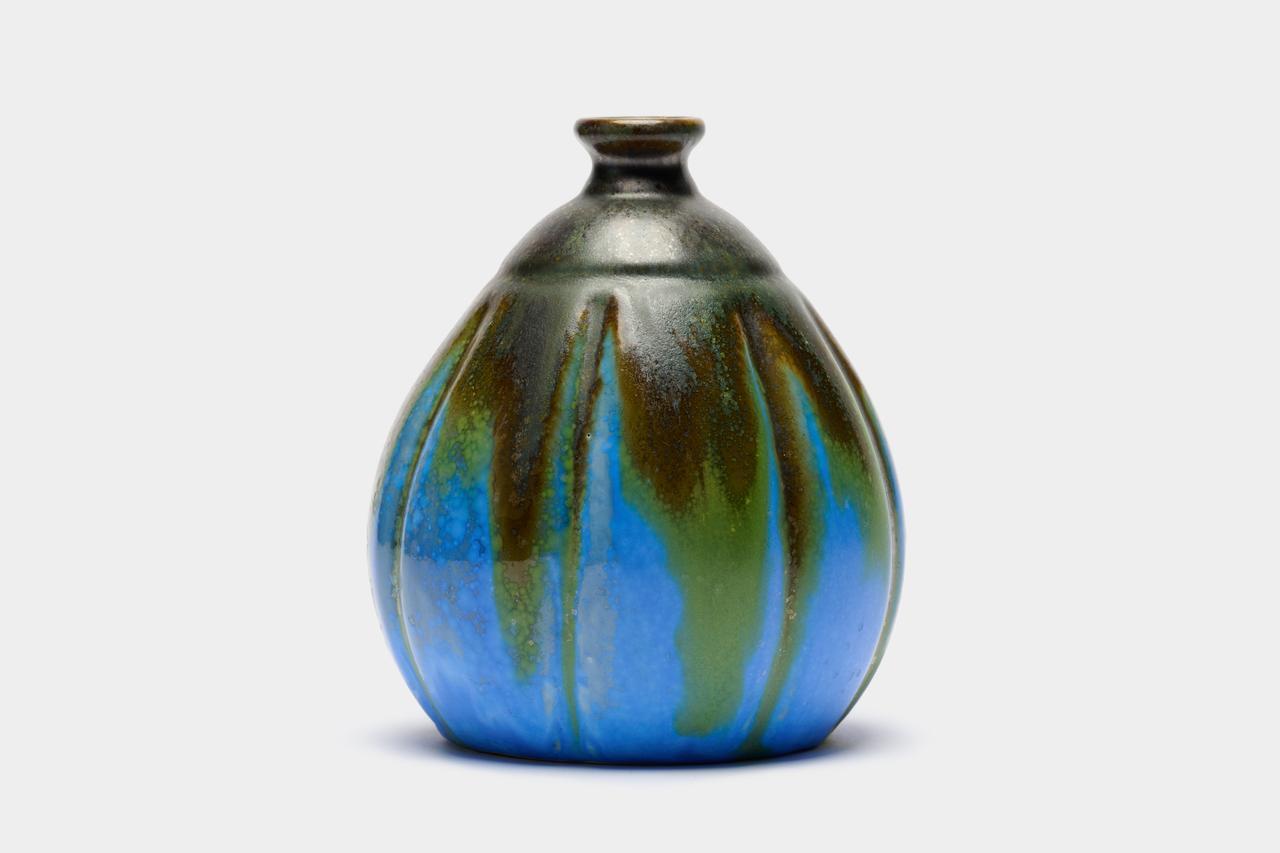
Vase - Terracotta - Antique glass


06
days
00
hours
41
minutes
09
seconds

No bids placed
Catawiki Buyer Protection
Your payment’s safe with us until you receive your object.View details
Trustpilot 4.4 | 139877 reviews
Rated Excellent on Trustpilot.
Antique terracotta vase from Italy in the iapi subgeometric daunio style, dating to the 4th–5th century, measuring 16 cm wide, 14 cm high and 12.5 cm deep, beige-brown in colour and in good condition with light wear.
AI-assisted summary
Description from the seller
This vase is defined as subgeometric daunio (or more generically peucetio/iapigio), with a strong influence from Greek geometric pottery. Here are the key characteristics of this style:
1. Geometric and Linear Decoration The design rejects realistic rendering of nature or human figures. It is based on the repetition of abstract motifs arranged in horizontal bands. It uses parallel lines to enclose and pace the decorative space.
2. Typical Decorative Syntax
Drop motif: Also called "stylized leaves" or "tongue ribbons", it fills the shoulder of the vase with a tight rhythm.
Continuous wave: Painted on the neck and near the rim, it symbolises water or fluid movement.
Concentric bands: Lines of varying thickness that embrace the body of the vase and accentuate its rounded form.
3. Bichrome / Monochrome Technique The vase uses a light base clay (from beige to yellowish). The decorations are laid on with a brush using a dark pigment (brown to black), derived from iron or manganese oxides.
This vase is defined as subgeometric daunio (or more generically peucetio/iapigio), with a strong influence from Greek geometric pottery. Here are the key characteristics of this style:
1. Geometric and Linear Decoration The design rejects realistic rendering of nature or human figures. It is based on the repetition of abstract motifs arranged in horizontal bands. It uses parallel lines to enclose and pace the decorative space.
2. Typical Decorative Syntax
Drop motif: Also called "stylized leaves" or "tongue ribbons", it fills the shoulder of the vase with a tight rhythm.
Continuous wave: Painted on the neck and near the rim, it symbolises water or fluid movement.
Concentric bands: Lines of varying thickness that embrace the body of the vase and accentuate its rounded form.
3. Bichrome / Monochrome Technique The vase uses a light base clay (from beige to yellowish). The decorations are laid on with a brush using a dark pigment (brown to black), derived from iron or manganese oxides.
Details
Era
1400-1900
Culture
iapi
Title additional information
Antique glass
Century/timeframe
IV V
Acquired from
Dealer at a fair
Number of objects
1
Country of origin
Italy
Year acquired
2000
Country acquired from
Italy
Material
Terracotta
Previous owner acquired from
Antique market
Previous owner - year acquired
2000
Colour
Beige, Brown
Previous owner - country acquired from
Italy
Condition
Excellent condition: barely used with minimal signs of wear
I verify that I have obtained this object legally and that I am allowed to sell it
Yes
Height
14 cm
Width
16 cm
Depth
12.5 cm
Sold by