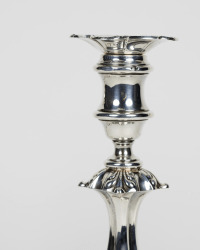
Amsterdam Assay Office - Brandy bowl - .950 silver - 1814


Starting bid
€ 1
Add to your favourites to get an alert when the auction starts.

Expert
Selected by Inés Fernández
Specialised in Spanish and Portuguese silver with over 10 years in galleries and auctions.
Estimate € 250 - € 280
Catawiki Buyer Protection
Your payment’s safe with us until you receive your object.View details
Trustpilot 4.4 | 139877 reviews
Rated Excellent on Trustpilot.
Description from the seller
This object is an antique footed silver container featuring highly detailed repoussé work depicting a classic Dutch pastoral scene, complete with a windmill, a milkmaid or farmer, and livestock. It is typical of late 19th-century or early 20th-century Dutch or Hanau-style decorative silverware, which heavily favored rustic genre scenes and baroque-style scrolling edges.
Wonderful and massive, 84 gr 950 silver tested with XRF and acid!! Must have !!
The piece features a scalloped rim, stylized cabriole feet, and a rich tarnish or patina that enhances the depth of the embossed design.
Depending on its exact size, specific construction, and any hidden hinges, it likely served as a sugar box, tea caddy, or a decorative trinket casket
The Minerva Head Assay Office Mark (Most Likely)If the letter "A" is a tiny letter stamped directly onto the helmet of a profile figure wearing a helmet (the Minerva head mark), it represents the Amsterdam Assay Office.
What it means: This Minerva head duty mark was used from 1814 onward to prove that the silver tax was paid and that the item was officially inspected in Amsterdam.
The Year Letter MarkIf the letter "A" is stamped by itself inside a distinct shield or border silhouette alongside other stamps, it is a date code indicating the specific year the silver was assayed.
Determining the year: The Dutch system rotates through the alphabet using different fonts (gothic, script, block letters) and shield shapes for every 26-year cycle.
This object is an antique footed silver container featuring highly detailed repoussé work depicting a classic Dutch pastoral scene, complete with a windmill, a milkmaid or farmer, and livestock. It is typical of late 19th-century or early 20th-century Dutch or Hanau-style decorative silverware, which heavily favored rustic genre scenes and baroque-style scrolling edges.
Wonderful and massive, 84 gr 950 silver tested with XRF and acid!! Must have !!
The piece features a scalloped rim, stylized cabriole feet, and a rich tarnish or patina that enhances the depth of the embossed design.
Depending on its exact size, specific construction, and any hidden hinges, it likely served as a sugar box, tea caddy, or a decorative trinket casket
The Minerva Head Assay Office Mark (Most Likely)If the letter "A" is a tiny letter stamped directly onto the helmet of a profile figure wearing a helmet (the Minerva head mark), it represents the Amsterdam Assay Office.
What it means: This Minerva head duty mark was used from 1814 onward to prove that the silver tax was paid and that the item was officially inspected in Amsterdam.
The Year Letter MarkIf the letter "A" is stamped by itself inside a distinct shield or border silhouette alongside other stamps, it is a date code indicating the specific year the silver was assayed.
Determining the year: The Dutch system rotates through the alphabet using different fonts (gothic, script, block letters) and shield shapes for every 26-year cycle.
Details
Era
1400-1900
Gross weight
84 g
Silver type
.950 silver
Specific region of origin
Amsterdam
Title additional information
1814
Country of origin
Netherlands
Manufacturer/brand
Amsterdam Assay Office
Material
Silver
Condition
Excellent condition: barely used with minimal signs of wear
Height
6 cm
Width
14 cm
Depth
14 cm
Estimated period
1800-1850
Sold by