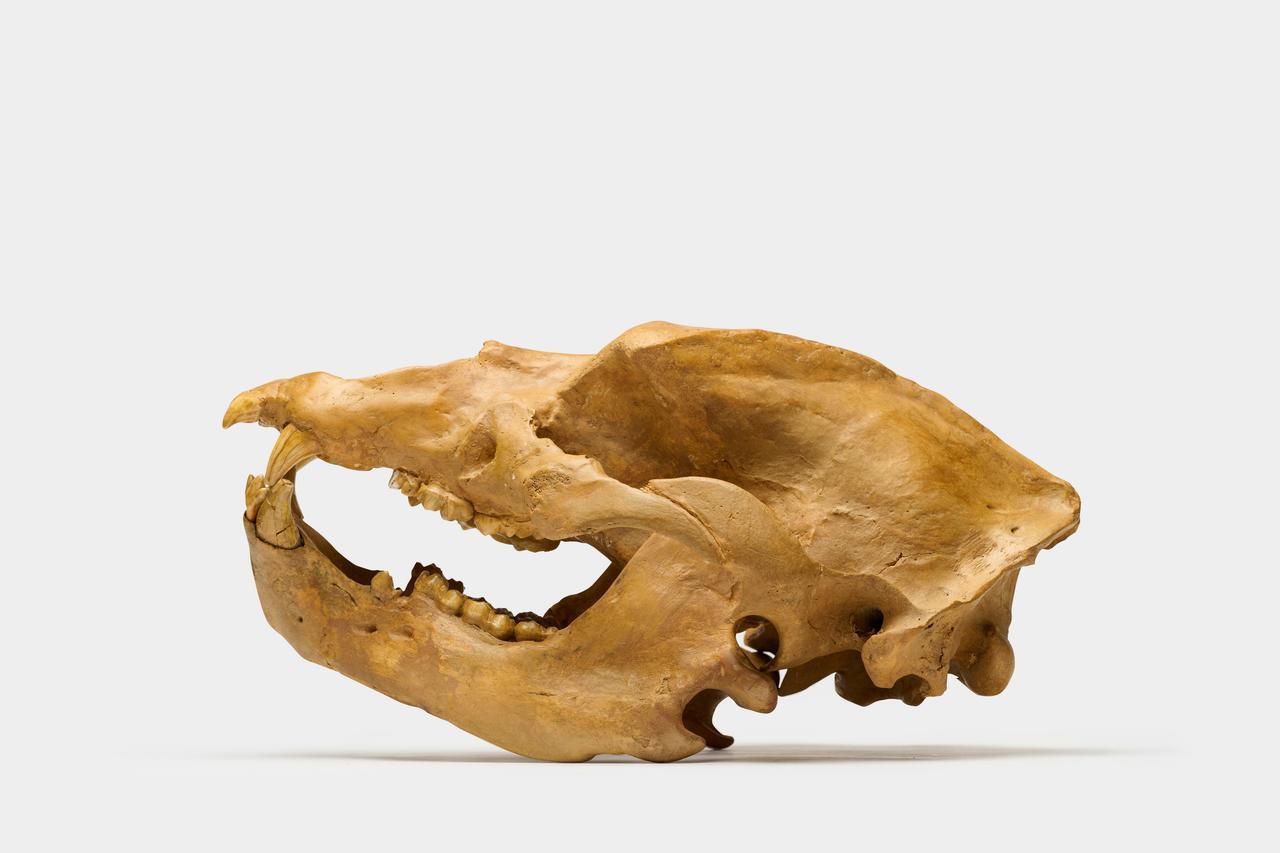
Primitive Whale - Fossil tooth - 7.5 cm - 3 cm


04
days
19
hours
39
minutes
11
seconds

No bids placed
Catawiki Buyer Protection
Your payment’s safe with us until you receive your object.View details
Trustpilot 4.4 | 143806 reviews
Rated Excellent on Trustpilot.
Basilosaurus primitive whale fossil specimen from the Paleogene to Eocene (about 56–33.9 million years ago), conserved and restored, origin Morocco, 80 g, 7.5 cm high, 3 cm wide, 1.5 cm deep.
AI-assisted summary
Description from the seller
Basilosaurus fossil tooth, an extinct genus of archaeocete cetaceans (primitive whales) that lived in the Late Eocene, about 40 to 34 million years ago.
Characteristics visible in the fossil:
Crown of the tooth: The upper part has a triangular shape typical of the molars and premolars of this marine predator. The edge is characterized by several cusps or sharp serrations on the lateral margins, which helped it grasp and slice its prey (mollusks, fish).
Root system: The specimen has long mineralized roots that are well defined (double or multiple structure) separated by a hollow space, which is a major anatomical feature of mammals compared to marine reptiles like mosasaurs (which have a single massive conical root).
Hue and texture: The color ranges from dark brown to ochre beige, reflecting the fossilization process and the replacement of organic tissues by mineral sediments.
This type of fossil is very frequently sourced from Morocco's phosphate deposits (Dakhla region or Ouled Abdoun Basin).
Details
Number of objects
1
Specimen
Primitive Whale
Country of origin
Morocco
Geological period
Paleogene, Eocene (56 - 33.9 million years)
Condition
Restored
Treatment
Conserved
Weight
80 g
Height
7.5 cm
Width
3 cm
Depth
1.5 cm
Authenticity
Original/official
Sold by