Games table - Wood


05
days
13
hours
30
minutes
27
seconds
Starting bid
€ 1
Reserve price not met

Expert
Selected by Anna Hue-Roques
Holds bachelor's degrees in Law and Art History with an Ecole du Louvre auctioneer diploma.
Estimate € 400 - € 500
No bids placed
Catawiki Buyer Protection
Your payment’s safe with us until you receive your object.View details
Trustpilot 4.4 | 140462 reviews
Rated Excellent on Trustpilot.
Empire-style game table in Portuguese mahogany dating to 1850–1900, with veneered and ebony inlays, a folding rectangular top with green felt interior, and measurements of 77 cm high, 69 cm wide, and 35 cm deep.
AI-assisted summary
Description from the seller
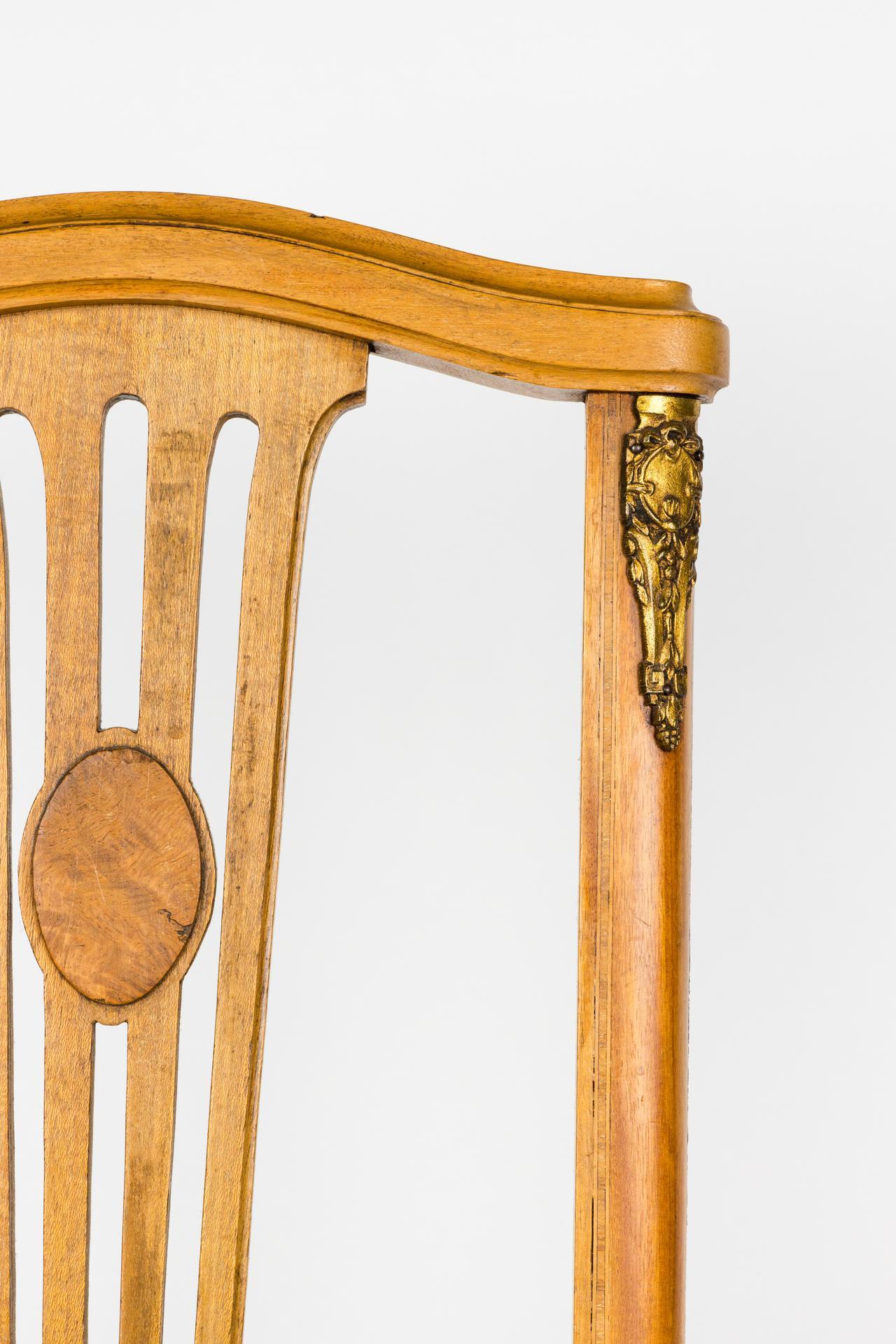
Empire gaming table. Portuguese, 19th century, of Empire taste, in mahogany wood, veneered and with ebony inlays. Rectangular, hinged top, opening to reveal the interior for gaming, lined with green felt. The case is sober and elegant, with symmetrical composition, resting on a central pyramidal-section column, decorated with carved elements, extending over a base with a sinuous cut and supported on feet with metal ferrules. The piece’s structure shows a language inspired by Empire and Neoclassical styles, particularly expressive in the architectural composition of the central column, in the symmetric organization of the whole, and in the restrained decoration. The use of mahogany, complemented by veneering and ebony inlays, enhances the surface through the contrast between different tones and grain patterns. The central column, pyramidal in configuration and marked by classical-inspired carvings, constitutes the main structural and decorative element of the table. The cut base gives dynamism to the composition, while the metal ferrules on the feet contribute to protecting the wood and to the functional character of the furniture. The hinged top reveals the interior for gaming, lined with green felt, a characteristic solution of 19th-century gaming tables. The piece thus combines an eminently practical function with a decorative conception appropriate to the more elaborate domestic interiors of the 19th century. The configuration and formal treatment bring it close to Portuguese models of Empire-taste furniture, with influence from English models, particularly widespread in Portugal during the 19th century. The central column, the architectural structure and the use of mahogany constitute particularly characteristic elements of this language. By the quality of the composition, the work of carving, and the contrast provided by the different materials and woods, it constitutes an especially noteworthy example within 19th-century Portuguese gaming furniture. Signs of use compatible with age. Dimensions: 77 × 69 × 35 cm.
Empire gaming table. Portuguese, 19th century, of Empire taste, in mahogany wood, veneered and with ebony inlays. Rectangular, hinged top, opening to reveal the interior for gaming, lined with green felt. The case is sober and elegant, with symmetrical composition, resting on a central pyramidal-section column, decorated with carved elements, extending over a base with a sinuous cut and supported on feet with metal ferrules. The piece’s structure shows a language inspired by Empire and Neoclassical styles, particularly expressive in the architectural composition of the central column, in the symmetric organization of the whole, and in the restrained decoration. The use of mahogany, complemented by veneering and ebony inlays, enhances the surface through the contrast between different tones and grain patterns. The central column, pyramidal in configuration and marked by classical-inspired carvings, constitutes the main structural and decorative element of the table. The cut base gives dynamism to the composition, while the metal ferrules on the feet contribute to protecting the wood and to the functional character of the furniture. The hinged top reveals the interior for gaming, lined with green felt, a characteristic solution of 19th-century gaming tables. The piece thus combines an eminently practical function with a decorative conception appropriate to the more elaborate domestic interiors of the 19th century. The configuration and formal treatment bring it close to Portuguese models of Empire-taste furniture, with influence from English models, particularly widespread in Portugal during the 19th century. The central column, the architectural structure and the use of mahogany constitute particularly characteristic elements of this language. By the quality of the composition, the work of carving, and the contrast provided by the different materials and woods, it constitutes an especially noteworthy example within 19th-century Portuguese gaming furniture. Signs of use compatible with age. Dimensions: 77 × 69 × 35 cm.
Details
Era
1400-1900
Style subtype
Empire Style
Country of origin
Portugal
Material
Wood
Style
Antique
Condition
Good condition - used with small signs of aging & blemishes
Height
77 cm
Width
69 cm
Depth
35 cm
Estimated period
1850-1900
Sold by