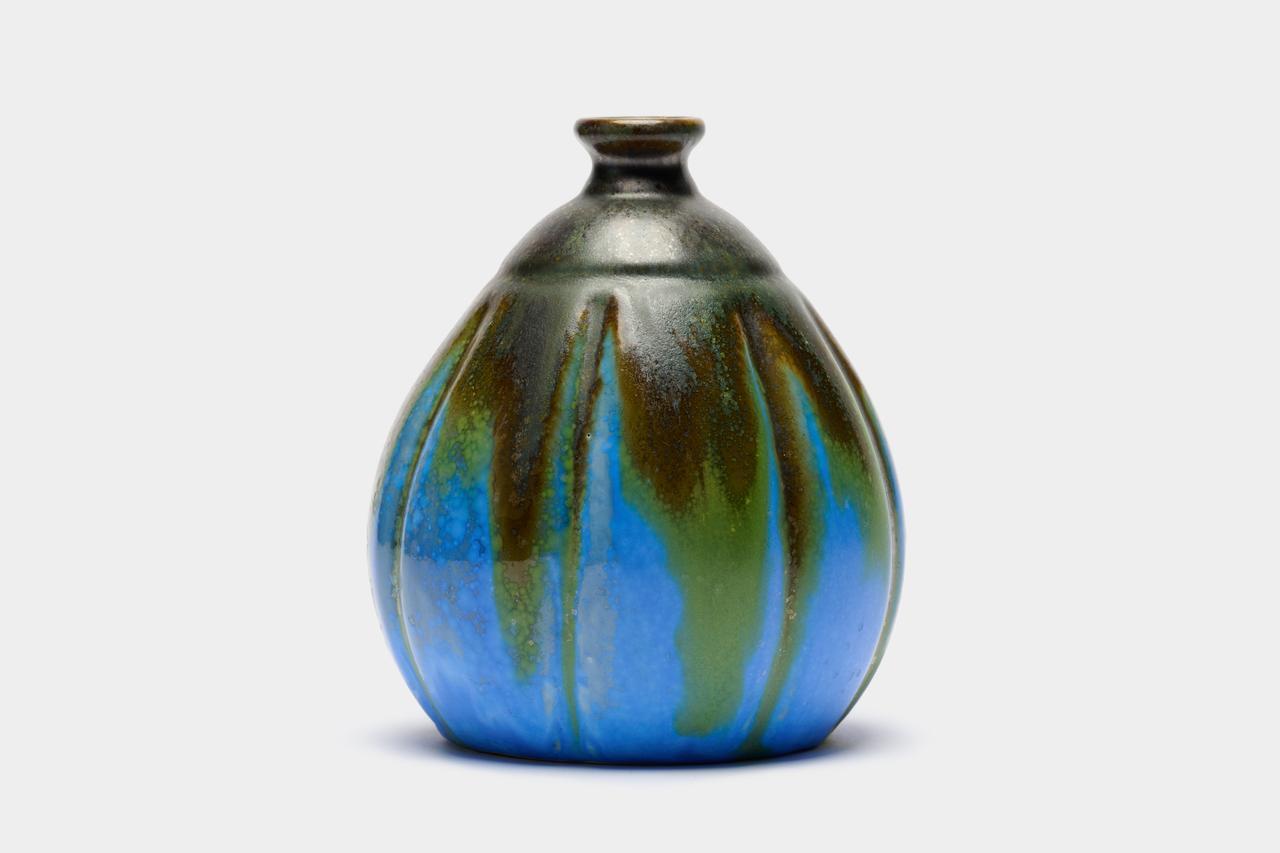
Labrec - Labrut et Recullé - Vase - Maud - Stoneware - Art studio


06
days
17
hours
27
minutes
21
seconds
Starting bid
€ 1
No reserve price

Expert
Selected by Michel Karis
Art historian with extensive experience working at various auction houses in antiques.
Estimate € 150 - € 200
No bids placed
Catawiki Buyer Protection
Your payment’s safe with us until you receive your object.View details
Trustpilot 4.4 | 140172 reviews
Rated Excellent on Trustpilot.
Art Deco salt-glazed stoneware vase, model Maud, made in France by Labrec circa 1910–1920, in good condition with minor wear due to age, height 22 cm and diameter 14 cm, signed Atelier d’art Labrec and Maud.
AI-assisted summary
Description from the seller
Art Deco vase in high-fired salt-glazed stoneware, with blended blue tones.
Labrec art stoneware, Maud model, circa 1910–1930. Labrec being the contraction of the two creators’ names.
The Labrut and Recullé workshops were located in Orléans from 1910. Production ceased in 1939.
Charles Labrut came from a family of ceramicists (in 1901 he even received a medal of honor for his salt-glazed wares) and his daughter would marry the son of industrialist Louis Recullé, who would develop the activity.
The house produced its art pieces on commission and sold them in Paris.
The high-fire salt-glazed stoneware is achieved by throwing salt onto the glazes during firing with the flame of the kiln. This technique was used in the Art Deco period, notably by Guérin.
Very complex to master, both to prevent pieces from breaking during firing and to ensure the execution of a decoration is pleasantly controlled.
The piece presents a 'bi-material' glaze effect, with a matte brown glaze background and glossy molten glazes.
The piece is shaped in the stylized onion form typical of the Art Deco period.
Good overall condition, a slight loss at the base; see photos.
Signed on the base in relief “Atelier d’art Labrec” as well as “Maud”.
Height 22 cm x diameter 14 cm
Art Deco vase in high-fired salt-glazed stoneware, with blended blue tones.
Labrec art stoneware, Maud model, circa 1910–1930. Labrec being the contraction of the two creators’ names.
The Labrut and Recullé workshops were located in Orléans from 1910. Production ceased in 1939.
Charles Labrut came from a family of ceramicists (in 1901 he even received a medal of honor for his salt-glazed wares) and his daughter would marry the son of industrialist Louis Recullé, who would develop the activity.
The house produced its art pieces on commission and sold them in Paris.
The high-fire salt-glazed stoneware is achieved by throwing salt onto the glazes during firing with the flame of the kiln. This technique was used in the Art Deco period, notably by Guérin.
Very complex to master, both to prevent pieces from breaking during firing and to ensure the execution of a decoration is pleasantly controlled.
The piece presents a 'bi-material' glaze effect, with a matte brown glaze background and glossy molten glazes.
The piece is shaped in the stylized onion form typical of the Art Deco period.
Good overall condition, a slight loss at the base; see photos.
Signed on the base in relief “Atelier d’art Labrec” as well as “Maud”.
Height 22 cm x diameter 14 cm
Details
Era
1900-2000
Ceramics type
Stoneware
Title additional information
Art studio
Country of origin
France
Model
Maud
Designer/artist/maker
Labrut et Recullé
Material
Ceramic
Style
Art Deco
Manufacturer/brand
Labrec
Colour
Blue
Condition
Good condition - used with small signs of aging & blemishes
Height
22 cm
Width
14 cm
Depth
14 cm
Diameter
14 cm
Estimated period
1910-1920