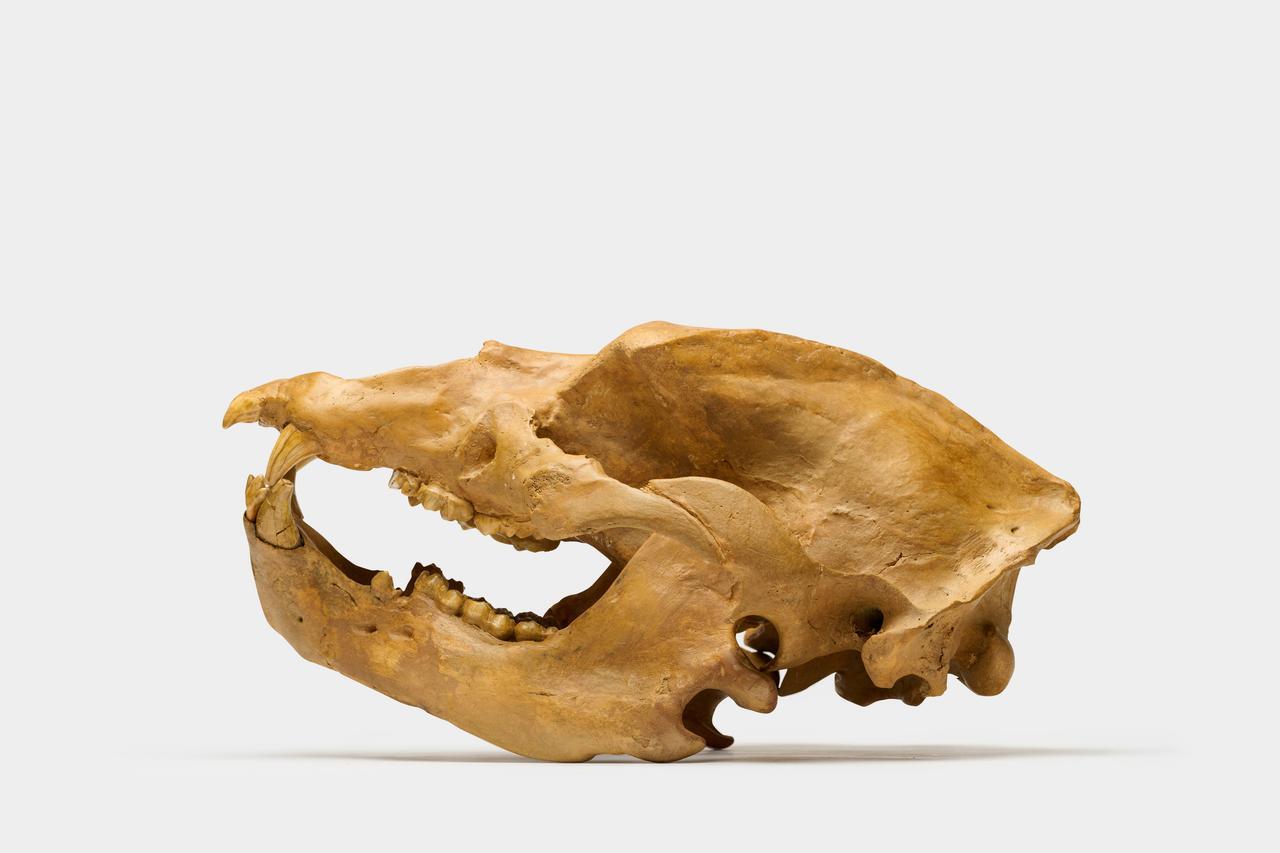
Mosasaur - Fossil mandible bone - Globidens SP


04
days
14
hours
49
minutes
43
seconds

No bids placed
Catawiki Buyer Protection
Your payment’s safe with us until you receive your object.View details
Trustpilot 4.4 | 140482 reviews
Rated Excellent on Trustpilot.
Description from the seller
Globidens sp. jaw — Durophagous mosasaur of the Cretaceous
Sidi Chennane phosphate mines, Oulad Abdoun Basin, Morocco
Exceptional pair of fossil mandible ramus belonging to Globidens, one of the most distinctive mosasaurs of the Late Cretaceous (Maastrichtian, ~66-70 million years). Unlike other mosasaurs with sharp teeth, Globidens developed a highly specialized globular and hemispherical dentition to crush mollusks, ammonites and other hard-shelled invertebrates — a relatively uncommon durophagous adaptation among marine reptiles.
Features of the specimen:
• Length of each mandibular ramus: 33 cm
• Dentary series practically complete, with teeth in different stages of eruption and replacement, showing the natural growth pattern of the animal
• Rounded and bulbous crowns perfectly preserved, with original enamel visible
• Natural phosphate mineralization, with the typical cream-ivory color of bone and brown tones in the dental enamel
• Authentic piece, with no restoration or reconstruction added
Globidens sp. jaw — Durophagous mosasaur of the Cretaceous
Sidi Chennane phosphate mines, Oulad Abdoun Basin, Morocco
Exceptional pair of fossil mandible ramus belonging to Globidens, one of the most distinctive mosasaurs of the Late Cretaceous (Maastrichtian, ~66-70 million years). Unlike other mosasaurs with sharp teeth, Globidens developed a highly specialized globular and hemispherical dentition to crush mollusks, ammonites and other hard-shelled invertebrates — a relatively uncommon durophagous adaptation among marine reptiles.
Features of the specimen:
• Length of each mandibular ramus: 33 cm
• Dentary series practically complete, with teeth in different stages of eruption and replacement, showing the natural growth pattern of the animal
• Rounded and bulbous crowns perfectly preserved, with original enamel visible
• Natural phosphate mineralization, with the typical cream-ivory color of bone and brown tones in the dental enamel
• Authentic piece, with no restoration or reconstruction added
Details
Sold by