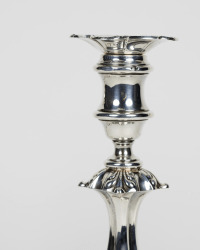
Chalice - Silver - Gioacchino Belli 1815-22


05
days
13
hours
56
minutes
16
seconds
Current bid
€ 550
Reserve price not met

Expert
Selected by Inés Fernández
Specialised in Spanish and Portuguese silver with over 10 years in galleries and auctions.
Estimate € 2,800 - € 3,300
 | €550 | |
|---|---|---|
| €500 | |
| €300 | |
Catawiki Buyer Protection
Your payment’s safe with us until you receive your object.View details
Trustpilot 4.4 | 140943 reviews
Rated Excellent on Trustpilot.
Liturgical silver chalice attributed to Gioacchino Belli, Rome, circa 1815–1822, in good condition with normal wear and inner gilding, height 26.5 cm, cup diameter 8.5 cm, base diameter 13 cm, weight 422 g, neoclassical design with vegetal decoration.
AI-assisted summary
Description from the seller
LITURGICAL CHALICE IN SILVER
Gioacchino Belli
Rome, circa 1815–1822
Main attribution on the basis of the marks, technical characteristics, and stylistic approach
CATALOGUE DATA
Artist/workshop: Gioacchino Belli, main attribution
Place of execution: Rome
Chronology: circa 1815–1822
Object: Liturgical chalice
Material: Silver, with gilding on the interior
Technique: Plateworking, turning, chasing, engraving and gilding
Height: 26.5 cm
Cup diameter: 8.5 cm
Base diameter: 13 cm
Weight: 422 g
Punch marks: workshop mark G11B and papal chamber mark post-1815, impressed in multiple points of the work
Condition: Good, with normal signs of use, oxidation; interior gilding preserved
DESCRIPTION
Elegant silver liturgical chalice, with harmonious and slender proportions, featuring a refined neoclassical decorative scheme in which the sobriety of the structure combines with a repertoire of late eighteenth-century ornamental derivation.
The cup, slightly truncated-conical and flared, presents at the bottom a continuous ornamental band made up of lanceolate leaves, raised in relief and accurately defined by chasing. The decoration develops at a regular, orderly rhythm, valorizing the metal surface and highlighting the transition to the understem. A circular molding, clear and well-marked, links the cup to the underlying structure.
The understem repeats the cup’s ornamental language and introduces the transition to the stem through a calibrated sequence of molded elements and circular connectors.
The stem, articulated in multiple turned and molded elements, is built through a succession of circular profiles, connectors and bulging shapes that give the whole a balanced vertical movement. The vegetal decoration, combined with the strict spacing of the moldings, emphasizes the neoclassical character of the piece.
The base, wide, circular and stepped, features a continuous ornamental band with lanceolate leaves and palmette motifs. The central field, smooth and gently convex, creates an effective contrast with the decorated band and gives the base a visually solid yet elegant structure.
The interior of the cup is gilded, in keeping with the traditional liturgical purpose of the object. The exterior surface retains a patina of use and widespread traces of manual work, particularly legible in the decorated areas, elements that contribute to the perception of authenticity and the artisanal quality of the work.
PUNCH MARKS
The chalice bears several stamps, impressed on the cup, understem and base, a circumstance of particular interest for identification and chronological framing of the work.
Among the marks one can recognize the workshop stamp G11B, accompanied by the papal chamber mark introduced with the 1815 punch reform.
The presence of this system of marks constitutes an important chronological element and allows placing the piece within Roman silverware dating after 1815.
It should be noted that the G11B punch is documented in relation to Gioacchino Belli’s workshop and is known to have been used by his son Pietro Belli in the period immediately following the father’s death.
This circumstance theoretically allows dating the piece up to around 1825. However, in this particular chalice, the ensemble of stylistic and technical characteristics—the quality of the vegetal ornament, the neoclassical layout of the structure, the careful spacing of the moldings and the balanced relationship between decoration and architectural framework—leads to a higher likelihood of a realization within Gioacchino Belli’s production, specifically in the period between 1815 and 1822.
Proposed attribution
Gioacchino Belli, main attribution
Rome, circa 1815–1822
HISTORICAL-ARTISTIC FRAMEWORK
The chalice fits within the production of Roman silverware in the early decades of the nineteenth century, a phase marked by the progressive affirmation of neoclassical taste, accompanied by the persistence of late eighteenth-century ornamental motifs.
The object’s structure, rigorously articulated through moldings and geometric profiles, is enriched by a vegetal repertoire primarily consisting of lanceolate leaves and palmette motifs. The decoration does not overwhelm the architectural structure of the chalice but integrates harmoniously with it, according to a principle of balance particularly significant for Neoclassical culture.
The construction of the stem, the ample base and the orderly spacing of the various parts give the piece an elegant, solemn character while remaining suitable for liturgical use.
The quality of chasing and engraving work, together with the turning of the structural elements and the interior gilding of the cup, highlight a production of a high artisanal standard.
CONDITION
The chalice is in good condition considering its age and intended use.
Normal signs of use, oxidation, and the natural traces of manual workmanship are present. The chasing and engraving decoration is generally legible and well preserved.
The interior gilding of the cup is preserved, maintaining the original liturgical function of the object.
LITURGICAL CHALICE IN SILVER
Gioacchino Belli
Rome, circa 1815–1822
Main attribution on the basis of the marks, technical characteristics, and stylistic approach
CATALOGUE DATA
Artist/workshop: Gioacchino Belli, main attribution
Place of execution: Rome
Chronology: circa 1815–1822
Object: Liturgical chalice
Material: Silver, with gilding on the interior
Technique: Plateworking, turning, chasing, engraving and gilding
Height: 26.5 cm
Cup diameter: 8.5 cm
Base diameter: 13 cm
Weight: 422 g
Punch marks: workshop mark G11B and papal chamber mark post-1815, impressed in multiple points of the work
Condition: Good, with normal signs of use, oxidation; interior gilding preserved
DESCRIPTION
Elegant silver liturgical chalice, with harmonious and slender proportions, featuring a refined neoclassical decorative scheme in which the sobriety of the structure combines with a repertoire of late eighteenth-century ornamental derivation.
The cup, slightly truncated-conical and flared, presents at the bottom a continuous ornamental band made up of lanceolate leaves, raised in relief and accurately defined by chasing. The decoration develops at a regular, orderly rhythm, valorizing the metal surface and highlighting the transition to the understem. A circular molding, clear and well-marked, links the cup to the underlying structure.
The understem repeats the cup’s ornamental language and introduces the transition to the stem through a calibrated sequence of molded elements and circular connectors.
The stem, articulated in multiple turned and molded elements, is built through a succession of circular profiles, connectors and bulging shapes that give the whole a balanced vertical movement. The vegetal decoration, combined with the strict spacing of the moldings, emphasizes the neoclassical character of the piece.
The base, wide, circular and stepped, features a continuous ornamental band with lanceolate leaves and palmette motifs. The central field, smooth and gently convex, creates an effective contrast with the decorated band and gives the base a visually solid yet elegant structure.
The interior of the cup is gilded, in keeping with the traditional liturgical purpose of the object. The exterior surface retains a patina of use and widespread traces of manual work, particularly legible in the decorated areas, elements that contribute to the perception of authenticity and the artisanal quality of the work.
PUNCH MARKS
The chalice bears several stamps, impressed on the cup, understem and base, a circumstance of particular interest for identification and chronological framing of the work.
Among the marks one can recognize the workshop stamp G11B, accompanied by the papal chamber mark introduced with the 1815 punch reform.
The presence of this system of marks constitutes an important chronological element and allows placing the piece within Roman silverware dating after 1815.
It should be noted that the G11B punch is documented in relation to Gioacchino Belli’s workshop and is known to have been used by his son Pietro Belli in the period immediately following the father’s death.
This circumstance theoretically allows dating the piece up to around 1825. However, in this particular chalice, the ensemble of stylistic and technical characteristics—the quality of the vegetal ornament, the neoclassical layout of the structure, the careful spacing of the moldings and the balanced relationship between decoration and architectural framework—leads to a higher likelihood of a realization within Gioacchino Belli’s production, specifically in the period between 1815 and 1822.
Proposed attribution
Gioacchino Belli, main attribution
Rome, circa 1815–1822
HISTORICAL-ARTISTIC FRAMEWORK
The chalice fits within the production of Roman silverware in the early decades of the nineteenth century, a phase marked by the progressive affirmation of neoclassical taste, accompanied by the persistence of late eighteenth-century ornamental motifs.
The object’s structure, rigorously articulated through moldings and geometric profiles, is enriched by a vegetal repertoire primarily consisting of lanceolate leaves and palmette motifs. The decoration does not overwhelm the architectural structure of the chalice but integrates harmoniously with it, according to a principle of balance particularly significant for Neoclassical culture.
The construction of the stem, the ample base and the orderly spacing of the various parts give the piece an elegant, solemn character while remaining suitable for liturgical use.
The quality of chasing and engraving work, together with the turning of the structural elements and the interior gilding of the cup, highlight a production of a high artisanal standard.
CONDITION
The chalice is in good condition considering its age and intended use.
Normal signs of use, oxidation, and the natural traces of manual workmanship are present. The chasing and engraving decoration is generally legible and well preserved.
The interior gilding of the cup is preserved, maintaining the original liturgical function of the object.
Details
Era
1400-1900
Style subtype
Neo-Classicism
Gross weight
422 g
Specific region of origin
Roma
Title additional information
Gioacchino Belli 1815-22
Country of origin
Italy
Material
Silver
Style
Antique
Colour
Gold, Silver
Condition
Good condition - used with small signs of ageing
Height
26.5 cm
Width
0 cm
Diameter
13 cm
Depth
8.5 cm
Estimated period
1800-1850
Sold by