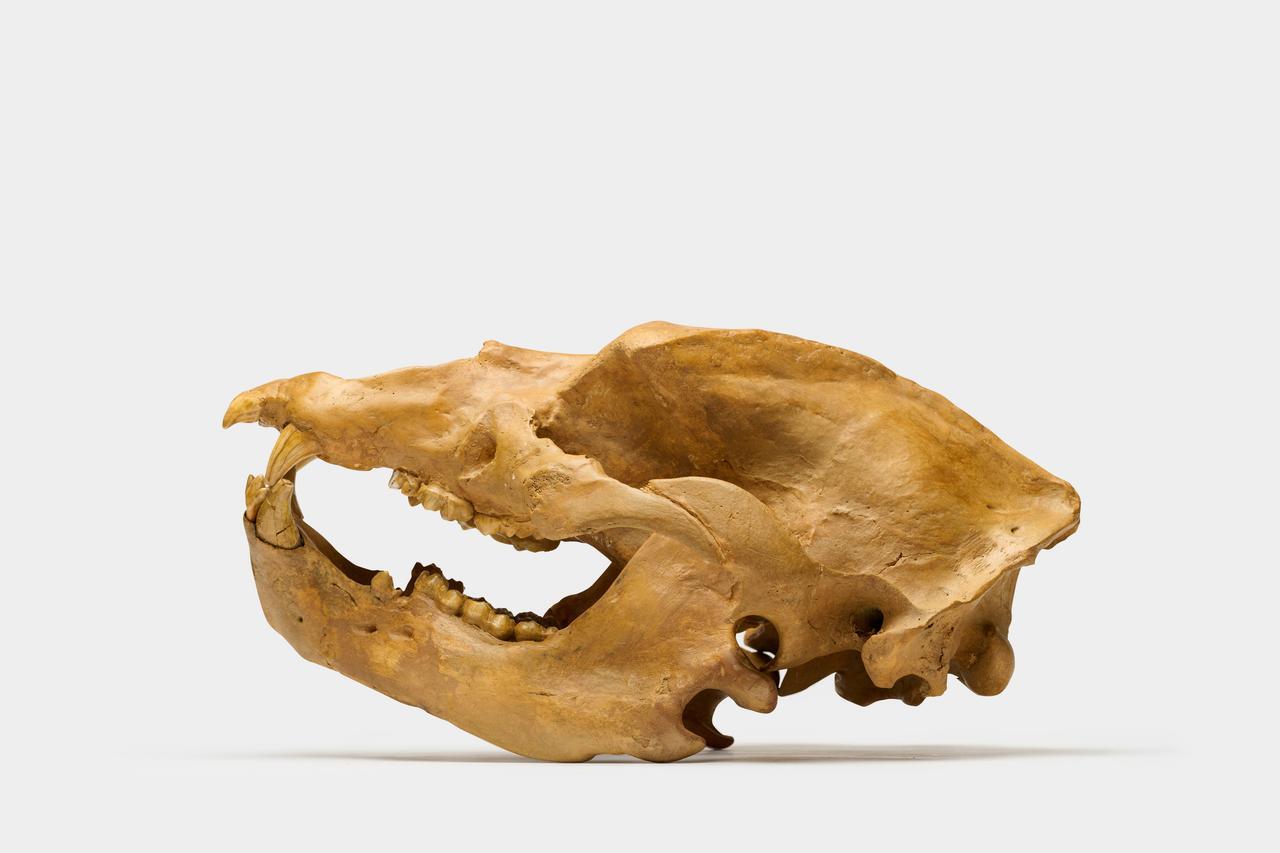
Stephanorhinus - Fossil tooth


03
days
14
hours
28
minutes
35
seconds

 | €50 | |
|---|---|---|
 | €1 |
Catawiki Buyer Protection
Your payment’s safe with us until you receive your object.View details
Trustpilot 4.4 | 140908 reviews
Rated Excellent on Trustpilot.
A restored molar from the jaw of Stephanorhinus from Germany, dating to the Pleistocene (Quaternary) with original/official authenticity.
AI-assisted summary
Description from the seller
This is a molar from the jaw of Stephanorhinus kirchbergensis, an extinct Rhinoceros.It’s 6cm on thelongest side. It's Pleistocene in age, or approximately 120,000 years old and comes from the gravel deposits of the Rhine River. Fossils of Stephanorhinus are much rarer than those of the Woolly Rhinoceros (Coelodonta).
The gravel deposits along the Rhine River used to produce a large number of Pleistocene fossils while miners quarried for gravel aggregate. They have become much harder to come by in recent years as the quarry operations have become more mechanized, often destroying fossils in the process.
Stephanorhinus, or Merck's rhinoceros, is an extinct genus of rhinoceros native to northern Eurasia that lived during the Lower to Early Late Pleistocene epoch. It had two horns and was a relatively large rhino. It weighed over 3,000 kilograms (6,600 pounds) and measured about 2 meters (6.56 feet) tall and 4 meters (13.12 feet) in length, similar to a modern white rhino.
Please keep in mind the object is old, and therefore have marks and flaws on them, that might no be visiable in the photos
This is a molar from the jaw of Stephanorhinus kirchbergensis, an extinct Rhinoceros.It’s 6cm on thelongest side. It's Pleistocene in age, or approximately 120,000 years old and comes from the gravel deposits of the Rhine River. Fossils of Stephanorhinus are much rarer than those of the Woolly Rhinoceros (Coelodonta).
The gravel deposits along the Rhine River used to produce a large number of Pleistocene fossils while miners quarried for gravel aggregate. They have become much harder to come by in recent years as the quarry operations have become more mechanized, often destroying fossils in the process.
Stephanorhinus, or Merck's rhinoceros, is an extinct genus of rhinoceros native to northern Eurasia that lived during the Lower to Early Late Pleistocene epoch. It had two horns and was a relatively large rhino. It weighed over 3,000 kilograms (6,600 pounds) and measured about 2 meters (6.56 feet) tall and 4 meters (13.12 feet) in length, similar to a modern white rhino.
Please keep in mind the object is old, and therefore have marks and flaws on them, that might no be visiable in the photos
Details
Specimen
Stephanorhinus
Country of origin
Germany
Geological period
Quaternary, Pleistocene (2.58 - 0.0117 million years)
Condition
Restored
Authenticity
Original/official