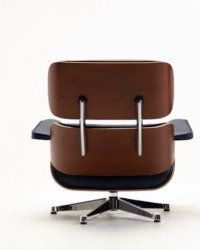
Bernini - Carlo Scarpa - Chair (6) - Walnut - model 765


04
days
18
hours
29
minutes
25
seconds
Current bid
€ 100
Reserve price not met

Expert
Selected by Alexander Fahl
Art historian with over 10 years' experience and expertise in Italian design.
Estimate € 2,500 - € 3,000
 | €100 |
|---|
Catawiki Buyer Protection
Your payment’s safe with us until you receive your object.View details
Trustpilot 4.4 | 141104 reviews
Rated Excellent on Trustpilot.
Six Carlo Scarpa chairs in walnut wood with black leather cushions (model 1934 / 765), produced by Bernini in 1977, in fair condition with heavy wear and possible missing small parts.
AI-assisted summary
Description from the seller
Six Carlo Scarpa chairs in walnut wood with black leather cushions (model 1934 / 765), produced by Bernini in 1977. All original cushions are black leather.
Model 765 was designed in 1934 by Carlo Scarpa—the year the chair would later owe its name to—but production only started in 1977.
The designer originally created the chair for his own home in Venice.
The construction is made of walnut wood; Scarpa seems to want to emphasize the use of this material with a backrest characterized by curved forms and a central opening, reminiscent of a knot in wood.
The joints required a lot of craftsmanship, as Scarpa wanted them to be as unobtrusive as possible, especially in the backrest.
The construction is reinforced by a cylindrical element between the two front legs.
These very rare chairs have some issues, particularly with the backrest; one chair has the back split in two, I’ve re-glued it, and the other backrests have issues as well—unfortunately too intricate for me to repair, really needing a master woodworker.
Six Carlo Scarpa chairs in walnut wood with black leather cushions (model 1934 / 765), produced by Bernini in 1977. All original cushions are black leather.
Model 765 was designed in 1934 by Carlo Scarpa—the year the chair would later owe its name to—but production only started in 1977.
The designer originally created the chair for his own home in Venice.
The construction is made of walnut wood; Scarpa seems to want to emphasize the use of this material with a backrest characterized by curved forms and a central opening, reminiscent of a knot in wood.
The joints required a lot of craftsmanship, as Scarpa wanted them to be as unobtrusive as possible, especially in the backrest.
The construction is reinforced by a cylindrical element between the two front legs.
These very rare chairs have some issues, particularly with the backrest; one chair has the back split in two, I’ve re-glued it, and the other backrests have issues as well—unfortunately too intricate for me to repair, really needing a master woodworker.
Details
Era
1900-2000
Wood type
Walnut
Title additional information
model 765
Number of objects
6
Country of origin
Italy
Manufacturer/brand
Bernini
Designer/artist/maker
Carlo Scarpa
Material
Wood
Style
Mid-century modern
Colour
Black, Brown
Condition
Fair condition - heavily used & with possibly minor parts missing
Height
92 cm
Width
43 cm
Depth
41 cm
Estimated period
1970-1980
Seating height
44 cm
Sold by