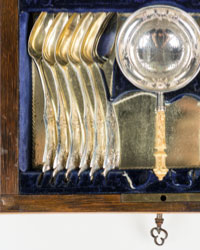
Drinking set (6) - Silverplated, Copper, Ceramic - Tradi ..Ottoman coffee set


Starting bid
€ 1
Add to your favourites to get an alert when the auction starts.

Catawiki Buyer Protection
Your payment’s safe with us until you receive your object.View details
Trustpilot 4.4 | 140943 reviews
Rated Excellent on Trustpilot.
Description from the seller
Traditional Ottoman coffee service
Estimated age: Late 19th century – Early 20th century
Materials: silver-plated copper, with ceramic interior for the cups
Style: Ottoman/Middle Eastern
Origin: Probably the Ottoman Empire (Turkey, Middle East or the Balkans region)
Historical significance: This coffee service represents an important cultural tradition—the preparation and tasting of Turkish coffee. These sets were used in Ottoman households to offer coffee to guests, symbolizing hospitality and social status. The decorative engravings on the metal reflect the craftsmanship of the period and the artistic influences of the region.
Restoration tips: Gently clean the metal with a mild product suitable for silver or silver-plated metal, avoiding abrasives that could damage the finish. For the ceramic cups, a soft wash with warm water and neutral soap is enough. If the silver plating is worn, professional restoration can be considered to maintain the object's aesthetic and historical value.
Fun facts: Turkish coffee is prepared by boiling very finely ground coffee with water and sugar in a small pot called a cezve or ibrik.
Fun facts: The cups are usually small, handleless, and called 'fincan'.
Fun facts: It is common to read the future in the coffee grounds left at the bottom of the cup after drinking.
Fun facts: The engraving on the tray and vessels is often intricate and done by hand, with floral, geometric, or calligraphic motifs.
Traditional Ottoman coffee service
Estimated age: Late 19th century – Early 20th century
Materials: silver-plated copper, with ceramic interior for the cups
Style: Ottoman/Middle Eastern
Origin: Probably the Ottoman Empire (Turkey, Middle East or the Balkans region)
Historical significance: This coffee service represents an important cultural tradition—the preparation and tasting of Turkish coffee. These sets were used in Ottoman households to offer coffee to guests, symbolizing hospitality and social status. The decorative engravings on the metal reflect the craftsmanship of the period and the artistic influences of the region.
Restoration tips: Gently clean the metal with a mild product suitable for silver or silver-plated metal, avoiding abrasives that could damage the finish. For the ceramic cups, a soft wash with warm water and neutral soap is enough. If the silver plating is worn, professional restoration can be considered to maintain the object's aesthetic and historical value.
Fun facts: Turkish coffee is prepared by boiling very finely ground coffee with water and sugar in a small pot called a cezve or ibrik.
Fun facts: The cups are usually small, handleless, and called 'fincan'.
Fun facts: It is common to read the future in the coffee grounds left at the bottom of the cup after drinking.
Fun facts: The engraving on the tray and vessels is often intricate and done by hand, with floral, geometric, or calligraphic motifs.
Details
Era
1900-2000
Weight
1260 g
Title additional information
Tradi ..Ottoman coffee set
Number of objects
6
Material
Ceramic, Copper, Silverplated
Country of origin
Türkiye
Style
Vintage
Colour
Silver
Condition
Excellent condition: barely used with minimal signs of wear
Height
14 cm
Width
33 cm
Depth
10 cm
Estimated period
1910-1920
Sold by