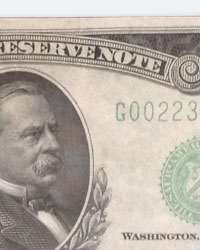
Austria. - 100 Banknotes - Various Dates (No reserve price)


04
days
23
hours
51
minutes
23
seconds

 | €2 | |
|---|---|---|
 | €1 |
Catawiki Buyer Protection
Your payment’s safe with us until you receive your object.View details
Trustpilot 4.4 | 141255 reviews
Rated Excellent on Trustpilot.
This lot comprises 100 Austrian Notgeld banknotes issued up to 1920 with varying dates and mixed grades, reflecting historical and local motifs.
AI-assisted summary
Description from the seller
Austrian emergency money up to 1920.
The Austrian Notgeld arose during World War I due to a shortage of metal coinage. Coins were hoarded or used for the war industry, making small denominations particularly scarce. Municipalities, towns, companies, and institutions therefore issued temporary own banknotes.
The first important issues appeared from 1918, especially in Tyrol, including Innsbruck, Kufstein, and Kitzbühel. The common denominations were 10, 20, and 50 Heller, but higher values were also issued, sometimes up to 100 Kronen. This so-called Großgeld was intended for larger payments.
After the dissolution of Austria-Hungary in 1918, production increased markedly. In 1919 and especially 1920 hundreds of Austrian municipalities issued their own emergency money. Upper Austria became an important center in particular. The banknotes were usually valid for only a short time and could be exchanged at the issuing authority.
From 1920 the banknotes increasingly took on an artistic and local character. Castles, churches, town halls, landscapes, coats of arms, and historical figures were depicted. Due to the strong interest of collectors, special series, color variants, print variants, and other issues also appeared, sometimes scarcely intended for use in daily payments.
In addition to municipal Notgeld, there were, among others, Privatnotgeld from companies and shops and Lagergeld for use within certain institutions or closed communities.
Important collecting areas are Tyrol, Salzburg, Vorarlberg, Vienna, Lower Austria, Upper Austria, Styria, and Carinthia. For Upper Austria hundreds of municipalities are known. One municipality could also issue dozens of different variants.
1920 marks an important end point for a collection, because from the end of that year the issuance was increasingly restricted. The Austrian Notgeld from this period is nowadays interesting both for its historical significance and for its great artistic and local diversity.
For a comprehensive study, the catalogs by Johann Kodnar & Norbert Künstner, Katalog des österreichischen Notgeldes 1914–1924, and the regional catalogs of the Oberösterreichische Landesarchiv are of particular importance.
These are 100 Notgeld banknotes from Austria. They cannot be returned or exchanged. They are of varying quality (look at the photos to get a good impression; what you see is what you get). No items are shipped to the United States of America. 5
Austrian emergency money up to 1920.
The Austrian Notgeld arose during World War I due to a shortage of metal coinage. Coins were hoarded or used for the war industry, making small denominations particularly scarce. Municipalities, towns, companies, and institutions therefore issued temporary own banknotes.
The first important issues appeared from 1918, especially in Tyrol, including Innsbruck, Kufstein, and Kitzbühel. The common denominations were 10, 20, and 50 Heller, but higher values were also issued, sometimes up to 100 Kronen. This so-called Großgeld was intended for larger payments.
After the dissolution of Austria-Hungary in 1918, production increased markedly. In 1919 and especially 1920 hundreds of Austrian municipalities issued their own emergency money. Upper Austria became an important center in particular. The banknotes were usually valid for only a short time and could be exchanged at the issuing authority.
From 1920 the banknotes increasingly took on an artistic and local character. Castles, churches, town halls, landscapes, coats of arms, and historical figures were depicted. Due to the strong interest of collectors, special series, color variants, print variants, and other issues also appeared, sometimes scarcely intended for use in daily payments.
In addition to municipal Notgeld, there were, among others, Privatnotgeld from companies and shops and Lagergeld for use within certain institutions or closed communities.
Important collecting areas are Tyrol, Salzburg, Vorarlberg, Vienna, Lower Austria, Upper Austria, Styria, and Carinthia. For Upper Austria hundreds of municipalities are known. One municipality could also issue dozens of different variants.
1920 marks an important end point for a collection, because from the end of that year the issuance was increasingly restricted. The Austrian Notgeld from this period is nowadays interesting both for its historical significance and for its great artistic and local diversity.
For a comprehensive study, the catalogs by Johann Kodnar & Norbert Künstner, Katalog des österreichischen Notgeldes 1914–1924, and the regional catalogs of the Oberösterreichische Landesarchiv are of particular importance.
These are 100 Notgeld banknotes from Austria. They cannot be returned or exchanged. They are of varying quality (look at the photos to get a good impression; what you see is what you get). No items are shipped to the United States of America. 5
Details
Era
1900-2000
Grade (Certified notes)
Various grades
Country/province
Austria
Year/period and variation
- Various Dates
Quantity x nominal value
- 100 Banknotes
Number of items
100
Theme
History
Sold by