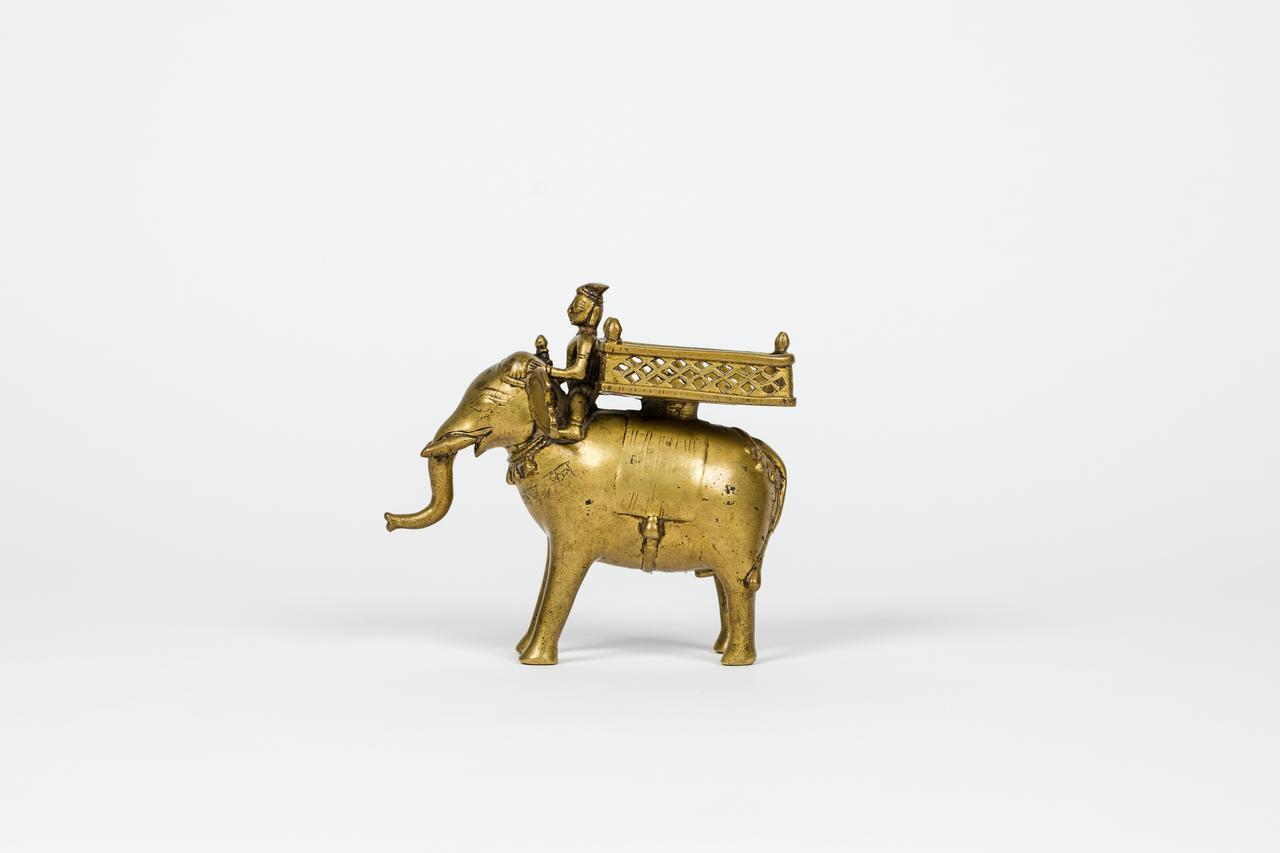
Container - Brass - Betelset (Chuna-Dani)


05
days
20
hours
27
minutes
49
seconds

No bids placed
Catawiki Buyer Protection
Your payment’s safe with us until you receive your object.View details
Trustpilot 4.4 | 141736 reviews
Rated Excellent on Trustpilot.
Authentic two-piece Betel set (Chuna-Dani) from India, crafted in heavy brass, dating to the second half of the 19th century into the 20th century, approximately 1850–1910, comprising two boxes connected by a brass chain.
AI-assisted summary
Description from the seller
Authentic and highly characteristic two-piece betel-set for betel ingredients, in the culture of origin also known as a chuna-dani. This rare portable set was artisanal in the late 19th to early 20th century (ca. 1850 – 1910) in South Asia, most likely in northern or central India. The set is entirely crafted in heavy, thick-walled cast brass and reflects the rich historical tradition of betel chewing. The two separate containers are organically connected to each other via the original, robust brass link chain, decorated with diamond-shaped intermediate elements featuring refined floral engravings and a sturdy hanging loop.
The set consists of two complementary boxes, each with a specific function during travel. The first box has an elegant, melon-shaped structure with fluting and subtly stamped circular patterns along the edges. This part was originally intended for the dry storage of seasonings such as clove, cardamom, or areca nut. This specific box measures 5.8 by 6.4 by 6.4 cm and has a standalone weight of 225 g. The underside shows a beautiful dark patina with natural age wear on the support ring.
The second part of the set concerns the primary lime-pot, executed in a classic vase form with a profiled lid and a broad base. This box measures 6.3 by 5.5 by 5.5 cm and weighs no less than 300 g. The interior of this holder is in a museum-like state, as it is still almost completely filled with the original petrified remnants of the historical extinguished lime paste. At the inner edge is also visible the mounting point where the lime spatula was originally attached. The underside of the base shows clear concentric rings indicating the manual turning process on a historical lathe. With a combined total weight of over 500 g and the presence of both original halves, this object forms a beautiful and complete collectible for enthusiasts of Asian metal art and anthropology.
Left
Dimensions: 5.8 x 6.4 x 6.4 cm
Weight: 225 g
Right
Dimensions: 6.3 x 5.5 x 5.5 cm
Weight: 300 g
Authentic and highly characteristic two-piece betel-set for betel ingredients, in the culture of origin also known as a chuna-dani. This rare portable set was artisanal in the late 19th to early 20th century (ca. 1850 – 1910) in South Asia, most likely in northern or central India. The set is entirely crafted in heavy, thick-walled cast brass and reflects the rich historical tradition of betel chewing. The two separate containers are organically connected to each other via the original, robust brass link chain, decorated with diamond-shaped intermediate elements featuring refined floral engravings and a sturdy hanging loop.
The set consists of two complementary boxes, each with a specific function during travel. The first box has an elegant, melon-shaped structure with fluting and subtly stamped circular patterns along the edges. This part was originally intended for the dry storage of seasonings such as clove, cardamom, or areca nut. This specific box measures 5.8 by 6.4 by 6.4 cm and has a standalone weight of 225 g. The underside shows a beautiful dark patina with natural age wear on the support ring.
The second part of the set concerns the primary lime-pot, executed in a classic vase form with a profiled lid and a broad base. This box measures 6.3 by 5.5 by 5.5 cm and weighs no less than 300 g. The interior of this holder is in a museum-like state, as it is still almost completely filled with the original petrified remnants of the historical extinguished lime paste. At the inner edge is also visible the mounting point where the lime spatula was originally attached. The underside of the base shows clear concentric rings indicating the manual turning process on a historical lathe. With a combined total weight of over 500 g and the presence of both original halves, this object forms a beautiful and complete collectible for enthusiasts of Asian metal art and anthropology.
Left
Dimensions: 5.8 x 6.4 x 6.4 cm
Weight: 225 g
Right
Dimensions: 6.3 x 5.5 x 5.5 cm
Weight: 300 g
Details
Era
1400-1900
Title additional information
Betelset (Chuna-Dani)
Country of origin
India
Material
Brass
Dynastic style/period
Second half of the 19th century – 20th century
Condition
Excellent condition: barely used with minimal signs of wear
Height
6.3 cm
Width
5.5 cm
Depth
5.5 cm
Estimated period
1850-1900