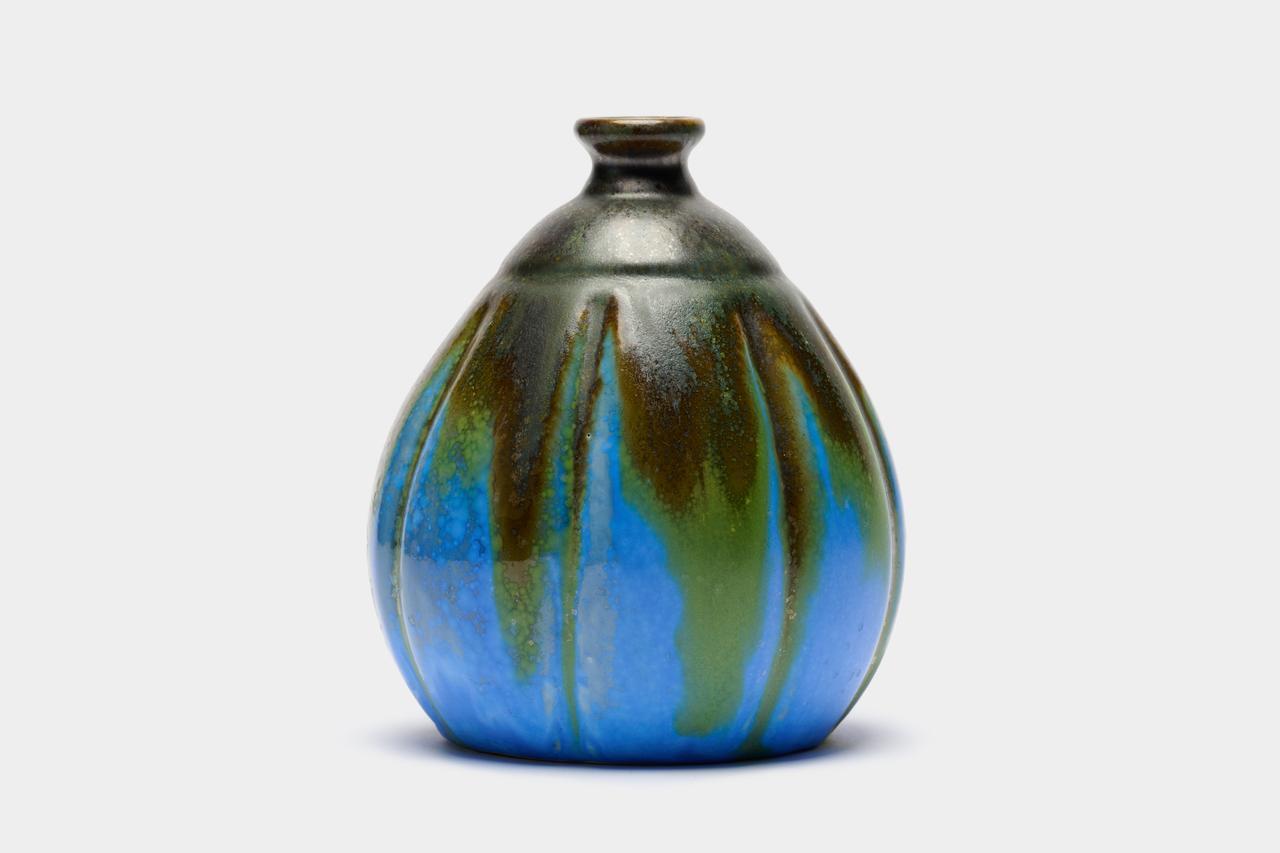
Boch Frères - Vase (2) - Earthenware - Boch Naturalist Vases


02
days
13
hours
08
minutes
40
seconds

 | €120 | |
|---|---|---|
 | €110 | |
| €100 |
Catawiki Buyer Protection
Your payment’s safe with us until you receive your object.View details
Trustpilot 4.4 | 142645 reviews
Rated Excellent on Trustpilot.
A pair of baluster-shaped fine earthenware vases by Boch Frères of La Louvière, Belgium, in faïence, each 23 cm high and 1 kg, with a 15 cm width and 13 cm depth, dating to the early 1840s and in antique neoclassical style with brown and silver glaze and high-relief botanical ornamentation, sold in good condition with minor age-related wear.
AI-assisted summary
Description from the seller
This pair of baluster-shaped, fine earthenware vases from the early period of the Boch Frères factory in La Louvière represents a historical milestone of exceptional rarity. Manufactured in the very early 1840s, between 1841 and 1847, these prestigious showpieces bear witness to the workshop’s first major technical and artistic experiments. The body of the vessels features a masterfully mottled and marbled glaze, combining tones of brown and beige to create an organic textured effect that mimics stone or the grain of precious woods. The ornamentation is enhanced by a virtuoso sculptural work of hand-modeled plants applied in very high relief, portraying intertwined branches of wild vine adorned with finely cut leaves and dense clusters of fruit evocative of blackberries or hops. The principal artistic feature lies in the finish of these reliefs, covered with a specific metallic lustre glaze that provides a striking chromatic contrast with the satin-matte background. Under each base, workshop marks are impressed alongside a highly unusual central yellow cameo medallion applied in relief. This exclusive badge, directly inspired by neoclassical designs from the English Wedgwood workshop, unmistakably confirms the authenticity of this exceptional production. Each vase stands 23 cm tall, with an individual weight of 1 kg, bringing the total weight of the pair to 2 kg. Regarding the condition of these extremely delicate pieces, nearly 180 years old and featuring a notably protruding botanical structure, the set retains superb aesthetic freshness and solid structural integrity. Precise notes record minor localized chips and losses at the tips of a few relief leaves (see photos), along with minor signs of wear and firing imperfections from the period, which remain very discreet and blend naturally into the density of this handcrafted sculpted composition."
This pair of baluster-shaped, fine earthenware vases from the early period of the Boch Frères factory in La Louvière represents a historical milestone of exceptional rarity. Manufactured in the very early 1840s, between 1841 and 1847, these prestigious showpieces bear witness to the workshop’s first major technical and artistic experiments. The body of the vessels features a masterfully mottled and marbled glaze, combining tones of brown and beige to create an organic textured effect that mimics stone or the grain of precious woods. The ornamentation is enhanced by a virtuoso sculptural work of hand-modeled plants applied in very high relief, portraying intertwined branches of wild vine adorned with finely cut leaves and dense clusters of fruit evocative of blackberries or hops. The principal artistic feature lies in the finish of these reliefs, covered with a specific metallic lustre glaze that provides a striking chromatic contrast with the satin-matte background. Under each base, workshop marks are impressed alongside a highly unusual central yellow cameo medallion applied in relief. This exclusive badge, directly inspired by neoclassical designs from the English Wedgwood workshop, unmistakably confirms the authenticity of this exceptional production. Each vase stands 23 cm tall, with an individual weight of 1 kg, bringing the total weight of the pair to 2 kg. Regarding the condition of these extremely delicate pieces, nearly 180 years old and featuring a notably protruding botanical structure, the set retains superb aesthetic freshness and solid structural integrity. Precise notes record minor localized chips and losses at the tips of a few relief leaves (see photos), along with minor signs of wear and firing imperfections from the period, which remain very discreet and blend naturally into the density of this handcrafted sculpted composition."
Details
Era
1400-1900
Weight
1000 g
Style subtype
Neoclassical Style
Title additional information
Boch Naturalist Vases
Number of objects
2
Country of origin
Belgium
Material
Earthenware
Style
Antique
Manufacturer/brand
Boch Frères
Colour
Brown, Silver
Condition
Good condition - used with small signs of aging & blemishes
Height
23 mm
Width
15 cm
Depth
13 cm
Estimated period
1800-1850