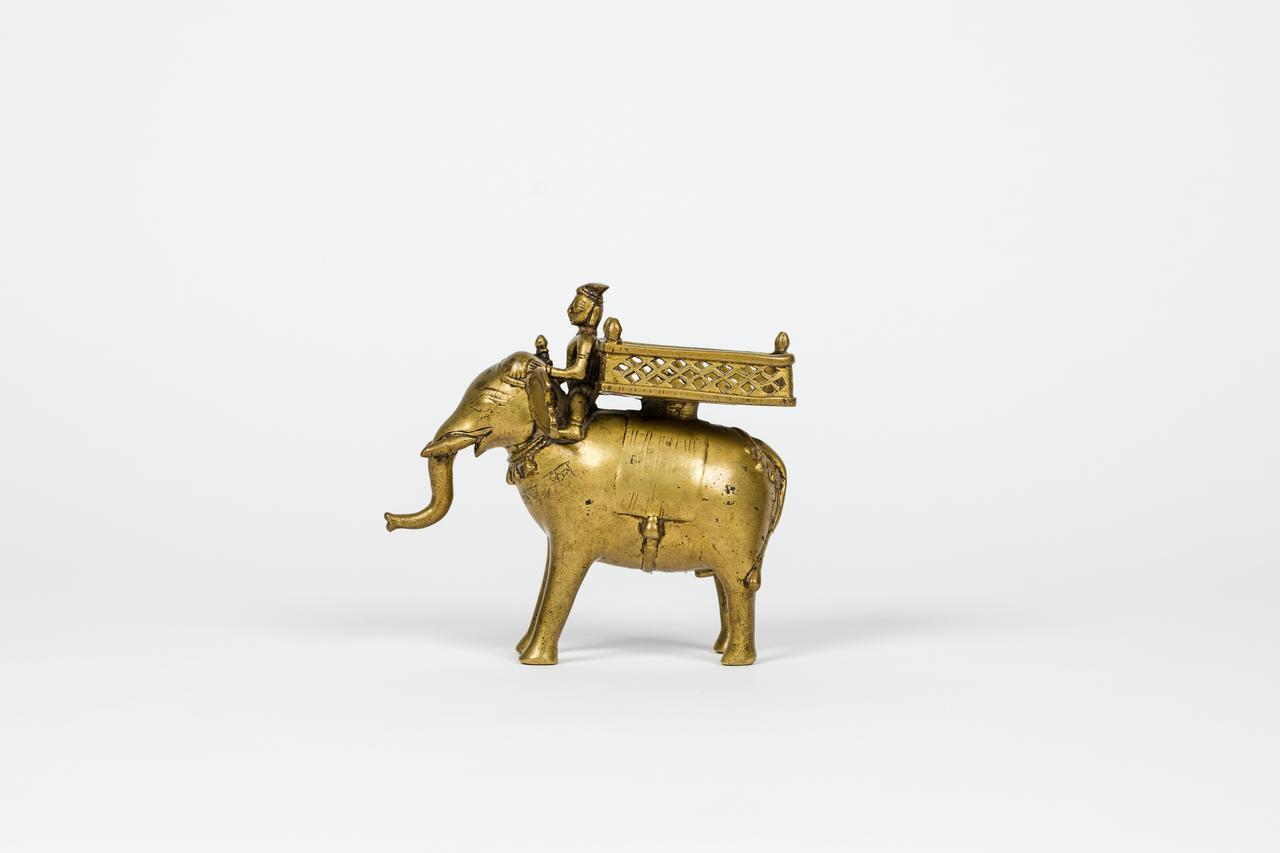
Statue of Ganesh - Brass - Nepal - 20th century


03
days
00
hours
42
minutes
11
seconds
Current bid
€ 2
Reserve price not met

Expert
Selected by Sarah Le Helley
Studied Asian art and art market management; researched art in Taipei; worked in auctions.
Estimate € 250 - € 300
 | €2 | |
|---|---|---|
| €1 |
Catawiki Buyer Protection
Your payment’s safe with us until you receive your object.View details
Trustpilot 4.4 | 141873 reviews
Rated Excellent on Trustpilot.
Statua Ganesh in brass, Nepal, XX century, original, 29 cm high, 15 cm wide, 18 cm deep, depicting Ganesha seated on a pedestal with traditional attributes.
AI-assisted summary
Description from the seller
This sculpture depicts Ganesha seated on a pedestal, blessing and with his traditional attributes (including the axe, the ankush, and the laddu sweet in the trunk), surrounded by a finely worked halo (prabhavali).
The main alloy is gilded brass.
The tiles and stones that compose the ornamental mosaic (stone inlay work) belong to typical Indian and Nepalese artisanal craftsmanship, Stones and Mosaic Materials.
• Variegated green stone (Green): This is malachite (or alternatively rebuilt green turquoise/stone paste). The concentric veins clearly visible on the green tiles (especially on the seat and the ears) show the classic structure of malachite.
• Red stone (Red): This is red coral (often coral paste or reconstituted stone cut into rectangular tiles) and red cabochon beads along the edges of the garments.
• Blue stone (Blue): Cabochons and tiles in lapis lazuli (or blue mineral stone paste/glass), used for circular details and along the rear halo.
• Turquoise/blue stone: Turquoise tiles and beads (or reconstructed turquoise) used as a contrast in the halo and in the medallions.
In sculptures of this artisanal typology, the tiles and cabochons are cut and affixed individually in metal housings using a traditional dark resin or putty (called laha). Anatomically and stylistically, this type of brass sculpture with stone inlay (a typical Nepalese and northern Indian craft) belongs to the contemporary production of the second half of the 20th century or early 2000s (datable roughly between the 1980s and 2000s).
Height: 29 cm. Weight: 4.5 kg
This sculpture depicts Ganesha seated on a pedestal, blessing and with his traditional attributes (including the axe, the ankush, and the laddu sweet in the trunk), surrounded by a finely worked halo (prabhavali).
The main alloy is gilded brass.
The tiles and stones that compose the ornamental mosaic (stone inlay work) belong to typical Indian and Nepalese artisanal craftsmanship, Stones and Mosaic Materials.
• Variegated green stone (Green): This is malachite (or alternatively rebuilt green turquoise/stone paste). The concentric veins clearly visible on the green tiles (especially on the seat and the ears) show the classic structure of malachite.
• Red stone (Red): This is red coral (often coral paste or reconstituted stone cut into rectangular tiles) and red cabochon beads along the edges of the garments.
• Blue stone (Blue): Cabochons and tiles in lapis lazuli (or blue mineral stone paste/glass), used for circular details and along the rear halo.
• Turquoise/blue stone: Turquoise tiles and beads (or reconstructed turquoise) used as a contrast in the halo and in the medallions.
In sculptures of this artisanal typology, the tiles and cabochons are cut and affixed individually in metal housings using a traditional dark resin or putty (called laha). Anatomically and stylistically, this type of brass sculpture with stone inlay (a typical Nepalese and northern Indian craft) belongs to the contemporary production of the second half of the 20th century or early 2000s (datable roughly between the 1980s and 2000s).
Height: 29 cm. Weight: 4.5 kg
Details
Dynastic Style/Period
20th century
Country of Origin
Nepal
Material
Brass
Height
29 cm
Width
15 cm
Title of artwork
Statue of Ganesh
Depth
18 cm
Condition
Excellent condition
Authenticity
Original/official
Sold by