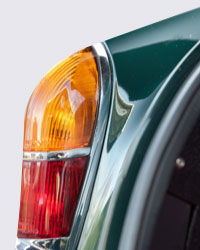
Lotus - Super Seven S2 twin cam Joop Donkervoort - 1967


06
days
20
hours
46
minutes
28
seconds
Current bid
€ 28,250
Reserve price not met

Expert
Selected by Arjan Rietveld
Thirty years' experience with classic cars, specialising in Italian cars and Porsche.
Estimate € 32,000 - € 36,000
 | €28,250 | |
|---|---|---|
| €26,250 | |
| €24,250 | |
Catawiki Buyer Protection
Your payment’s safe with us until you receive your object.View details
Trustpilot 4.4 | 142645 reviews
Rated Excellent on Trustpilot.
1967 Lotus Super Seven S2 twin cam Joop Donkervoort with Dutch registration, manual petrol, green body, 125 bhp from a 1600cc engine, chassis 66018, matching numbers and colours, 5500 miles, service history, valid MOT, CoC not present, engine number 01600-073585, located in Spain, weight about 560 kg.
AI-assisted summary
Description from the seller
HIGHLIGHTS:
• Rare Lotus Super Seven S2 kit version prepared and adapted by Joop Donkervoort (predecessor to the Donkervoort S7)
• Features a longer and wider chassis than the standard English version, accommodating drivers over 1.85m
• Powered by a tuned 1600cc twin-cam engine producing 125 bhp for an exceptional power-to-weight ratio (560 kg)
• Fully documented build history by its creator, Mr. Nolte, and recently subjected to a major mechanical service
• Fitted with restored original Revolution alloy wheels, tonneau cover, and a new, unused soft top
HISTORY/OVERVIEW:
The Lotus Seven, designed by Colin Chapman and launched in 1957, embodies the ultimate philosophy of performance through light weight and simplicity. The Series 2 (S2) model introduced refined frame architecture and fiberglass components, becoming a benchmark among lightweight sports cars.
This specific Lotus Super Seven S2 carries a unique place in history: it was sold as a kit in 1971 by the official Lotus importer of the time, Joop Donkervoort. Produced in 1967, this chassis features a longer and wider body than standard English S2 models. This modified architecture served as the direct precursor to what became the Donkervoort S7 in 1978, making it comfortable even for drivers taller than 1.85 meters. Built and documented meticulously by its owner, Mr. Nolte, this Seven combines authentic vintage charm, historical importance, and a lightweight 560 kg build.
BODYWORK & PAINT:
The aluminum and fiberglass bodywork exhibits an attractive, age-appropriate patina showing the true history of the car. The paintwork and body show visible signs of age, including stone chips and minor cosmetic marks accumulated over the years. The vehicle comes equipped with a tonneau cover and a new, unused soft top. The Revolution alloy wheels have been recently restored.
INTERIOR:
The open-cockpit interior matches the overall character and age of the vehicle, displaying authentic patina throughout. The dashboard, seating, and cockpit layout reflect the minimalist, function-first design typical of the Series 2 Seven.
MECHANICS:
The vehicle is powered by a specially prepared and tuned 1600cc twin-cam engine delivering 125 bhp. Paired with a total kerb weight of just 560 kg, it provides immediate throttle response and direct driving dynamics. The car recently underwent a major service, which included:
• Complete cylinder head rebuild with new inlet and outlet valves
• Overhauled carburetors and new expansion tank
• Installation of a new radiator, new distributor cap, and new spark plugs
• Overall overhaul of the braking system
DOCUMENTS:
The build process and component selection were thoroughly documented step-by-step by the builder, Mr. Nolte. Further registration papers and historical records are available as part of the vehicle's history file.
HIGHLIGHTS:
• Rare Lotus Super Seven S2 kit version prepared and adapted by Joop Donkervoort (predecessor to the Donkervoort S7)
• Features a longer and wider chassis than the standard English version, accommodating drivers over 1.85m
• Powered by a tuned 1600cc twin-cam engine producing 125 bhp for an exceptional power-to-weight ratio (560 kg)
• Fully documented build history by its creator, Mr. Nolte, and recently subjected to a major mechanical service
• Fitted with restored original Revolution alloy wheels, tonneau cover, and a new, unused soft top
HISTORY/OVERVIEW:
The Lotus Seven, designed by Colin Chapman and launched in 1957, embodies the ultimate philosophy of performance through light weight and simplicity. The Series 2 (S2) model introduced refined frame architecture and fiberglass components, becoming a benchmark among lightweight sports cars.
This specific Lotus Super Seven S2 carries a unique place in history: it was sold as a kit in 1971 by the official Lotus importer of the time, Joop Donkervoort. Produced in 1967, this chassis features a longer and wider body than standard English S2 models. This modified architecture served as the direct precursor to what became the Donkervoort S7 in 1978, making it comfortable even for drivers taller than 1.85 meters. Built and documented meticulously by its owner, Mr. Nolte, this Seven combines authentic vintage charm, historical importance, and a lightweight 560 kg build.
BODYWORK & PAINT:
The aluminum and fiberglass bodywork exhibits an attractive, age-appropriate patina showing the true history of the car. The paintwork and body show visible signs of age, including stone chips and minor cosmetic marks accumulated over the years. The vehicle comes equipped with a tonneau cover and a new, unused soft top. The Revolution alloy wheels have been recently restored.
INTERIOR:
The open-cockpit interior matches the overall character and age of the vehicle, displaying authentic patina throughout. The dashboard, seating, and cockpit layout reflect the minimalist, function-first design typical of the Series 2 Seven.
MECHANICS:
The vehicle is powered by a specially prepared and tuned 1600cc twin-cam engine delivering 125 bhp. Paired with a total kerb weight of just 560 kg, it provides immediate throttle response and direct driving dynamics. The car recently underwent a major service, which included:
• Complete cylinder head rebuild with new inlet and outlet valves
• Overhauled carburetors and new expansion tank
• Installation of a new radiator, new distributor cap, and new spark plugs
• Overall overhaul of the braking system
DOCUMENTS:
The build process and component selection were thoroughly documented step-by-step by the builder, Mr. Nolte. Further registration papers and historical records are available as part of the vehicle's history file.
Details
Brand
Lotus
Model type
Super Seven S2 twin cam Joop Donkervoort
Year
1967
Located in
Spain
Mileage reading
5500 mi
Registration papers
with Dutch registration
Transmission
Manual
Fuel
Petrol
Colour
Green
Horse power
125
Cubic capacity
1600
Matching numbers
Yes
Matching colours
Yes
Service book/history
Yes
Valid MOT
Yes
CoC (Certificate of Conformity) present
No
Certificate available
No
Engine number
01600-073585
Chassis number
66018
Condition (Paint & body)
Very Good: minor chips or scratches, minor conventional body and paintwork
Condition (Interior)
Good: shows signs of normal wear and usage. May require repair or replacement of parts
Condition (Frame & underbody)
Good: frame/structure shows minor signs of surface rust, signs of usage/wear, may require some attention
Condition (Mechanical)
Very Good: mechanically sound, may require minor service
Condition (Overall)
Good condition: visible signs of wear and general ageing
Vehicle registration
We can help buyers register their vehicle through our trusted external partner. The process is straightforward and can be completed after purchase. Vehicle registration remains the buyer's responsibility.
Sold by
Disclaimer
Catawiki always aims to offer you the best possible buying experience. Our experts virtually review and select every vehicle in line with our submission guidelines and we require our sellers to provide the most accurate description of the vehicle. However, providing a fully detailed analysis of the vehicle is extremely difficult, and close to impossible. To guide you, we ask our sellers to provide information about the vehicle’s condition. Please consider that most vehicles for sale are classic vehicles and they often already have a whole life behind them, meaning that even a condition 1 or 2 vehicle might need maintenance to be ready for the road. It is advised to carefully read our submission guidelines that further describe details about the condition grades and types to manage your expectations. Cars are sold “as is”, meaning as described and in the condition they are in at the time of the sale and without any representation, warranty or assumption of liability of any kind as to the condition by Catawiki or by the seller. The condition of this item is the opinion of the seller and may differ from yours, your local garage, or the dealer’s opinion. This does not automatically mean the car does not conform to its description. Before bidding, please check your local legislation regarding vehicle registration. Neither the seller nor Catawiki is responsible for the registration of the vehicle in your country and will not accept a cancellation for your failure to register the vehicle. We also recommend that, if possible, you arrange a viewing with the seller before placing a bid.
Catawiki always aims to offer you the best possible buying experience. Our experts virtually review and select every vehicle in line with our submission guidelines and we require our sellers to provide the most accurate description of the vehicle. However, providing a fully detailed analysis of the vehicle is extremely difficult, and close to impossible. To guide you, we ask our sellers to provide information about the vehicle’s condition. Please consider that most vehicles for sale are classic vehicles and they often already have a whole life behind them, meaning that even a condition 1 or 2 vehicle might need maintenance to be ready for the road. It is advised to carefully read our submission guidelines that further describe details about the condition grades and types to manage your expectations. Cars are sold “as is”, meaning as described and in the condition they are in at the time of the sale and without any representation, warranty or assumption of liability of any kind as to the condition by Catawiki or by the seller. The condition of this item is the opinion of the seller and may differ from yours, your local garage, or the dealer’s opinion. This does not automatically mean the car does not conform to its description. Before bidding, please check your local legislation regarding vehicle registration. Neither the seller nor Catawiki is responsible for the registration of the vehicle in your country and will not accept a cancellation for your failure to register the vehicle. We also recommend that, if possible, you arrange a viewing with the seller before placing a bid.