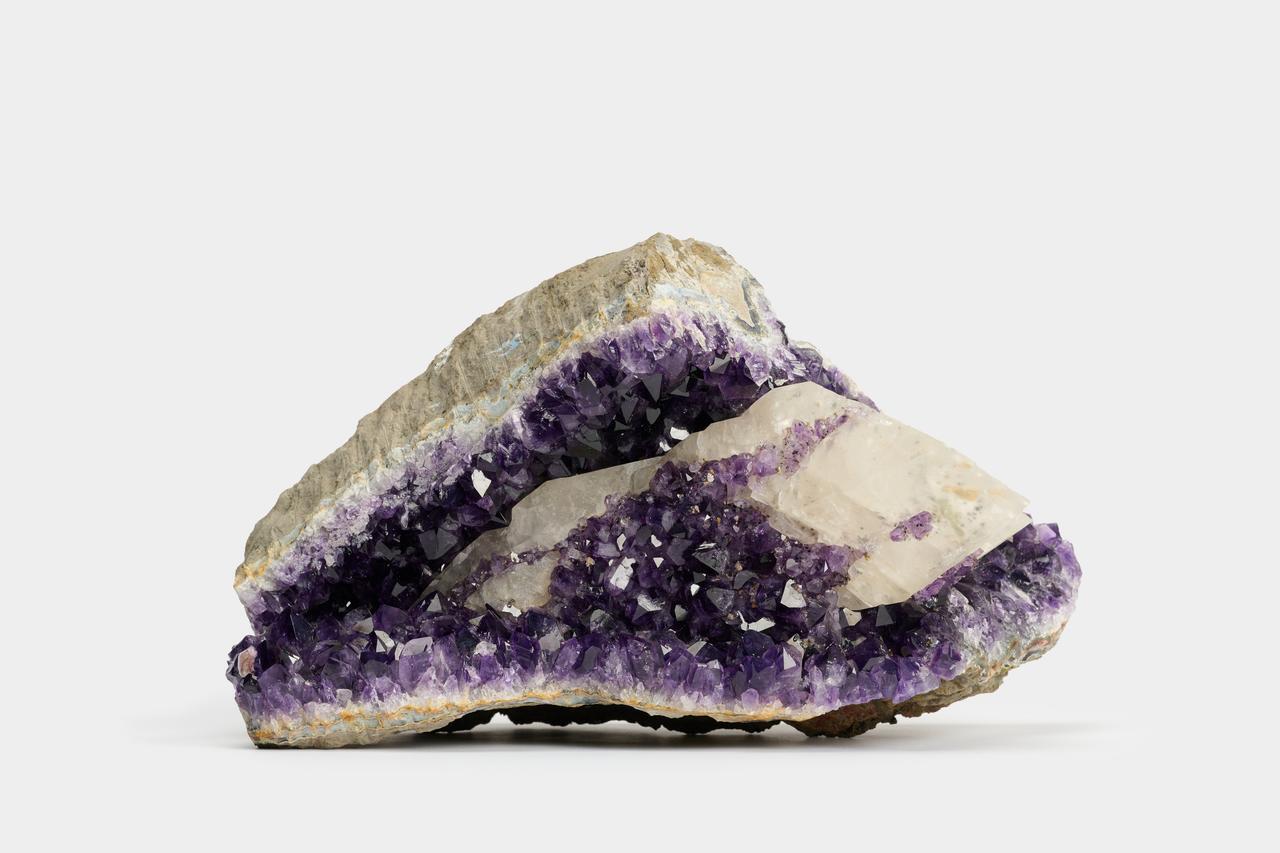
Monumental Biomorphic Gogotte, a Natural Sandstone Sculpture from Fontainebleau A Spectacular Globular Masses with Soft Curves - Height: 350 mm - Width: 310 mm- 15500 g - (1)


02
days
15
hours
35
minutes
47
seconds
Current bid
€ 1
Reserve price not met

Expert
Selected by Georgia Foteinou
Holds BSc in geology and post-graduate qualifications in geochemistry.
Estimate € 14,000 - € 16,000
 | €1 |
|---|
Catawiki Buyer Protection
Your payment’s safe with us until you receive your object.View details
Trustpilot 4.4 | 142038 reviews
Rated Excellent on Trustpilot.
Gogotte biomorfa monumentale, a natural Fontainebleau sandstone sculpture from Fontainebleau, France, forms a spectacular globular mass measuring 350 mm high, 310 mm wide and 180 mm deep, weighing 15.5 kg.
AI-assisted summary
Description from the seller
Extraordinary, Extremely Rare Natural Formation — a monumental specimen of Gogotte from the famous Fontainebleau forest in France. This geological formation, dating from the Oligocene, presents itself as a true natural sculpture, an assemblage of globular volumes that evoke modern art while being the product of an entirely spontaneous process that lasted millions of years. The specimen fascinates with its complex and harmonious morphology, an interweaving of spheroidal and lobed masses that merge into one another. The surfaces are soft, continuous and free of edges, drawing sinuous curves that catch the light and create a delicate play of shadows. The texture is the fine, homogeneous sandstone of Fontainebleau, composed of quartz grains of exceptional purity, which to the touch and sight appears almost velvety. The color is a uniform ivory white, a shade that enhances its formal purity and monumentality. The Gogottes, also known as 'stone meringues', are concretions of sandstone of rare perfection. Their genesis dates back about 30 million years, during the Oligocene, when groundwater rich in calcium carbonate permeated the fine quartz sand deposits left by an ancient sea. The calcium carbonate, acting as a natural cement, progressively bound the sand grains, giving rise to these spectacular and complex mineral architectures. The Fontainebleau region is the type locality for these formations, making every specimen an iconic piece of French geology. Sought since the XVII century, the Gogottes were appreciated by Louis XIV, the Sun King, who chose them to adorn the fountains in his Versailles gardens, recognizing their intrinsic artistic value. Even today, these formations are considered at the crossroads between science and art, objects capable of dialoguing with contemporary design and luxury furnishings. This specimen, for its exceptional size and pristine aesthetics, represents a high-level collection piece, ideal for a modern Wunderkammer, a professional study, or an art gallery. Possessing a Fontainebleau Gogotte of this magnitude means safeguarding a fragment of Earth's history, a tangible testimony of how nature can be the most sublime of sculptors. Its presence is silent but powerful, an invitation to contemplate the beauty that emerges from the slowest and most hidden geological processes.
Seller's Story
The Mineral Art Gallery offers minerals, fossils, shells and natural elements.
Born in Italy in 2017, today she collaborates with international galleries and collectors, she is a direct importer of large minerals and naturalistic collectible elements; deals with the processing to insert them inside the living space. A section of the gallery was dedicated to the Wunderkammer, "chamber of wonders or cabinet of curiosities" in which Mirabilia elements are presented: naturalia and italiania, a union between "the present is the past".
All lots are shipped via DHL Express and Fercam couriers, with insured parcel and tracking.
Translated by Google TranslateExtraordinary, Extremely Rare Natural Formation — a monumental specimen of Gogotte from the famous Fontainebleau forest in France. This geological formation, dating from the Oligocene, presents itself as a true natural sculpture, an assemblage of globular volumes that evoke modern art while being the product of an entirely spontaneous process that lasted millions of years. The specimen fascinates with its complex and harmonious morphology, an interweaving of spheroidal and lobed masses that merge into one another. The surfaces are soft, continuous and free of edges, drawing sinuous curves that catch the light and create a delicate play of shadows. The texture is the fine, homogeneous sandstone of Fontainebleau, composed of quartz grains of exceptional purity, which to the touch and sight appears almost velvety. The color is a uniform ivory white, a shade that enhances its formal purity and monumentality. The Gogottes, also known as 'stone meringues', are concretions of sandstone of rare perfection. Their genesis dates back about 30 million years, during the Oligocene, when groundwater rich in calcium carbonate permeated the fine quartz sand deposits left by an ancient sea. The calcium carbonate, acting as a natural cement, progressively bound the sand grains, giving rise to these spectacular and complex mineral architectures. The Fontainebleau region is the type locality for these formations, making every specimen an iconic piece of French geology. Sought since the XVII century, the Gogottes were appreciated by Louis XIV, the Sun King, who chose them to adorn the fountains in his Versailles gardens, recognizing their intrinsic artistic value. Even today, these formations are considered at the crossroads between science and art, objects capable of dialoguing with contemporary design and luxury furnishings. This specimen, for its exceptional size and pristine aesthetics, represents a high-level collection piece, ideal for a modern Wunderkammer, a professional study, or an art gallery. Possessing a Fontainebleau Gogotte of this magnitude means safeguarding a fragment of Earth's history, a tangible testimony of how nature can be the most sublime of sculptors. Its presence is silent but powerful, an invitation to contemplate the beauty that emerges from the slowest and most hidden geological processes.
Seller's Story
The Mineral Art Gallery offers minerals, fossils, shells and natural elements.
Born in Italy in 2017, today she collaborates with international galleries and collectors, she is a direct importer of large minerals and naturalistic collectible elements; deals with the processing to insert them inside the living space. A section of the gallery was dedicated to the Wunderkammer, "chamber of wonders or cabinet of curiosities" in which Mirabilia elements are presented: naturalia and italiania, a union between "the present is the past".
All lots are shipped via DHL Express and Fercam couriers, with insured parcel and tracking.
Translated by Google TranslateDetails
Number of objects
1
Main mineral
Monumental Biomorphic Gogotte, a Natural Sandstone Sculpture from Fontainebleau
Mineral form
A Spectacular Globular Masses with Soft Curves
Supplement
Museum Sculpture from Fontainebleau
Weight
15500 g
Origin (region/city)
Fontainebleau
Country of origin
France
Height
350 mm
Width
310 mm
Depth
180 mm
Sold by