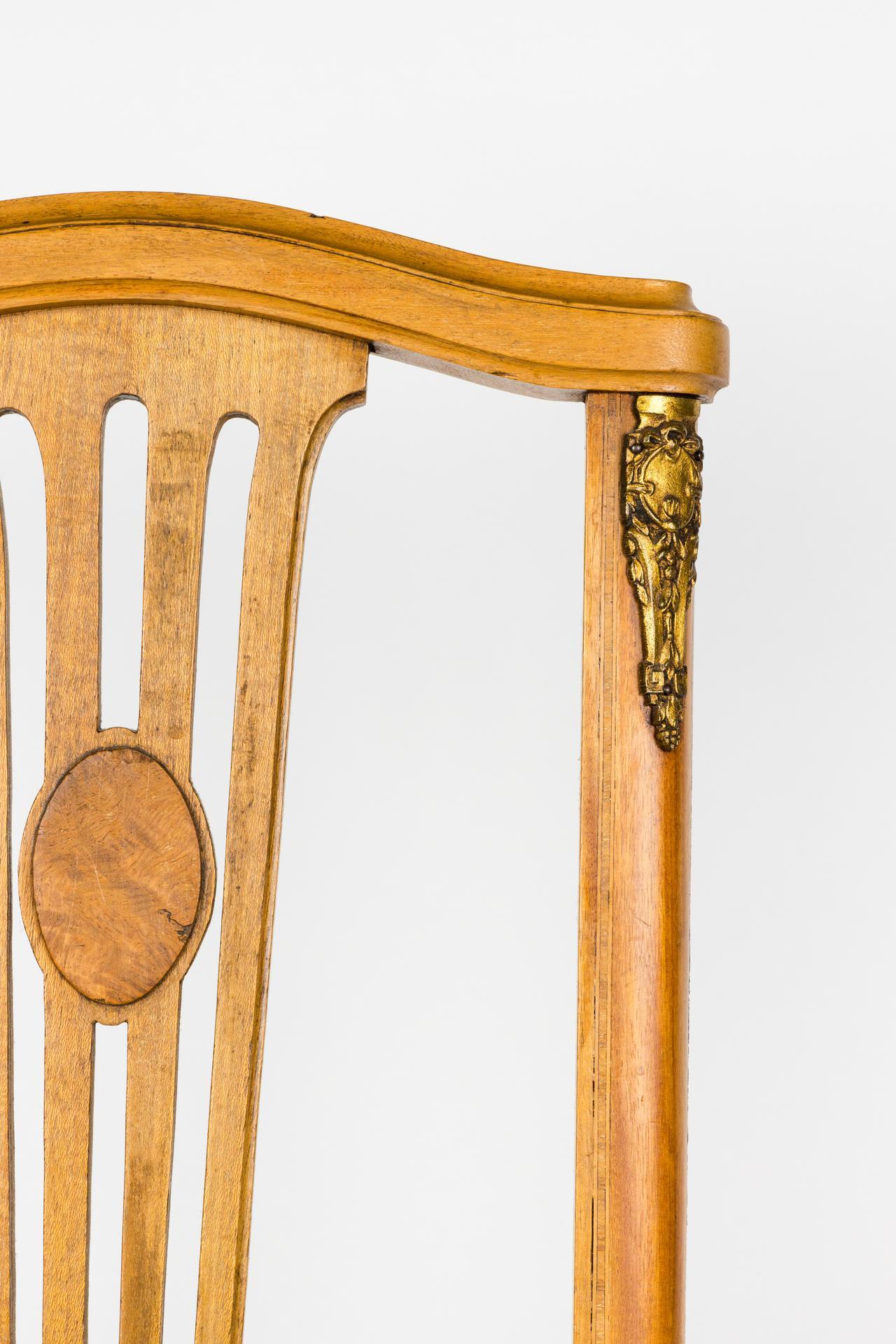
Secrétaire à abattant - Wood


03
days
16
hours
39
minutes
57
seconds

No bids placed
Catawiki Buyer Protection
Your payment’s safe with us until you receive your object.View details
Trustpilot 4.4 | 142120 reviews
Rated Excellent on Trustpilot.
A wooden secretaire in Empire antique style, dating to 1850–1900, with a solid oak frame, brown colour, height 160 cm, width 103 cm, depth 47 cm, weight 80 kg, origin Europe, and can be locked, in reasonable heavily used condition with possible missing small parts.
AI-assisted summary
Description from the seller
Secretary from circa 1820. Falls under the Empire style. This style was named after the reign period of Emperor Napoleon Bonaparte of France, which came to an end in 1815 at the famous Battle of Waterloo. Napoleon wanted to be a successor to the emperors of the Roman Empire, and much of his legal codes and strategies can be traced back to this period of classical antiquity. Through his campaigns to Egypt, the classical Egyptian period also came into the spotlight. All of this found its expression in the visual and applied arts.
The most striking features of the furniture are the design, a clean line that recalls the antique examples such as on vases and frescoes, and the ornaments used in classical architecture. This secretary is a typical example of late Empire: clean lines without embellishment.
The secretary was carefully restored a few years ago by a specialist, with the solid oak frame and the drawers preserved in their original condition. The secretary features three large sliding drawers and when opened, seven smaller drawers and some storage space reveal themselves.
Dimensions: The height is 160 cm, and with the removable round finials about 170 cm
The width is 103 cm and the depth is 47 cm.
Secretary from circa 1820. Falls under the Empire style. This style was named after the reign period of Emperor Napoleon Bonaparte of France, which came to an end in 1815 at the famous Battle of Waterloo. Napoleon wanted to be a successor to the emperors of the Roman Empire, and much of his legal codes and strategies can be traced back to this period of classical antiquity. Through his campaigns to Egypt, the classical Egyptian period also came into the spotlight. All of this found its expression in the visual and applied arts.
The most striking features of the furniture are the design, a clean line that recalls the antique examples such as on vases and frescoes, and the ornaments used in classical architecture. This secretary is a typical example of late Empire: clean lines without embellishment.
The secretary was carefully restored a few years ago by a specialist, with the solid oak frame and the drawers preserved in their original condition. The secretary features three large sliding drawers and when opened, seven smaller drawers and some storage space reveal themselves.
Dimensions: The height is 160 cm, and with the removable round finials about 170 cm
The width is 103 cm and the depth is 47 cm.
Details
Era
1400-1900
Weight
80 kg
Style subtype
Empire
Country of origin
Europe
Material
Wood
Style
Antique
Colour
Brown
Condition
Fair condition - heavily used & with possibly minor parts missing
Height
160 cm
Width
103 cm
Depth
47 cm
Estimated period
1850-1900
Can Be Locked
Yes
Sold by