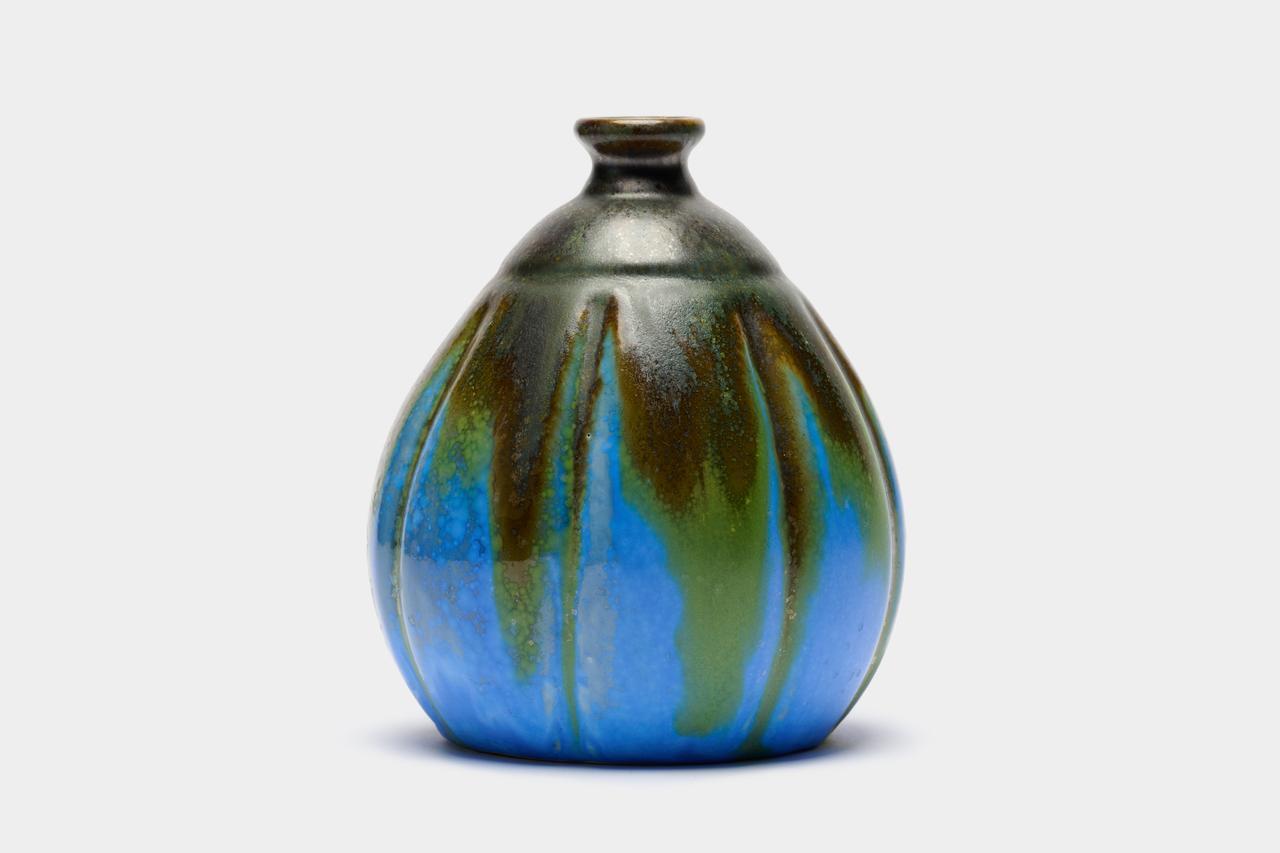
Pharmacy jar/ Albarello - Ceramic


02
days
03
hours
24
minutes
23
seconds
Current bid
€ 90
Reserve price not met

Expert
Selected by John Laurance
Thirty years' experience in decorative objects and two decades as shop owner.
Estimate € 150 - € 200
 | €90 | |
|---|---|---|
| €70 | |
| €65 | |
Catawiki Buyer Protection
Your payment’s safe with us until you receive your object.View details
Trustpilot 4.4 | 142857 reviews
Rated Excellent on Trustpilot.
Polychrome maiolica albarello pharmacy vessel from Southern Italy, dating to the second half of the 19th century, with a cylindrical, slightly bulged body, yellow/ochre rim, glazed scene of a seated figure with a sheep, height 23 cm, diameter 9 cm, in good used condition with two small hairlines on the upper rim.
AI-assisted summary
Description from the seller
Pharmacy albarello in multicolored majolica, placed in southern Italy (as in the Abruzzo area workshops) and datable to the second half of the 19th century. Hand-painted with a rural scene depicting a seated figure with an animal (a sheep) and landscape details in the background. The cylindrical body is slightly bulged at the center and has lobed edges in yellow/ochre. In glazed ceramic, also called "majolica/faience," typical of traditional pharmaceutical containers. The setting of the scene, with an idyll-like tone but a simplified style devoid of strict classicism, places it in the second half of the 1800s. Two small chips on the upper rim are noted but nothing compromising, due to age. Potential buyers are invited to carefully examine the photographs and all relevant details, as well as the condition of the object, before proceeding with the purchase, in order to assess its state of preservation knowingly.
Pharmacy albarello in multicolored majolica, placed in southern Italy (as in the Abruzzo area workshops) and datable to the second half of the 19th century. Hand-painted with a rural scene depicting a seated figure with an animal (a sheep) and landscape details in the background. The cylindrical body is slightly bulged at the center and has lobed edges in yellow/ochre. In glazed ceramic, also called "majolica/faience," typical of traditional pharmaceutical containers. The setting of the scene, with an idyll-like tone but a simplified style devoid of strict classicism, places it in the second half of the 1800s. Two small chips on the upper rim are noted but nothing compromising, due to age. Potential buyers are invited to carefully examine the photographs and all relevant details, as well as the condition of the object, before proceeding with the purchase, in order to assess its state of preservation knowingly.
Details
Era
1400-1900
Country of origin
Italy
Material
Ceramic
Condition
Good condition - used with small signs of ageing
Height
23 cm
Width
9 cm
Depth
9 cm
Diameter
9 cm
Estimated period
1850-1900
Sold by