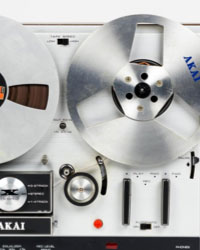
Sony - PCM-501es DSP - digital sound processor


07
days
02
hours
08
minutes
02
seconds

No bids placed
Catawiki Buyer Protection
Your payment’s safe with us until you receive your object.View details
Trustpilot 4.4 | 141582 reviews
Rated Excellent on Trustpilot.
Description from the seller
Incoming audio is digitized into a 14- or 16-bit code depending on the user’s needs. Although the 16-bit version offers better sound quality in terms of noise, dynamic range, and distortion, there is an industrial standard that operates on the 14-bit system, hence the option to choose. Moreover, the error-correction system is more effective in the 14-bit format, but we will discuss that later.
Converting an analog signal to digital involves sampling, and the 501 uses a sampling rate of 44.1 kHz, which provides a frequency response of 5 to 20,000 Hz. This, combined with 16-bit sampling resolution, means that, at least in theory, you have the possibility to match CD-quality recordings, but with an even better frequency response. As with CDs, noise and distortion are very low and effects like wow and flutter are practically imperceptible. Since sampling is linear (the input is sampled in equal-step increments), pre-emphasis and de-emphasis of the high frequencies are used to further improve noise performance. This involves increasing the level of high frequencies during recording and decreasing their amount during playback, returning the sound to its initial level but reducing high-frequency noise due to quantization. Quantization noise is caused by differences between the input and output waveforms, due to the digitized waveform being composed of a finite number of steps. Each point of the analog waveform is digitized to the nearest step, and while these errors are small on a 16-bit system, they are still present and manifest as noise at the output. Some preregistered materials may not have been recorded using pre-emphasis, and in this case the 501 is equipped with a system to detect this condition and automatically disable de-emphasis during playback. A status indicator shows whether the feature is active or inactive.
Incoming audio is digitized into a 14- or 16-bit code depending on the user’s needs. Although the 16-bit version offers better sound quality in terms of noise, dynamic range, and distortion, there is an industrial standard that operates on the 14-bit system, hence the option to choose. Moreover, the error-correction system is more effective in the 14-bit format, but we will discuss that later.
Converting an analog signal to digital involves sampling, and the 501 uses a sampling rate of 44.1 kHz, which provides a frequency response of 5 to 20,000 Hz. This, combined with 16-bit sampling resolution, means that, at least in theory, you have the possibility to match CD-quality recordings, but with an even better frequency response. As with CDs, noise and distortion are very low and effects like wow and flutter are practically imperceptible. Since sampling is linear (the input is sampled in equal-step increments), pre-emphasis and de-emphasis of the high frequencies are used to further improve noise performance. This involves increasing the level of high frequencies during recording and decreasing their amount during playback, returning the sound to its initial level but reducing high-frequency noise due to quantization. Quantization noise is caused by differences between the input and output waveforms, due to the digitized waveform being composed of a finite number of steps. Each point of the analog waveform is digitized to the nearest step, and while these errors are small on a 16-bit system, they are still present and manifest as noise at the output. Some preregistered materials may not have been recorded using pre-emphasis, and in this case the 501 is equipped with a system to detect this condition and automatically disable de-emphasis during playback. A status indicator shows whether the feature is active or inactive.
Details
Era
1900-2000
Brand
Sony
Model
PCM-501es
Multiple models
No
Physical condition
Excellent
Number of objects
1
Includes
No extra's
Serial number
502687
Year of manufacturing
1987
Weight
4 kg
Functional condition
Tested and working/playable
Height
80 mm
Width
430 mm
Depth
350 mm
Sold by