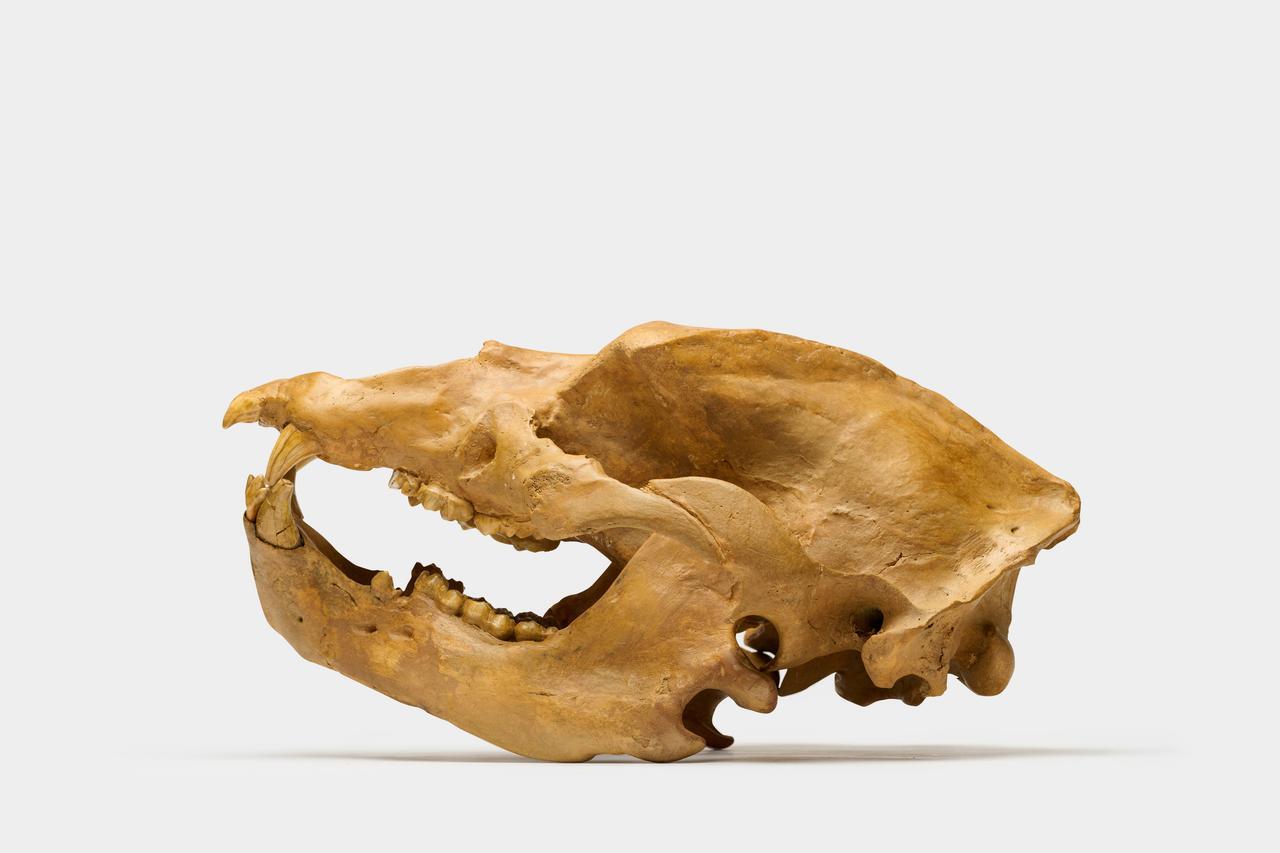
Trilobite - Fossil carapace - Morocops Ovatus


05
days
13
hours
11
minutes
09
seconds

No bids placed
Catawiki Buyer Protection
Your payment’s safe with us until you receive your object.View details
Trustpilot 4.4 | 141835 reviews
Rated Excellent on Trustpilot.
Description from the seller
This lot offers well-sized trilobites of the species Morocops ovatus, in matrix (full piece size 11.5 cm). The trilobite body measures 6.5 cm. Completely natural and perfectly preserved, natural sheen, no paints. Perfect eye quality; this is a specimen of top quality. Worked using a blasting technique; “it is an exquisite piece.” Comes from the Oufaten Mountains, near Taharajat, Errachidia Province (Morocco). Belongs to the Middle Devonian Period, Emsian–Eifelian ages. Morocops is a genus in the Phacopidae family; there are several representatives of this genus. Often, anatomical differences between species can be very subtle, and only the most attentive eyes can distinguish them. In the case of M. ovatus compared to another member of the genus (M. granulops), a notable difference would be the row of ovoid tubercles along the thorax, specifically at the contact between the axial rings and the pleural segments; these tubercles are clearly distinct in M. ovatus, hence its name, subtler in M. granulops. This specimen is accompanied by an L-shaped acrylic display stand as a gift.
Seller's Story
Passionate about paleontology since childhood, a 'conservative' collector.
For me, working with this material is a dream, treated with all the respect and love.
It is well known to all of us that the feeling of having a fossil in our hands is something very special.
Honestly, I really enjoy sharing with other enthusiasts this treasure that is fossils, a legacy of our planet's natural history.
Translated by Google TranslateThis lot offers well-sized trilobites of the species Morocops ovatus, in matrix (full piece size 11.5 cm). The trilobite body measures 6.5 cm. Completely natural and perfectly preserved, natural sheen, no paints. Perfect eye quality; this is a specimen of top quality. Worked using a blasting technique; “it is an exquisite piece.” Comes from the Oufaten Mountains, near Taharajat, Errachidia Province (Morocco). Belongs to the Middle Devonian Period, Emsian–Eifelian ages. Morocops is a genus in the Phacopidae family; there are several representatives of this genus. Often, anatomical differences between species can be very subtle, and only the most attentive eyes can distinguish them. In the case of M. ovatus compared to another member of the genus (M. granulops), a notable difference would be the row of ovoid tubercles along the thorax, specifically at the contact between the axial rings and the pleural segments; these tubercles are clearly distinct in M. ovatus, hence its name, subtler in M. granulops. This specimen is accompanied by an L-shaped acrylic display stand as a gift.
Seller's Story
Passionate about paleontology since childhood, a 'conservative' collector.
For me, working with this material is a dream, treated with all the respect and love.
It is well known to all of us that the feeling of having a fossil in our hands is something very special.
Honestly, I really enjoy sharing with other enthusiasts this treasure that is fossils, a legacy of our planet's natural history.
Translated by Google TranslateDetails
Number of objects
1
Specimen
Trilobite
Scientific name
Morocops Ovatus
Country of origin
Morocco
Geological period
Devonian, Middle (393.3 - 382.7 million years)
Condition
Natural
Authenticity
Original/official
Sold by